Economic Cultural Meander: Subscribing Into Poverty – Part 3

If you’ve never been loved, nurtured or encouraged, how do you know who you are? You don’t.

Destabilised From The Inside

Before I even discuss emotional poverty, I think it’s best to direct you towards a definition. I found this from a book by Dr. Ruby Payne called ‘Emotional Poverty in all Demographics: How to Reduce Anger, Anxiety amd Violence in the Classroom’. Her definition is thus:

‘when the integration and regulation of the brain are underdeveloped, the inner self is weak, and bonding and attachment is unstable

Whilst that book is for professional devlopment, what I’ve taken from it is that an overall lack of structure and cohesion creates emotional detachment which results in an individual becoming fractured and fragmented. This breaking up of the psyche can lead to destuructive and isolating behaviours.

But what causes this?

This article by the Mom Collective references Dr. Payne’s book and it suggests that things like the death of a parent, bullying, racism and moving (house) a lot are some of principle reasons.

If such events are not addressed at a young age then the child will grow into a less stable adult. I believe it’s one of the main reasons therapy in young adults is so high nowadays. The parents of the last forty years aren’t there for their children in the same that the parents born in World War 2 and back were there for their children. The Boomers appear to have been the catalyst for emotional decline as being the first where both parents could choose to work with neither staying at home to tend to their child, instead relying on the school to do the bulk of the care work.

In the 21st Century, I’ve seen a significant drop in emotional health between my generation (Millenial) and the current Gen Z (birth years circa 1995 – 2010 and Generation Alpha (birth years circa 2011 – 2026). There’s a sense of unassuredness masked by a veneer of false confidence in them which I believe comes from not having having been raised correctly.

I think I was part of the last generation that was encouraged to go out and play in parks, forests, fields, etc and be home in time for dinner. When I visit my home village, I hardly see any children playing. There’s either not enough of them now or they’re encouraged to stay indoors and play on a tablet, console or watch TV in their room. They’re given a prison out of compassion in an attempt to protect their children from the ‘dangers’ of the outside world at a time where it’s far safer than it’s ever been. All this does is create a crutch for them in the future where emotional resilience forms the bedrock of being able to tackle real world problems effectively as an adult. You don’t learn much from scripted events in games, films and TV shows compared to developing and maintaining connections with your peers.

But let’s get back to the aforementioned definition. How does an inner self become so weak that the attachments and bonds created with others is unstable?

From my own experience, I can say that neglect is a major factor. Parents that take a very hands-off approach to raising their children can create a lot of emotional problems. If parents show little to no interest in their own children, it should come of little surprise that that child will grow up with a low opinion of themselves and end up over-exerting themselves to make as big an impression as possible on people just to earn the slightest bit of attention.

Conversely, I’ve experienced children that were so spoiled with material items, but not truly disciplined, that they grew up to have little-to-no respect for their parents. It seemed the parents wanted to be popular with their children rather than respected. This has been the case with a childhood friend. She and her younger brother got anything they wanted despite being absolute brats. Now adults, the parents have been enslaved into acting on every whim of their adult children. Needless to say, they have been aged significantly by this and, I’d argue, robbed of any real quality time with their grandchildren. But then, if you don’t spend real time with your children don’t expect them to want to spend time with you when they get older.

I never kept in touch with those children after finishing secondary school but I get reports that their lives are not steady and structured. The son is on his second child with two different women, has no employment or financial stability and doesn’t seem to be able to provide a home for his children. His father has built a second shed in his garden just to store his son’s excess stuff.

The daughter has subscribed to the alternative lifestyle. Hair of various shades, sexually ambiguous and promiscuous (always was) and seems to have turned her boyfriend into becoming a neutered ‘they’. From what I’ve gathered, her job situation is also unstable having had 17 jobs since 2010.

I think what these examples serve to highlight are how important it is for parents to attach and bond to their children.

It’s become all too common now for parents to give up on the actual parenting and outsource it to technology, the government and other people. You’re not a parent if you think a child can be looked after by a screen and a controller or anyone that isn’t you. What you are is neglectful of your child and your duties towards them. It should be a pleasure and privilege to have a child to take care of. To love, support and watch them grow into well-rounded individuals with a sense of self. But how many see their children as an expense they say they can’t afford? How many tell their children they gave up on their dreams because of their children? How many don’t say these things but project them? Too many, I’d wager.

It’s not the child’s fault they were born therefore the blame cannot be passed on to them because the lives of the parents have now been deemed as disrupted.

This study from the Guttmacher Institute may give some insight as to why Millenials onward are the most likely generations to develop emotional problems.

Source: Guttmacher Institute (2022) – Unintended pregancy and abortion

The graph above is for the UK and shows that, over a 29-year period, an average of 35% of pregnancies were unintended and, of those, an average of 13% end in abortion. The Institute doesn’t provide figures until its graph for 2015-2019 where it stated that there were 1,150,000 pregnancies annually. That must be an average but they don’t state it so I’ll take them at their word. In that four-year period, 545,000 were unintended and 197,000 ended in abortion. Again, they don’t state but this must also be annually.

If we believe these figures to be a true reflection of the percentages of unintended pregnancies and abortions then it stands to reason that, on average, a third of children born during the assessed timeframe could develop mental and emotional problems because they were not planned or, even worse, not wanted but had anyway.

How do I come to this conclusion?

Let’s take an abortion. Woman is raped and unwillingly impregnated. She gets rid of the foetus. She finds a man worth having a child with but hasn’t dealt with the trauma of her previous pregnancy. Second pregnancy goes to term and the child is born. That child, through no fault of its own, is not bonded with its mother. In fact, its mother rejects it because all she can think about is the rape. She’s not emotionally healthy therefore the child grows up resented and neglected by its mother. It may well be cared for well enough by the father but living with a mother that hates you because of what you are not is a very scary and confusing environment for that child to grow up in. The child will, in all likelihood, develop problems with their image, worth, abilites, etc because they do not have the backing of two supportive parents. This will create a multitude of problems as the child gets older and requires more sophisticated guidance and, possibly, treatment.

It’s a made-up scenario but it’s entirely feasible. An unintended pregancy can be a double-edged sword. For couples that have been trying unsuccessfully to get pregnant, it’s a Godsend. For those that didn’t want children or had them already, it could change their minds or just be a surprise and welcome addition. Conversely, it could be a burden.

A child is a responsibility and should be a privilege. Never a burden. To treat one as the latter only does harm.

And if the child is treated as a burden then you have to look at the environment that’s being provided. If they were unintended and unwanted, the enviornment the child grows up in will not be one that fosters a whole individual. Instead, they will become fractured and unsure of who they are and why they are here which can lead to a whole host of problems.

This blog post from Psychotrauma Practitioner, Vivian Broughton, is full of insights. I’ve copied over the bullet points from the Catch 22 section:

  • the mother doesn’t want to get pregnant and have a child
  • the pregnancy was a mistake
  • the conception was violent, or by rape
  • the conception was coercive, unpleasant, boring, unemotional
  • conception was seen as a duty
  • the mother hates the father
  • pregnancy is unpleasant and the mother is often sick
  • the mother is ambivalent about having a child
  • the mother is frightened of pregnancy and giving birth
  • the mother has been told many frightening things about having children
  • due to her own childhood trauma the mother is still psychologically a child and sees her child as a rival for satisfaction of her wants and needs
  • the mother sees children as a nuisance, a drain on her resources and opportunities
  • the mother may suffer from her own trauma from being unwanted, even hated, by her mother
  • she may unconsciously see her child as, finally, someone weaker than her that she can take revenge on for her own victimisation
  • if the mother has been abused as a child she may see her unborn child as a potential abuser
  • for many reasons the mother may prefer a child of the opposite gender, not wanting the child as he/she is

This list is neither exhaustive nor does it include the reasons a father might not want a child. However, across the sexes, the reasons are quite similiar.

What this post does discuss is the fact that a child unwanted by its parents will pick it up…eventually. They will become consciously aware of the fact that at least one of their parents didn’t want them. Once this thought has embedded itself into a child’s psyche, it will dominate to the point that the child may disassociate themselves from their parents in a number of ways. They may become more introverted and isolate themselves; their behaviour could become more erratic and violent; or they may become overwhelmed with feelings of helplessness.

The problem with mental and emotional poverty is that it’s arguably the worst kind because it is largely invisible. It requires objective observation and granting the affected person the space where they can feel comfortable to openly discuss their experience.

If they even realise what’s happened.

Then the problem becomes a person that wanders through life without even knowing they’ve been deprived of a decent upbringing. And even if you’re sure of it, you cannot force awareness to the affected person as that will unsettle their psyche to the point where they may be unable to function properly. Whilst they might be concsiously aware, they can still be deluding themselves to the point they create an illusion of stability to the public and themselves. Breaking that illusion could send the person into a downward spiral of destruction.

So, what to do?

Accept it. Rather than subscribe to a delusion, subscribe to reality. The parents should be confronted about the nature of their child’s conception and the effect it’s had on their lives. It’ll be tough. It’ll bring about feelings of anger, guilt, shame, betrayal, hate, etc but, by getting the truth out in the open, the child and their parents can at least move forward honestly however that may look be it together or apart. The main thing is gaining some closure over how the child came to be in this world. Then they can go about the rest of their life with either some or all of the void filled.

If this happened more then, perhaps, we’d have far less young people wandering around seeking some semblance of structure however loose it may be. I can only think they’d be all the healthier for it.

Because that’s all any child really needs, isn’t it? Some structure. A structure forged out of love, responsibility and a duty of care. Without it, we become wayward and end up falling into all kinds of emotional traps later in life which can lead us down very dark paths. Some may find/fight their way back to a worthwhile path but many won’t. Of course, that can happen to those who had a good upbringing. The difference there is that such a child is likely to get themselves back on a good footing and avoid such traps in the future because they’ve been taught.

But then, the unfortunate truth is that it’s fashionable to not look after children anymore. At least, in the UK.

Speaking of emotional traps.

This BBC article highlights the childcare subsidies for parents in England. They are expected to come into force in between April 2024 and September 2025. The main points are:

  • Eligible working parents of two-year-olds will get 15 hours of free childcare per week from April 2024
  • Children between nine months and two years old will get 15 hours of free childcare from September 2024
  • All eligible under-5s will get 30 hours of free childcare from September 2025

So, parents will effectively be paid to not look after their children. The state shall provide a carer who will, in all likelihood, become the person the child has the strongest bond with during these crucial early years.

And once it’s done? I imagine the child will have a similar relationship with their parents as those who are sent to public school in England (private in Scotland).

This article from Brighton Therapy Partnership discusses the effects of ‘Boarding School Syndrome’. Whilst it’s not a medical condition, it’s effects are quite real.

One such effect is losing the ability to form relationships with parents and other family members. And it’s not surprising. The child is at home and is then sent off to live with strangers for several months only to return for holidays. In some cases, the child is away for years. It can help some if the parents are in an abusive relationship. For the children that aren’t, it can cause depression, confusion and a sense of loss. They may think they’ve done something wrong to deserve being sent away.

That’s just one effect. Now, let’s take the UK government’s childcare proposal. The child is under five and the parents leave whilst a stranger comes to look after them. Imagine the problems that could cause.

Of course, rather than pay a stranger to spend 15-30 hours a week looking after someone else’s children, why not give that money to, I don’t know, the parents? If the mother/father wants to stay at home with their children then why not have that be their occupation for a few years? If the parents would prefer to split things, then the money gets divided.

Ah. But that would be giving power back to parents and communites and we can’t have that, can we?

I’ll not divert in the political direction. That’s a whole other topic.

I will, however, finish by saying that being emotionally malnourished does not allow someone to function well in the world. You can come from a rich background, have gone to the best schools and a great university where you received a top class degree which landed you an excellent job at a reputable company. But if you weren’t loved fully by your parents, none of that will matter. I’ve seen it in big organisations. These people are cold but not because they’re evil but because human intimacy is alien to them.

Conversely, I went to school with a guy who was highly intellectual. His mother was a housewife and his father a postman. He became a lawyer. Why? Because his parents loved him enough to give all they could so he could achieve a life beyond his upbringing. And he did.

Cultural Economic Meander: Subscribed into Poverty – Part 2

And that’s before they’ve become sober enough to check their bank balance.

I covered the car quite extensively in the first part of this blog. In this second part, I’ll run you through the other ways subscription can make you worse off.

Living in the Cuckoo’s Nest

The way house prices are going, a house this size will cost you £150,000 in 2050.

Renting. The principle is simple. Someone buys a property, lives in it for a minimum of two years (in the UK) then converts the mortgage from residential to buy to let. Then, they remove anything of value, get an estate agent involved to manage the property, hike the price well above the mortgage value then get someone poorer and more desperate to come in and pay for the property. You, the poor schmuck, ends up paying over the odds whilst an agent gets 10% to maange the place and the owner simply cashes in. More so if the mortgage has been paid off. The property increases in value as supply runs low since more and more people rent their properties out making renting a vastly expensive venture.

I was helping a friend out recently who has moved to Glasgow from Central America to start a position with the University of Glasgow. They hadn’t sorted a place to stay and asked for my help since I’m the only person they know that lives in the city. Despite having gone over their finances and suggested a budget of between £400 and £600 a month for rent (which is still possible) to keep their living costs as low as possible whilst still granting them their own space, they opted for a flat in the West End, near the University with poorly fitted windows, which makes it cold and the landlady allows heating for two hours a day, and they’re sharing with a fellow colleague. Yet, the University would have paid for them to stay in a hotel for up to three months to take the time to find a place to live.

Were they happy with their choice of accommodation? No. Why? It was too much (bills are not included so half their wages are gone on the flat), it was cold (‘but Spring is almost here. It’ll be fine.’) and they’re sharing with someone when they wanted their own place.

I said nothing. In reality, they made the choice because of convenience. The property is a short walk to work, plus they get the prestige of living in a posh part of Glasgow. See that thing about paying for a badge in the previous blog? Apply it to location for property. People will pay over the odds for the perception of living in an affluent area even if they themselves are not affluent. A lot of people do it, especially in cities.

This New York Times article points at two common reasons why some people live in nicer areas or houses than their income would suggest – hidden debt or wealth.

Certainly, in the case of young students and graduates, it’s not uncommon for their wealthier parents to bankroll some or all the living costs to help their children find their feet. I worked with one young graduate at Royal Bank of Scotland. She lived in a flat owned by her father, a wealth management advisor. As far as I remember, she didn’t have to pay rent but did have to pay for utilities. Council tax may have been taken care of too. However, her flatmate was charged rent at the going rate. And she was certainly not affluent being a budding photographer and film director.

So, how avoid renting? It’s tricky but possible. If you’re willing, you could club together with friends and buy a house together. For clarity, I am talking more about those leaving home for the first time in an attempt to avoid getting into the renting cycle.

Good financial guidance and support from family is important here. Not every family is going to be able to offer it but, for those that can, it should be utilised. If they can provide, then they will likely be involved every step of the way to ensure the property not only provides good value for money, but will be a suitable place to live in. This is the kind of activiy that can also more fully reinforce the familial bonds as the family has become the preferred choice. I’m not suggesting they buy it for you. Most cannot do that. I’m suggesting contributions to a deposit or acting as guarantor on the mortgage. If split two, three or four ways, the upfront costs are less and the living costs lowered by the number of people living in the property.

By going this route, you will have to learn several skills to make this work. Your financial skills will need to be up to par to be able to maintain your end of the bargain.

If you can’t make a payment, you will need to communicate in advance to your housemates. To do so will require acknowledgement of your accountability to your peers. This will teach humility and vulnerability.

Diplomacy will also be a vital skill as house/flat-sharing is seldom plain sailing. There will be discussions, debates, conflicts and arguments over everything from bills to alarm clocks, sleeping habits to relationships, and chores to house activities.

It won’t be comfortable but nothing worthwhile ever is. What you should gain from the experience is the ability to manage yourself and people far better than before. And, at the end, you can sell the property and split the proceeds or rent it out and continue splitting the proceeds.

Ultimately, renting should, ideally, only be for the short term either whilst you’re working in another location or saving up for a home, if the family option isn’t available.

Are You Entertained?

So much choice but how much of it do you actually use and is it worth constantly paying for?

Netflix, Disney+, HBO Max, Prime Video, Sky, the TV Licence, Hulu, Now TV. The list of television and streaming services gets longer by the year. But how much do you watch and how many of the damned things do you actually need? Starting at £4.99 a month (Apple TV) and going as high as £71 a month for Sky Q, Netflix, Sky Sports & BT Sport. How much entertainment is really required?

Of course, I’m not suggesting you live without some form of entertainment. We all need to unwind and sitting on the sofa watching a favourite film or TV show is a comfortable way to relax.

Music services have increased in popularity. I moved to Amazon’s Prime Music streaming service and sold all my CD’s. I reckoned that if I listened to just 8 new albums a year, it was presenting value. I have recently moved to Spotify to be able to listening to their exclusive podcasts as well as new music. There’s an increase in price but the knowledge and wisdom gained from the likes of Joe Rogan’s podcast makes the extra expense worthwhile. That alone, to me, is worth the subscription price. In addition, I still get to listen to new music and I take part in a friend’s weekly themed playlists so there’s a community element too.

But entertainment should be a luxury not an essential. If you’re not getting anything out of it, why keep paying? I stopped paying the UK’s TV Licence fee (which funds the BBC) because it stopped presenting value for money. I enjoyed Doctor Who but it started going down the drain as did Top Gear; Coverage of Formula 1 ceased on the BBC and moved to Channel 4 which only showed highights as live coverage moved to Sky; and international rugby was split between the BBC and ITV for the Six Nations tournament whilst the Autumn Internationals (played in the Northern Hemisphere) have moved exclusively to Amazon’s Prime Video. For the very little I used the BBC for, it just ended up getting worse so I stopped paying for it. Why fund something you no longer get any joy from?

With Spotify, or other music streaming services, I have found considerable value. I listen to it daily and it allows me to listen anywhere on whatever device be it my PC, laptop, phone, earphones or the car. And, being a vinyl collector, I use the service to sample new music, to listen to over and over before making a decision on whether I like it enough to justify buying on vinyl. So, for me, music streaming has been worthwhile.

Now, these services are nothing compared to going out whether it’s drinking, cinema, theatre, clubbing, etc. Cinema is the cheapest here as a ticket is still around £10 and, as long as you don’t buy any drinks or snacks on the premises, it will stay at that. Theatre is next cheapest. More expensive ticket, on average, but same rules apply to keep it at ticket price.

It’s the clubbing and drinking that causes the financial strain. According to these figures, a night out in the UK costs, on average, £56.10. From my experience, I would agree with that, allowing for inflation since I was out doing such things. However, these figures do not factor in travel costs which would add anywhere between £5 and £20 depending on how far you live and the mode of transport used.

I think it’s also worth mention in here the habitual spending. Being a vinyl collector has stopped that habit for me, specifically of CD’s and blu-rays. I would buy the latest CD of a band I kind of liked just because the CD was cheap and I’d buy a blu-ray of a film I saw at the cinema even though I thought the film was OK. Thousands gone on stuff I didn’t like enough to watch or listen to more than once, if watched or listened to at all. I stopped buying CD’s in 2018 and, in 2021, decided to buy vinyl because it would be a different experience over CD and streaming. But before investing, I made the conscious effort to plan out how I was going to operate this hobby. I started with my six favourite bands, concentrated on them and worked out from there. At the very least, if I didn’t enjoy the vinyl experience or got fed up, I’d have music I knew I’d always enjoy. As it’s turned out, I’m fully enjoying the experience but I’m careful to not get into the old habit of buying for the sake of it. If there are two albums I really like by a band I sort-of like, I get those two albums and that’s it. Of course, apply this to whatever you think you needlessly spend money on. I’m sure the results will surprise, maybe shock, you once you’ve calculated it out.

These Boots Are Made For…Projection Of My Insecurity?

Better than letting everyone know where your fashion allegiances lie, I’m sure.

Clothes. Specifically, designer ones. Whether it’s sports brands like Adidas or Nike, or fashion brands like Gucci and Louis Vuitton, the price tag rarely meets the quality of the garment or footwear. With trainers, once you’re over £50 you stop paying for the actual material and start paying for the brand. I learned this from my marketing module but it came out in practice when a pair of £50 Adidas trainers barely lasted a year of mixed use between walking, hiking and the gym. I decided to stump up £85 for Adidas’ ‘walking’ trainers. Still, barely a year and a 1,000 miles later, they were dead. I have taken the decision to pay for much better footwear as they will last over ten years and I get them resoled for free which will just extend the life. For the winter months, I’ve been using a pair a Loake’s Wolf winter boots. They cost £330 but they are used daily and are designed for urban walking and forest trails. They were bought September ’22 and, despite regular use, aren’t really showing any signs of wear. Plus, the sheepskin lining is not only comfortable but warm.

Yes, you will pay signifincantly more upfront, usually over £200 a pair, but when you can expect to get at least ten years from one pair, it starts to make sense. The same goes for trousers, shirts, jumpers, etc. By paying more upfront for better quality, you save in the long run as long as you look after them. The problem here is breaking out of the cyclical mindset that so many people have where they ‘need’ to change their wardrobe every 2-3 years and ‘treat’ themselves to new shoes, jackets, bags, etc. It’s this mindset that prevents being able to buy better and less often.

The other thing that holds a lot of people back is wanting to appear like they have sufficient money to keep affording regular wardrobe changes. In reality, people with money rarely change their wardrobe often because they know something you don’t – Clothes don’t make the person. You make you. Yes, they may be wearing more expensive clothes, accessories and footwear but can you tell? No. Why not? Because it’s gone on quality and not on advertising other companies which is precisly what happens when you give in to designer brands; you become their walking advert thus you are exploited because you’ve paid over the odds for cheaply made, poor quality items.

Also, those who have made the switch have matured mentally and emotionally enough to realise that clothes are just that. Clothes. They’re designed to keep us warm and protect us from the elements as well as cover up areas we don’t want others to see in public. And with this more mature mindset comes more mature colours and styles. They may be flamboyant or muted but the pallette is always tasteful and leads you to the face of the wearer because that’s what’s important. Paying attention to the person you’re with and not their body which is fast becoming the norm here in the UK and I’m seeing it spread to Western Europe to a lesser extent.

What I’ve also found when I made the switch was I became that bit more relaxed because I wasn’t having the additional worry of hoping that whatever style, pattern or image my clothes had were sending the wrong message. I sit here now in a grey henley shirt and jeans. I’m sending no subliminal message meaning as I’m in control of what message I do send which will be via my mouth.

And for music fans, anyone thinking that they’re getting a better deal buying a band hoodie at £85 versus a merino wool pullover for the same money, guess again. That band/artist hoodie costs £4-£6 to make. You are paying to advertise that band or artist. Alternatively, just enjoy the live music. You paid for the ticket. If you want to buy anything else, maybe get an album off them and support them that way but band clothing is just the same as sports and designer brands.

“Ah, but I’m showing my support by wearing their shirt.” is what some will say. Sure, you are showing support but if it’s Lady Gaga or Metallica how much more support do you think they need? It’s a bit different if it’s a local band or a friend’s band where they do need the support of as many people to help get their name out. If you love the music, get a shirt and help spread their name. You never know, you may just be helping the next headliner. And small bands don’t charge exorbitant prices for their t-shirts because the cuts from the venue, record label and event organiser won’t be as big. Strangely enough, they all use the same manufacturers as the major acts be it Gildan, Fruit of the Loom, etc.

Repairing your own clothes is the skill here that can save you some money. Naturally, you’d need to practice so small rips and tears are good for starters. If your mother or grandmother can’t show you, there are plenty of resources online to show you how to stitch and sow. The materials are inexpensive and will cost you less than buying a replacement shirt, jumper, skirt, etc.

Credit To You

It’s not easy being green.

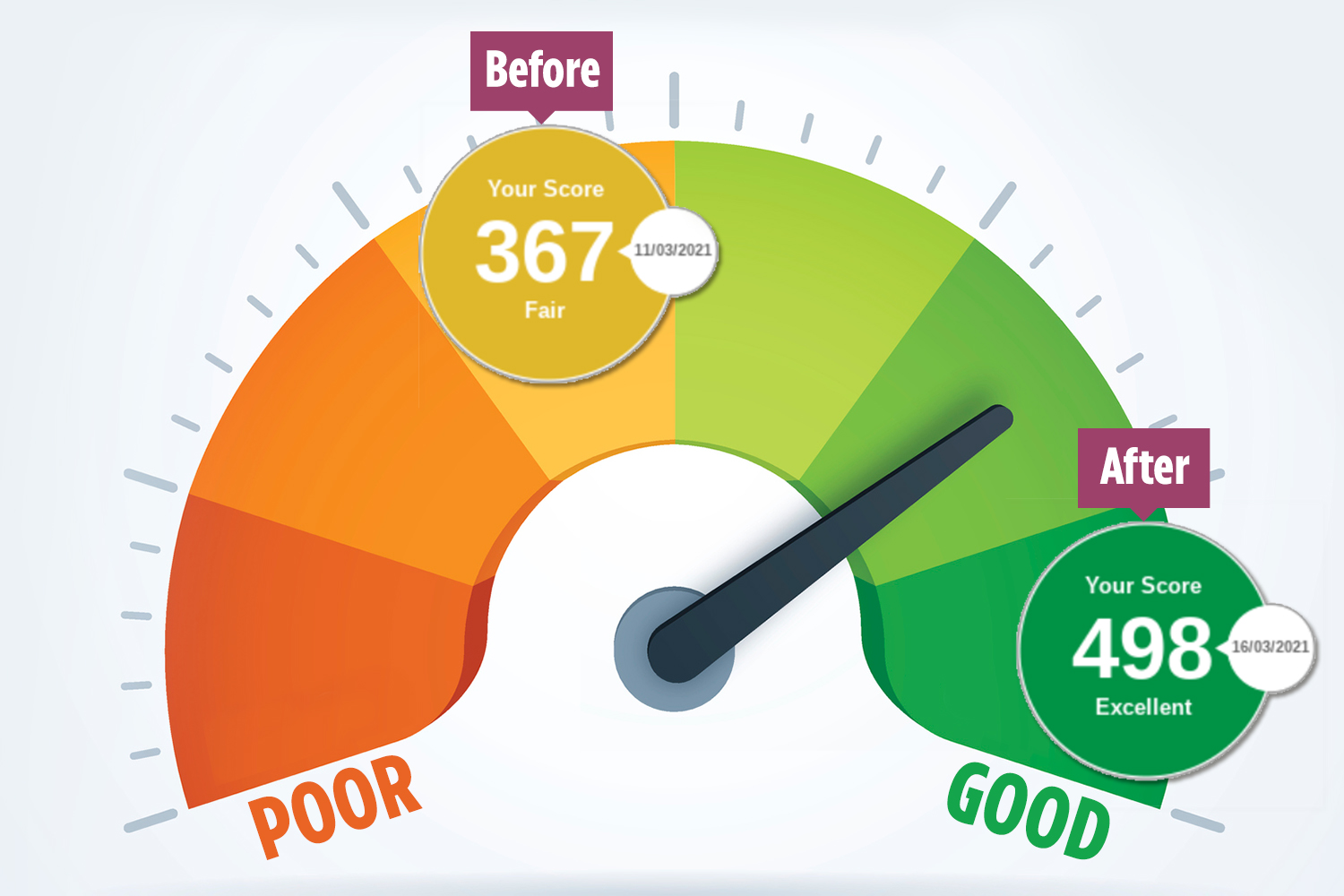
Credit score. A lot of people won’t know what that is let alone how to get one and improve it.

A credit score is a measure of how likely banks and other financial institutions are to give you a loan, credit card or other form of borrowing. This is dicatated by your spending habits which is a reflection of how you run your life.

Just from looking at a person’s bank statements, it’s easy to see where their money goes. This is precisely what lenders do and to determine whether you’re a safe pair of hands or irresponsible.

But how is this calculated?

Well, typically, there are five factors involved:

  1. Payment History (35% of your score) – Here in the UK, there are three main ways to pay bills. You can transfer the money yourself in by cash or card to the payment details given by your creditor; You can set up a Standing Order in which case you have instructed your bank to make a payment on your behalf to the details provided on a given date at a given payment frequency or; You can set up a Direct Debit in which case you have authorised the creditor (company you owe money to) to collect the money straight out of your bank account. Doing the latter ensures more of the company swings towards the company. As long as you have sufficient funds in your account, you’ll never miss a payment. With a Standing Order, it’s best to set it up 2-3 days before the bill is due to ensure payment gets there on time. And if you’re doing it yourself, it’s all on you. Of course, this is the riskier option and more likely to make you miss a payment even with the best memory and reminders. If you get distracted and forget the payment, it’s going to be a mark against you. Generally, in the UK, we go by Direct Debit where possible. That way we can concentrate on other things. But if you’re reliant on transferring money yourself and keep missing payments, these will be reported to the bank and credit rating agencies. Typically, any payments over 30 days will be reported but constantly missing payments across your accounts will see a mark against you on your credit file and lower your score.
  2. Existing Debt (30% of your score) – Lenders will look at the entirety of your credit facility across loans and credit cards. Keeping a good payment history will mean your always bringing your debt down, but if you’re taking on too much debt against your salary and bills, your score will go down. For credit cards, ensuring a total usage of less than 25% across all your cards and credit facilities will make sure your score isn’t affected. Of course, one-off emergencies happen and this should be one of the main functions of the credit facility. Your score will drop a bit but if you’re paying back then you take the hit knowing your score will improve.
  3. Length of Credit History (15% of your score) – Keeping a credit card and using it over a number of years shows lenders you are actually responsible with credit. It may seem counterintuitive at first to apply for a credit card when you don’t need to borrow, but keeping one on you and using it for something small then paying it back straight away shows you can use a credit facility correctly.
  4. Types of Accounts (10% of your score) – A variety of borrowing can improve your score. A mortgage provides a good foundation as that will typically be your main debt for 15-30 years. Add on credit cards and installment loans and you will have sufficient facilites to provide evidence of good, stable borrowing habits.
  5. Recent Credit Activity (10% of your score) – Making two or more credit applications within a six month period (in the UK, at least) will indicate to a lender that you are in desperate situation. Whilst this may not be the case (I applied for three credit facilities within a short period to bump up my overall credit facility to boost my score to improve my ability to get a mortgage since I’m on a house hunt), it will temprorarily drop your score. By spacing out your applications, it will indicate that you are not in financial trouble.

So, why add credit to this blog? Well, money dictates your life. The quicker we accept that, the better. Whilst many think that the idea of borrowing is a bad thing, that’s only the case if you’re poor at handling money. Debt is a financial instrument and allows you to obtain things you either can’t afford outright or would rather spread the cost of via disposable income rather than taking a hit in your savings. For example, if you have £200,000 in the bank, you could buy a house outright but then you’d have a house and no financial cushion because you spent it buying a house so, now, you’re in a tough financial position because you’d have to build your savings back up.

Similarly, most people will take 15-30 years to even set enough aside (if they have the discipline) to be able to buy a house outright. Meanwhile, where are you living whilst waiting to buy a house outright? It’s simply easier to get in a position to be able to borrow from a bank to get a place to live and pay back with interest. This principle applies for other forms of borrowing, however, where a mortgage won’t harm your rating, paying a credit card back outside of your interest free period will as you will be charged for late payments and interest will accumulate on your outstanding balance. So, generally speaking, borrowing is fine to be able to get something you need now but make sure you understand the rules of that borrowing before applying. And never borrow more than you can afford as this will put you in a negative cycle and lead you towards loan sharks and payday lenders when you get into a habit of borrowing to pay off a loan to pay off a credit card that you forgot about for a few months or years. That’s the worst case scenario for poor financial discipline.

So, in summary, the Credit Score is a reflection of how well you handle debt. It’s a tool and nothing to be ashamed of when used responsibily and always within your means. The skill here is learning how to use debt so that you can better control your finances. Do that and you’ll have taken an improtant step in enriching your life.

You Are What You Eat

The foodies equivalent of a one-night stand

Food and drink. This is a fairly major moneysink especially if your breakfast, lunch and dinner is bought in the form of takeaway or ready-made meals. Not only are they more expensive but the amount of processing that goes into these foods is unreal. Yes, we lead busier lives now and it’s far easier to pop into a supermarket and pick up a sandwich for lunch or grab a takeaway for dinner on the way home but, hold on. How much time do you spend waiting in a queue for that sandwich or waiting on your takeaway being made? How much of your lunch hour is spent just getting lunch rather than sitting down and enjoying it? How far out of your way do you have to go?

These questions are worth noting. Again, the main selling point here is convenience. But what exactly is convenient about running around for food when you can take it with you? What’s more convenient than a packed lunch? It’s cost you less, is healthier and you just pull it out your bag or work fridge and eat. You don’t have to waste time deciding what you want. It’s already there. Just enjoy.

Ah, but. What about the social aspect? What about it? Can you really afford to be spending £3-£10 a day on lunch just to hang out with work colleagues? At that price, you’re entering into a private member’s club where the membership benefits are you get to spend time with people who, most likely, won’t want to become actual friends. Are you likely to develop your career from lunch? Maybe, but for most people, no.

Ok, I admit, that might be a bit harsh. We do need to blow off some steam at work but, really, do you have to spend so much of your hard-earned cash doing so?

So, let’s look at these using a 5-day working week, 22-day working month and 260-day working year:

Breakfast – £2 to £10 a day. Weekly – £10 to £50 a week. Monthly – £44 to £220. Annually – £620 to £2,600.

Lunch – £3 to £20 a day. Weekly – £15 to £100. Monthly – £66 to £440. Annually – £780 to £5,200

Dinner – £5 to £30 a day. Weekly- £25 to £150. Monthly – £110 to £660. Annually – £1,300 to £7,800

And if you’re doing all three:

Daily – £10 to £60. Weekly – £50 to 300. Monthly – £220 to £1,320. Annually – £2,600 to £15,600.

Consider those figures. Whether you’re doing just one meal a day, two or three. Just look at the annual cost. I’ll reiterate. Convenience costs. There are areas where paying for convenience makes sense and others where it doesn’t. Food and drink is one for the former. For example, think of how much food you could feed yourself with for the low-end weekly cost of dinner? A single person who can cook can easily make two working months of healthy, nutritious dinners for £25. How? Well, if you have a freezer, you cook a batch and freeze it. If you have a big enough freezer, you make one batch for two, maybe, four weeks

Ah, but. Yes – it does mean you could be eating the same thing for a while but if you can’t really afford takeway dinners, you have little to argue with. Similarly, if you are able to afford takeaway dinners every night, you could be cooking yourself even better food for less.

And ready meals? In the time it takes to heat one of them up in the oven or microwave, you could have cooked something cheaper, tastier and healthier. Italian food is perfect for this as the cuisine is built on the principle of cheap, fresh and few ingredients. Dishes such as carbonara and puttanesca can be done in less than 15 minutes and, if you’re cooking for one, you will have leftovers to put in that freezer that you, hopefully, have.

In addition, by cooking more of your own meals, you will be more in control of your nutrition which, in turn, would provide a number of health benefits when compared to eating overly processed and unnourishing foods. The other benefit of doing this is that you gain a skill and by gaining it, you will keep more money in your pocket the better you get at it.

Building A Better You

Nae juice an’ aw purridge!

Fitness, when coupled with nutrition, is the foundation for a richer, healthier life. You can think more clearly which will lead to better decision-making. The more exercise you do, the better conditioned your muscles, bones and organs will become which will lead to a more capable body thus you will have more energy as your body has become more efficient.

However, fitness doesn’t have to cost anything more than a pair of decent trainers. For those who aren’t all that fit and have been duped into thinking you need a personal trainer, gym membership and specialist clothing – stop! You don’t! Not at the start. The very least you can start doing is walk. Get yourself a decent pair of trainers (under £50) and walk as far as you can until you can’t. Doesn’t matter if that’s 100 metres or 1 mile. Keep going and it will start getting easier. The greatest obstacle you’ll overcome here is yourself. Your mind has been conditioned into a state of deprivation and incapability. Your subconscious tells you you can’t get fit. Every time you go beyond the distance you previously couldn’t, your subconscious will start to change. Instead of sending you discouranging messages, it will send encouraging ones. Eventually, you will believe you can do things.

But if you go and get yourself a gym membership and a personal trainer straight away, the money you’re trying to save will be wasted. All a personal trainer is going to do (for a minimum of £30 an hour) is be your fitness companion. You tell them what you want to achieve, if you can articulate it, and they’ll find some way to make you believe you can achieve it via the longest possible route thus extracting the most money they can from you (most trainers aren’t paid by the gyms they operate in unless they’re with clients) whilst effectively gaslighting you into thinking you’re getting better. In all my years of going to a gym, I haven’t seen one person get fitter, lose fat, get shredded through a trainer. I had one for a year and I didn’t achieve my goal, however, I think I got a more honest trainer that did give me two pieces of information that came true when I put them into practice:

  • Change in diet leads to fat loss more than exercise.
  • It takes years of discipline and commitment for changes to take place naturally, particularly if you’re strength training.

Two years after I stopped using the personal trainer, I put his advice into practice but that was only because I’d managed to break through more layers of negative subconscious messaging. By changing my diet and adhering to the trainer’s advice (less than 2,000 calories per day for 5 days with 2 refill days of up to 3,500 calories), I lost 4 inches off my waist the first year; 2 inches the following year and I’m now losing the excess abdominal fat. I could lose it faster but I’m not an athlete, bodybuilder, powerlifter, etc. I have no need to get ‘shredded’ fast. The fact is, I’ve found what works for me , stuck to it and am now seeing the results.

But, fitness is still important. You can’t achieve a more efficient and healthy body through diet. The two go hand-in-hand. A fitter body will get more nutrients out of the lower calorie (but higher protein content) diet you give it. Think of a car engine. An inefficient engine will work a bit better when given more energy dense fuel. But an efficient engine will work even better on that fuel as it’s capable of getting more from it.

To continue the analogy, you can’t expect an engine to run well on fizzy juice so why do some think their body is fine with a diet of cheap fuel? All you end up doing depriving yourself of better health. When your body starts to improve through fitness, it affects the mind. The body will start telling the mind what it needs and, if you listen, you’ll give it what it needs.

Real food.

Real as in, fresh. Raw meat and vegetables that need to be prepared and cooked into something tasty as well as nutritious. If you’ve developed your cooking, you’ll reap the dividends in the fitness arena. Good health and good food will create a positive cycle which will result in you wanting to just keep getting better, whatever that looks like to you.

And a fitter, healthier body, if maintained, will also mean you go into your twilight years with less chance of significant health risks. For example, too much excess fat and you’re putting your joints under stress for decades which, once your muscle mass starts to decline, your body won’t be able to sustain the extra weight and you’ll end up with arthritis in your joints. By maintaining a good level of fitness (not talking elite athlete levels), you set yourself to being more able to enjoy old age with less health problems.

Does that mean you can’t have a lazy day and a takeaway? Of course not. We’re entitled to downtime and indulgence from time to time. This is about establishing good habits for the immediate and long-term health of your body. And rest and relaxation comes into that hence the refill days I mentioned earlier. I use them in between gym days so I might have a takeaway, eat out or make myself a mountain of food because, over the course of a week, I’m still consuming less calories than if I was eating 2,500 – 3,000 a day. Plus, I like to make sure I walk at least three miles a day so some exercise has been done. Easy to do if you’ve errands to run.

I’ve covered the two main aspects of what we think of when it comes to poverty – Financial and Physical. But we can’t neglect the impact of mental, emotional and spiritual poverty. I’ll cover those in the next part.

Cultural Economic Meander – Subscribed into Poverty: Part 1

The Pampered West. It’s All Champagne, Rolls-Royce’s and Mansions.

When we think of poverty, a lot of the Developed World has been conditioned into thinking of extreme poverty; People in Africa with no clean water, little food and wearing someone else’s unwanted clothes. These are issues we ordinary folk can’t do much to help the situation. If our own governments can’t reduce the political and economic corrption in African nations, why would we fare any better?

What I want to address is the relative poverty that can be found in many Developed Nations.

A large portion of this comes from a lack of financial literacy. In many cases, the only way to understand money is to have either been brought up with it, in which case you’ve been taught by family and social peers, or you entered into the Finance profession, in which case understanding money is your livelihood.

Unless you’re in one of those two categories, most people aren’t going to be utilising their finances effectively. And from that, their lack of understanding leads them to making poor financial choices leading them to becoming more and more impoverished over time.

Over time, either through my own behaviour or those I know, one thing that ensures a person stays poorer is the subscription. Whether it’s magazines, a gym, food delivery, cinema, gaming or streaming services, the subscription, and it’s various forms, can lead you to having much less money over time than if you took that same money and did something else with it, like save for home improvments, a much needed holiday, emergency savings or topping up a pension or investment fund. I know, they sound boring but if you’re reading this and think those things are boring then you’re probably going to be benefit from reading this.

Yes,Sir. You can buy it for less than £20,000. Just don’t tell us how much you earn and we won’t tell you the implications. Fair?

Theft on Wheels

Aside from a house, the biggest financial purchase most people make is a car. Personally, I’ve bought my cars second-hand. From years of watching old-school car programmes, the general consensus when buying a car was to buy used. Why? You get a lot more for your money. Now, to buy a second-hand car you do need to read up on what to look for with the particular model you’re interested in. There are loads of sites (Parkers, What Car, CarWow, etc) which will take you through the general issues that crop up with used versions of a car and give advice on which spec is best to go for and how much you should expect to pay. To do that, you need to figure out how much you’re willing to spend, how many miles you’re covering a year (which dictates fuel type), what body style is going to suit your lifestyle best and what creature comforts are must-have and what ones you can do without.

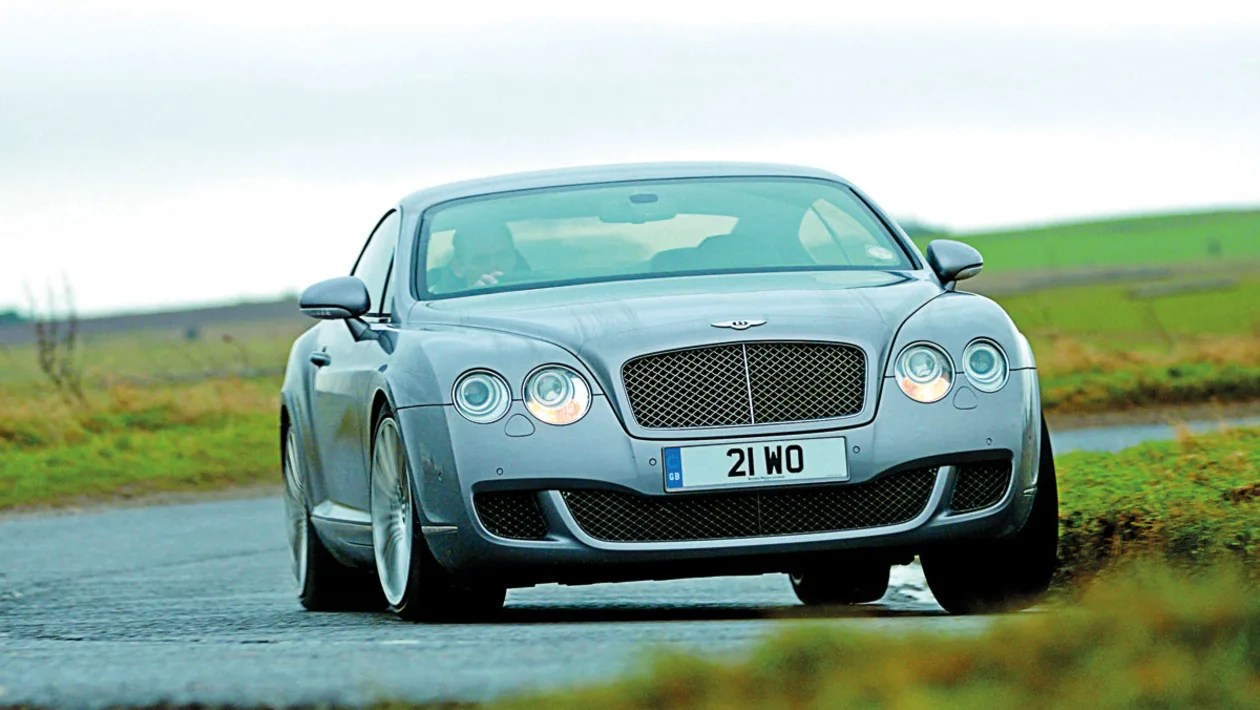
So, if your budget is, say, £20,000 and you earn £40,000 a year, you have a family, like long, frequent road trips, don’t want to be spending too much time at fuel stations and would benefit from heated seats, climate control and Apple Carplay/Android Auto then a 2005 Bentley Continental 6.0 GT for £18,995 with 58,200 miles on the clock is the very wrong choice.

But why, you ask? It’s within budget so why not splash out?

This very scenario was presented to me a few months ago when my dad, who had bought a new Skoda Superb Estate in 2021, was, for some reason, looking at his next car. Now, I consider my dad to fairly savvy when it comes to money but he’s not a car person. I am. And what I told him was that – yes, you can buy a hyper-luxurious car for the price of a Volkswagen Golf, but it keeps its associated running costs. Those stay the same.

So, according to Parkers, Vehicle Excise Duty (Road Tax was abolished 1937 in the UK. All funds go to the General Treasury and not used solely for the upkeep of roads. Just one reason why UK roads are poor compared to other countries.) is £360 and, according to Stratton Motor Company, a 10,000 mile service has a fixed cost of £599. In part, the fairly low price will be because it’ll use Volkswagen parts since Bentley is owned by Volkswagen. And so you’d think, yes, it’s more expensive but not as much as expected.

Tyres – Using an example with 19″ tyres, I found, on blackcircles, the cheapest tyre was £86.09. And you think, yeah, sounds great. Problem with cheap tyres is they won’t last. I bought my Jaguar XF S (3.0 litre V6 diesel) with economy tyres on it. Fuel economy was terrible (struggled to get 400 miles from a tank) and they had all the grip of a wet fish on ice. A set of Falken’s saw me get up to 500 miles but then I swapped the 20″ wheels for 18″ (with Pirelli P Zero tyres. Not great.) and I was getting between 500 and 600 miles on average. Between 600 and 700 miles on a longer run. A remap, and some good modifications along with a set of Bridgestone Eagle Touring (Developed with Jaguar) tyres sees me getting between 600 and 700 miles regularly. I expect to get between 700 and 800 from longer runs next time I go to Europe. And it does all that with a 64 litre fuel tank. The Bentley has a 90 litre tank and an expected range of 316 miles.

But back to tyres. The cheapest tyres are a great way to increase your running costs. On a vehicle like this, a full tank (taking average UK petrol prices at 148.12p per litre), it’ll cost you £133.31 to fill the tank from empty every 316 miles. If you fill up once a month, and most people fill up more regulalry, the fuel bill comes in at £1,600 a year. And that’s on the smallest wheels. You’re likely going to be over £2,000 for 22″ wheels.

Then there’s the consumables. Tyres were briefly covered. In reality, you should get the best tyres for the car. They improve handling, fuel economy and road noise. Sticking with blackcircles, the best rated tyre they offer for the Bentley is the Bridgestone Turanza T005. Rated A for wet handling and B for fuel economy whilst producing 72db road noise making them the third quietest tyre on offer from this site. Price? £221.10 a corner fully fitted. If you drive sensibly, you should ger 28,000 miles for your £884.40. I paid £160 a corner and should get 50-55,000 miles.

Then we have brakes. According to Flying Spares, a set of rear discs and pads will set you back £539.34 inc.VAT. Front discs and pads are £1,443.23 inc.VAT. These are OEM spec parts not third-party. From memory, I think I paid less than £400 front and rear including fitting for the Jag. On average, the brakes and pads could get between 20k and 60k miles depending on driving style.

Wheels – Damage the standard 19″ wheels and a refurb won’t cost too much. Crack them, however, and you need to replace them. Using Flying Spares again, the cheapest new OEM spec 19″ wheel is £592.22. Most expensive is £1,679.99. That’s the price for one wheel. Used, you can get a set from £600 but you’re best getting them checked by a reputable fitter before getting them put in the car.

The Cost of Keeping Up with the Jones’

Already, you can see how much such a vehicle can end up costing on a modest salary. And I haven’t even touched repairs but, believe me, you want a good stack of cash if anything goes wrong with the engine, turbos or gearbox. For the salary mentioned, this kind of car is a lot of stress. I know it seems like an extreme example but I put it in here because it happens. People do drive around in cars that may suit their lifestyle but, ultimately, don’t suit their budget. I have been to poorer parts of Glasgow where the terraced council houses are in serious need of some TLC but, somehow, there’s at least one brand new Mercedes AMG 55, Audi A8 or BMW X7 in a drive. These cars cost more than the house! Now, either they’re doing dodgy maths and buying a cheap house to afford an expensive car or, more likely, they’re getting themselves into serious debt to fund a lifestyle they can’t afford, or they’re involved in some illicit dealings.

Yes, driving an old but seriously cool Bentley is tempting for under £20k but you’d be better off with a diesel estate. If you insist on a bit of prestige, a Mercedes-Benz E-Class estate is an excellent workhorse. If the badge is of no consequence, anything from Ford, Volkswagen, Renault, etc will do.

The point here is that the sticker price is not the only price. Just because you can buy something aspirational for a modest sum doesn’t make it wise to do so. You must look at how much it’s going to cost over the long-term. The simple thing to do is break down the cost over 3, 5, 10 years, etc and see what you’re depriving yourself of. Could you afford a better place to live, better quality food, tuition towards a professional qulaification or maybe take your family away on some more meaningful holidays? Or does a fancy car mean that much you’re willing to sacrifice a better future for the sake of a badge?

Over £200,000! For a Golf! You must be joking! Or…are you?

Leasing is a popular form of accessing vehicles. I’m going to let you in on a little secret. The lease price is actually the depreciation cost. Every car loses value. Some more than others. I’ll give an example:

Volkswagen Golf. The Mark 8 starts from £25,765.00. You can lease a base model 1.5L TSI Life 5dr (Petrol with manual gearbox) from CarWow for £252 a month over a 2-year contract and an annual mileage limit of 8,000 miles. You do get your warranty, dealer service (basic) and Vehicle Excise Duty (£165 a year)included but that’s . Your cost over two years is £6,048. That same model, with 7,844 miles on the clock, can be found used for £20,750 for a 2021 model. PCP on it is £356 a month.

Taking the base price less the contract term price, we get £19,627. However, we must factor in £330 for VED which gives us £19,957. Basic dealer service is £195 (£390 for the contract term) giving us £20,347. The remaining £403 covers warranty, if used. Of course, given that lease companies deal in bulk and manaufacturers won’t charge themselves these prices for servicing and warranty, the only true fixed cost here is VED.

The point here is that leasing is the practice of literally handing money over to a company that owns the vehicle. Your monthly payment compensates the lease company for the depreciation and your deposit is payment for the privilege of using the vehicle. Do that over ten years and you’ll have spent £5,000 in deposits and, if you keep the same monthly payment value, £30,240. £35,240 spent to not own a vehicle. And that’s a cheap family car. Plus, you still have to pay for fuel, MOT, insurance and any repairs outside of warranty. Do you see the problem?

With some research, you can get a far better second-hand vehicle for less and actually save money. Plus, because it’s yours, you can sell it and recoup some of your costs back. I spent £15,000 on my 2012 Jaguar in 2017. It’s running costs aren’t much more than my previous car, a 2003 BMW 320D which had similiar costs to an equivalent Ford Mondeo, and it’s currently worth half that in stock trim. But beacuse it’s mine and I will be its last owner, I made some tasteful and worthwhile changes to not only improve its looks and performance but fuel economy too. Those changes will give it a second-hand value of £10-12k. In addition, I have a good relationship with an independent Jaguar garage who takes care of the bulk of the car’s needs. As far as actual repairs have gone, I’ve bought a used set of 18″ alloys to replace my 20″ because there was a crack in the rear left one. But, because the car was mine, I sold the wheels and made a profit because they came with the car and sold them for more than I bought the used wheels for which was £550 against selling my other wheels for £700.

Other than that, the oil sump failed causing oil to leak. Cost was £140. Not an issue with the car, but I had the winscreen replaced twice! Done through insurance, the cost to me was £100 a time. The parking brake fuse had corroded and needed replaced which cost me £200. A height sensor failed sticking the car in Sport mode. Another £200. And, most recently, the intercooler failed causing the car to go into ‘Restricted Performance’ mode. Cost of the replacement intercooler and fitting was £400. That went ‘bang’ too so another was fitted at no cost. So far, it’s working.

Currently, in over five and a half years of ownership, I’ve spent £1,140 in actual repairs for things that have actually gone wrong.

After four years of ownership, I felt the car had proved itself so, because I like to make things my own, I set about making the car a bit more personal. Not everyone wants to do that but not being stuck in a lease deal means I have the option and freedom to do just that.

And the best part of buying instead of leasing? Whether you buy the car with cash outright or through finance, once bought, you only have to pay for maintenance and repair. If you keep leasing, you keep paying full price. Sure, the selling point a lot of these companies make is that you don’t have to worry about the hassle of selling the car afterwards. Simply return it to the lease company who’ll sell it at no loss to them because you’ve paid the depreciation. They’ll continue to be in the money. You won’t.

Just to pad the Golf example out, let’s say you kept leasing a Golf from 17 (age you can get a licence in the UK) through to your death at, let’s say, 90. If you were able to pay £252 a month for 73 years, you’d have spent £220,752 on leasing an average family car. That’s a well specced Bentley Continental GT. Or an average family house. And, don’t forget, you have to pay insurance, fuel and non-warranty repairs. Alternatively, you spend, say, up to £20,000 on a good used car, run it for 20 years or so which is perfectly feasible if well maintained and not driven stupidly. By the time you’re 90 you’d be on your fifth car and would have spent, at most, £80,000 but extracted maximum use out of each vehicle. If you buy carefully, you might have ended up with a classic or two and been able to sell them for more than they were bought for. Again, the point here is you can get some money back. It might be a few hundred pounds a time or you might get lucky and turn a profit. But you shouldn’t buy a car looking to make money. It’s about utility, mobility and freedom. And enjoyment.

This has taken up a blog post all on its own so, I will make a second part to go over other areas.

Techno-Ethical Meander: God Creates Man, Man Kills God, Man Creates God.

Artificial Intelligence. If there were ever two words uttered that could strike a cold, deep fear into humanity those two would be second on a list of two. The other pair being Nuclear War.

Consequently, the two sets of doom-laden pairs seem to be fatally intertwined. If you pay attention to science fiction, that is. Total Recall gave us false memory impants and mutants born of pollution and radiation; Terminator had Skynet declare humanity unfit to live and therefore declared nuclear war against it. To clean up the remnants, the terrifying A.I. created humanoid killing machines to track down the survivors; Judge Dredd gave us megacities designed to protect humanity after a nuclear war engineered by President Booth who later deregulated A.I. to allow for the creation of smarter robots to create another war against his own Judges.

The Matrix showed us how we’d lose our fight against the Machines thanks to our inventing of A.I and how we’d all end up their equivalent of batteries to keep them charged whilst our minds are distracted by an A.I. simulation of the former real world.

The short story, I Have No Mouth and I Must Scream, by Harlan Ellison, tells of an Allied Mastercomputer that takes control of a future Cold War by assuming responsibility of all weapons leading to mass genocide that almost wipes out humanity.

Other stories, while they don’t directly link A.I. and Nuclear War, hint at the relationship. Interstellar, the Avatar films, Dune, 1984, Brave New World and the Alien films to name a few. They all come to the same inevitable conclusion. Either A.I. will result in a nuclear event that wipes out humanity or it will somehow be involved in a nuclear event that wipes humanity out.

In many ways, such dystopian visions of the future have become more prevalent with the large-scale removal of religion in most of the developed world. We’ve replaced faith with science and technology. Trust with facts. Hope with authoritarian projections. We are largely Godless now in the West. Is it such a stretch to think we’d convert to the religion of A.I. if it became Godlike? Without a deity to put our faith in, we have no teachings to help guide us into a future that can be more fulfilling for ourselves. We just have the word of other humans who don’t always have humanity’s best intentions at heart. Without faith, we are left with fear and with fear, we move into the realm of the uncertain. If we spend too long with uncertainty, we become depressed before developing resentment towards those we believe responsible. Faith is the key component of applying structure to uncertainty.

It’s a bleak outlook, such is the nature of dystopian storytelling. But what about current day A.I.?

In truth, current forms of Artificial Intelligence are far from those that instill a sense of existential dread. The only thing artifical about them is that they’re intelligent. A.I. requires data, a lot of data, before it can start to do anything. Data Pools, Data Lakes, Big Data, it’ll use it all. Essentially, it’s a massive bookworm. Give it plenty to read then ask it questions it can relate to using what it’s read to give you an answer. It might not be right but, at the least, it could be humorous or, more likely, frustrating. If it’s starved of information, it’s useless. What we call A.I. is nothing more than an active program that has access to a lot of data. However, it can organise that data to match the context of the question asked of it so there is something intelligent about that. Isn’t there?

No. Unfortunately, the code built into A.I. assistants is given a series of shortcut prompts based on the most likely questions it’ll be asked. It’s then programmed on how to answer those questions. At present, we have nothing more than a lot of humans doing all the thinking then having that masquerade as A.I.

Ah, but wait! How come my Alexa/Siri/Google smart device couldn’t understand my accent when I asked for the latest Taylor Swift album, I hear you ask? Well, some poor bugger (or a team of poor buggers) have to sit and listen to every request that Alexa didn’t understand. This will be detailed in an error log then fed back to Amazon, Apple, Google, etc where the aforementiond poor buggers have to listen to every request that wasn’t executed. Once deciphered, the correct entries are entered against that individual request so when you next ask for something whilst a bit inebriated, the A.I. assistant will know what you asked for and play it. It’s smart humans making all this work.

But what about Tesla’s Autopilot?

Whilst the code is extremely advanced, the template for the system’s responses is based on how human drivers operate. At present, the system is Level 2 autonomous (Level 5 puts us into full self-driving territory) so it can assist with long distance drives but still requires human supervision for the more complex tasks. It’s not unlike aviation autopilot (invented in 1912 by Sperry Corporation) where that takes over once the plane is at cruising altitude and speed therefore freeing the pilot and co-pilot to do more important tasks like figure out how to avoid a flock of geese.

Use of autopilot as a sort of A.I. assist is pretty simple. Once the pilot gets the plane at the right altitude, heading and speed, the autopilot maintaines what the pilot’s already done. Driving is very different. Far more complex and far more factors and nuances to account for.

But A.I. should highlight the wondrous complexity of the human brain. A person of average intelligence can be taught to operate a car then be allowed to use one autonomously whenver they like. The brain just does it once the information has been consciously processed then passed to the subconscious the stored in the memory. Most people can be taught a complex skill like driving within 24 hours yet we have spent years developing systems that will allow a car to essentially drive itself.

But why? Why bother with A.I.? Who asked for it? It seems we all did.

Technology has been an inherent part of the human experience ever since we learned to rub two bits of flint/wood together and make a fire. Then we used animals to catch other animals. Then we made weapons to better kill the animals the other animals caught. Then we used bigger animals to cover distances faster or move heavy things then we ditched animals and built machines to do the heavy work we couldn’t.

It’s all been the same pattern. Improve and replace. Accountants were up in arms with fear when Microsoft introduced Excel. They thought their jobs were going to be replaced by a spreadsheet. Of course, in reality, that didn’t happen but what did happen was the more time consuming parts of accountancy, the calculations, were largely taken by Excel freeing the accountants up to do more.

So, they were right. Their jobs were being taken by the software. Just the boring parts.

And that’s what we do with each new tool. We make it because it increases efficency and improves productivity whilst reducing the workload allocated to menial, time-consuming tasks. Where I would wash the dishes when I lived with my parents, my younger brother has to load a dishwasher and switch it on to wash overnight.

A.I. is simply a tool. ChatGPT has been doing the rounds recently and with it, a fair bit of scaremongering. On the one hand, it could be trained to give therapy whilst, on the other, it could be used to filter language perceived to be offensive.

An A.I. chatbot like ChatGPT has great potential. It could be used to offer suggestions when a person is alone and needs help. It may be able to search for help if someone is in trouble and unable to speak, assuming there’s signal and the person has access to the device running the app. I’ve seen A.I. programs realise certain what-if scenarios such as ‘What if Lord of the Rings was made as an 80’s dark fantasy film?’. Text-to-image A.I., like Midjourney, does just that. You can see an example of the output below:

A.I. can be used with a desire for good. But through you, it can wield an evil power.

If you’ve watched the above video, or even just a bit of it, you can see what happens with a fairly simple but well articulated prompt. The system has referenced the books, films and the aesthetics of dark fantasy films from the 1980’s to give us a glimpse of what could have been if the films were made when fantasy was at its peak. The fact that it’s been able to create exactly what most people would think of is astounding. For humans to do that, you’d need highly creative and skilled artists to draw, paint or sculpt what this A.I. could do. Does that mean that we’ll be getting an 80’s style dark fantasy version of Lord of the Rings soon? Not really. Making a film is extremely complex and the foundation of any film is the script which means writing. And literary A.I. is far from convincing because it’s doing the same thing. It’s accessing existing material to then create a story in accordance to the prompt it’s been given. It just doesn’t understand language and story well enough yet. And it doesn’t have imagination or the ability to refer to its own experiences to create a relateable narrative.

So, if an A.I. can create a fantasy nerd’s wet dream then what else can it do? A lot.

According to this tutorial site, A.I. is expected to have a heavy impact in 18 industry sectors this year. From harvesting crops to checking a car’s build quality to detecting fraud, A.I. is being pushed to do a lot of work this year and in the next few.

Now, where Excel caused accountants everywhere to go all skittish over being replaced, there is now a very real chance a huge amount of people will be left without a job because A.I. can do it better, faster and cheaper.

And what will happen to the people that have been replaced?

According to the World Economic Forum’s (Apply all the pinches of salt you need) “The Future of Jobs Report 2020”, it’s estimated that 85million jobs will be replaced but 97 million new jobs will be created by 2025. By that estimation, all the people that are replaced by A.I. will have a new job to go to. Maybe becoming a human supervisor for the A.I. that’s now doing their job.

That’s certainly one avenue but as this article rightly points out, there will always be a need for human input to improve the technology. Humans created it therefore humans improve it. We’re a long way off from creating a technology that can think for itself and make a plan on how to improve itself. This isn’t even at baby stage. We’re at the cell clustering stage. Right now, what we have is very sophisticated code that runs a lot of laborious tasks. That’s it.

But what about in several decades or centuries? The real problem there is that we may very well have made something that could threaten us. Or put us in our place. Like the gods of old, we may well create something so transcendent that its judgement of us is without question. And then what? We make the myths anew? Super strength, speed, agility, healing, intellect, etc, we could well end up with new versions of Hercules, Athena, Isis, Thor, Zeues, Achilles, Medusa, etc. Gorgons, Titans, Gods and Demigods could end up stalking the Earth waging war with each other. Seems far fetched but a century ago we were pulling things by horse and steam engine. Now, we have huge supply ships, cargo planes, trucks, lorries and electric vans delivering things all over the world. If you went back to the 1920’s with a Lockheed C-5 Galaxy or Airbus A600 Beluga, I don’t think it would be an overestimation that people might react like it’s a god or demon of some kind. New technology will always put fear into those yet to understand. If you’re keeping track, you just roll with it.

And if we did end up with sentient artificial beings, we could find ourselves at their mercy. If they deem us worthless, we could be removed from this Earth. If they develop a God complex, they may demand we bow before their magnificence and superiority to ensure our survival. A whole new new form of religion could be created dedicated to appeasing these new Gods at the expense of our own freedom. Whilst such scenarios could be some way off, it’s worth keeping in mind.

The question just now isn’t so much, “Will A.I. kill us all?” but, more pertinently, “Will A.I. be used by organisations for sinister purposes?”. Looking at what’s been coming out after the COVID-19 pandemic, A.I. is certainly being used to accelerate certain organisational goals. As A.I. advances, those organisations will be able to more fully realise any agendas they want being realised. The Chinese Social Credit Scoring system is on its way here in Europe; Smart Speakers always listen and not just to your music requests; Deepfake technology seamlessly makes one person look and sound like another; 3D body scanners take complete scans of your body at the airport. Throw in a good bit of Deepfake and, according to a camera, you could be the suspect of a serious crime; Smart monitors that allow communication throughout a house could be hacked allowing kidnappers and paedophiles access to your child; Neuralink, Elon Musk’s brain-computer interface, whilst initially being developed to help restore sensory and motor functions, could also be hacked/monitored maybe to the point where our own thoughts are no longer private. Or worse, you could be physically or mentally punished for having certain thoughts so you become conditioned into complying with whatever behaviour these organisations deem appropriate.

Without God, as fictional as such an entity may be, certain men are making it their business to take His place since we so readily lost faith.

Do not question why the tool exists. Instead, question the motives of those who created it and why they’re the ones wielding it.

Musical Meander: The Great Vinyl Comeback

For 2022, several sources have confirmed that vinyl had its strongest year after 15 years of coming back on the market. It’s been such a strong year for growth that in markets like the U.S. and UK, the format outsold the CD for the first time in 30 and 35 years respectively. But why might this be considering streaming has been the defacto medium for the last few years?

There are many reasons why the record has been making such a healthy return to popularity. I can’t speak for everyone, so I’ll go through my reasons for picking up the format as I seriously considered buying music again in 2021.

I had been an avid music buyer since the early 2000’s, buying CD’s then ripping them to my PC so I could listen to my music on my CD player then hi-fi then on the go through my MP3 player and, finally, my iPod. My ritual, by the time I went to university in 2005, was always to listen to the CD first before ripping it to my iPod. Rarely, did I listen to the CD after that since it was on my PC’s hard drive. Even in my first car, a 1999 Nissan Micra, I had burned copies of albums that stayed in the car so I didn’t lose or damage my bought copy. And yet, despite rarely listening to the actual disc, I kept buying CD’s. They were cheap, easy to transport and store and, at the time, allowed me to explore music with decent sound quality but only after tweaking the setups on all my devices.

I continued to buy CD’s right through to 2018 where my final CD was the debut album of Japanese Power Metal band, Lovebites. By that time, I was moving again from Edinburgh to my home city of Glasgow and I realised that the 12 boxes of CD’s I rarely listened to were simply dead weight. I had amassed a collection somewhere between 300 and 500 albums over at least 20 years, yet barely listened to the actual disc the music was contained on. Finally admitting this to myself, I sold all bar a few choice items before the end of the year and missed nothing. I had been using a streaming service and could listen to everything I’d ever owned before right from my mobile phone. On top of that, I can make playlists for various occasions, the biggest being a roadtrip playlist over 36 hours long. If I were to buy each track on that playlist, I’d be a few hundred pounds short so the streaming service offers a relatively low-cost method of listening to music I’m happy to listen to once in a while but perhaps wouldn’t want to own.

Indeed, I enjoy the flexibility streaming provides over CD. In my current car, I retrofitted Android Auto in 2021 with an IDCORE unit so I could not only improve functionality in my vehicle but give the sound system a boost as well since IDCORE are, first and foremost, music experts. And it’s been great not having to mess with my phone to sort out music and podcasts when I can manage it all on the car’s infotainment screen.

It was around that time that I realised my love of owning music hadn’t gone away. I now owned a piece of hardware that seriously enhanced my listening experience whilst travelling, but what about at home?

Unfortunately, streaming at home didn’t see me enjoy music as much. The live scene’s sound had improved over the last few years meaning a distinct reduction in distortion meaning little to no tinnitus after a gig. I had been able to enjoy hearing the individual instruments on stage for some time and wanted that kind of experience at home. With streaming and CD, there’s just too much compression. I don’t care how many alleged ‘lossless’ formats there are, they all cannot match the live experience. But there was one format I’d never tried. Vinyl.

And who better to get me buying music again and, therefore, vinyl but Iron Maiden. One of my favourite bands had announced their post-lockdown album, Senjutsu, and I was really excited. So excited that I had decided to pre-order the red and black marble record. One problem. I had no record player.

Another problem. I didn’t know where to begin with record players since I never grew up with one. My grandparents got rid of theirs before I was born and I remember my parents having a turntable as part of a hifi system but it was barely used. Similarly, a record player I bought for my dad years ago highlighted my lack of knowledge with the medium. It was a 1 by One all-in-one record player. Automatic movement with USB connection. I paid £50 for it new. Absolute crap. The sound was so thin and frail, you’d think you were hearing music being pushed through a tin can. If that was your first vinyl experience, you wouldn’t want to hear it again. No, I needed to do some serious research into what made a record sing, so to speak.

Whilst conducting that research, I kept buying records. I was in a new job earning very good money and so had the disposable income such a hobby required, since I also noted that this hobby would not be cheap when it came to sourcing albums by favourite bands that had either seldom seen a reissue or had never been reissued. So, I kept researching what made a good vinyl setup before giving myself a budget to work with. All the while, I kept amassing a record collection with nothing to use them on.

Since buying my first record in September 2021, it wasn’t until February 2022 that I finally bought my setup. I had also bought 52 records before doing this. You could say it’s a chicken and egg situation. I could have bought the setup first but would then have to buy records to listen to, meanwhile, I’d be cycling through the same records over and over whilst waiting on getting the next record. At least with the way I did it, I had a good selection ready to go. The setup itself consists of a Pro-Ject Primary-E turntable hooked up to a Cambridge Audio AXA35 amp hooked up to Wharfedale Diamond 9.0 speakers. A decent setup for a first-timer.

The question that had been in the back of my head in the run-up to getting the equipment was – “What if it sounded terrible?”. I could just picture myself getting all excited to finally being able to listen to a record only to find it just didn’t sound as expected. That was the worry.

A worry, whilst justified, ended up being erased swiftly and definitively as I thought I’d test the system with two records initially. Not with the first record I bought, but Iron Maiden’s 2006 masterpiece, A Matter of Life and Death. Still, I think, the bands most musically accomplished album, and one I know inside out. It would allow my ear to find any difference between the 2015 remaster put on vinyl versus the CD and streaming versions I’d been listening to since the album came out.

Well…my God! I was blown away. Hairs were raised and I was having the kind of low-grade euphoria found in ASMR. I couldn’t believe what I was hearing. I didn’t have the volume turned up particularly high but it carried its way through my flat (92sqm) like a knife through butter. My flatmate had to ask me to turn it down. That never happened with digital.

But it’s not a loudness thing. It’s a flow thing. When I have music playing on my PC and move to the kitchen, I hear muffled distortion. The flat itself is in a 19th century building so there’s easily 3ft of stone between rooms alongside insulation and plaster when it was redeveloped into flats. With vinyl, the music just sounds further away. It’s like walking away from a conversation to go make a cup of tea. I can still hear what’s being said when I’m 10-20 metres away. The conversation doesn’t get all warped. That’ was the first difference I noticed.

The second came when I put on Fleetwood Mac’s Rumours. I actually found myself sitting just listening to the music as it took me back to the 70’s when it was created, such was the clarity. I could actually see the band in my head record the album as it played. Never before has that happened.

Third thing I noticed came when playing Nightwish’s Imaginaerum. Depth. Heaps of it. The sound is just so immersive, you feel that it’s happening around you rather than being pointed directly at you like with digital compression. Music just pours out the speakers and fills up the room. I can hold a conversation with my flatmate in person or with colleagues over Teams and I can hear everything just fine at the set volume of 30db.

Other things my ear picks up are differences in production. Older records (pre-1990) tend to have much more open sound compared to much of the records made in the 21st Century. This is, in part, down to the the fact that those older records were using analogue recording equipment whilst nowadays it’s almost exclusively digital. Which begs another question – Why listen to modern records at all when they’re recorded digitally?

To answer that much better than I can, I recommend reading this article from Aesthetics for Birds. My takeaway from it is that digital and analog processes occur at some point suring the recording process so, in fact, the manner with which a record was made doesn’t have as much bearing on the listening experience as what the listener chooses to listen to the recording on. Interestingly, the article mentions that the ‘warmth’ associated with vinyl occurs due to the equipment adding additional harmonics or ‘overtones’ that weren’t there during the original recording resulting in the finished product, in many cases, sounding better than the artist/band intended.

That ‘warmth’ is what I referred to as ‘flow’, but I’d also state it’s about projection. Any good actor will tell you there’s a fine line between projecting and shouting. The end result is the same. Their voice fills the room, however, the response from the audience is different. Projection doesn’t irritate the ear and turn off the audience from what the actor is communicating. It encourages engagement and attention. Shouting creates an unpleasant distortion which, in the context of a listening or audio-visual experience, makes the audience uncomfortable. I have found that this effect is more prevalent with digital as the loudness of the recording can be increased.

But why raise the volume when that will only create further distortion? The answer is simple. Most listeners of music are casual/passive participants. Relatively few genuinely care about the music itself and really only want a distraction. Turn up the volume and the bass and you have a distraction. People will do this so they don’t have to pay attention to their commute or the people their with. As a whisky appreciator, there’s an overlap with music. I’m a member of the Scotch Malt Whisky Society and when I go to appreciate a dram at the rooms on Bath Street in Glasgow, the music is not loud. It’s well projected. You can appreciate the music, the whisky and the company you’re in simultaneously. And this is down to the intention of everyone involved. We are there to appreciate the quality of what’s been produced and the quality of the people we’re with. If we move over to any regular bar or pub, you do not see people sitting having good conversation whilst appreciating a good drink. You see people shouting at each other in a noisy establishment drinking cheap booze sold at high prices with the express purpose of making high profits. The intent of the people who go to these loud places is not to engage with other people on any meaningful level. It’s to get wasted and use that inebriated state as an excuse to behave poorly then refer to that time as ‘good’ because they got heavily intoxicated together and spent a lot of money doing so. The loud music is just a soundtrack to their choices.

A bit of a diversion but, for anyone that reads my articles regularly, it’s par for the course. The point I’m making is that the medium chosen to listen to music all comes down to the type of person. It can simply be down to appreciators and non-appreciators. Non-appreciators will not want to connect with the music in any real way but rather exploit it for their own purposes. An appreciator will make the time and effort to ensure they get as much from the experience as possible. That means spending good money (whatever that means to the individual) on equipment and ensuring it’s placed well enough to maximise the listening enjoyment because, as the article also stated, the equipment itself and its positioning have a major impact on the end result. For me, a record is one-off payment to a lifetime ticket to a specific music event. I can attend whenever I want, but I must attend to make the most of it.

I also want to draw attention to the atmospherics and sub-sonic sounds that are removed in digital formats. This makes the format easier to distribute over the web but, to my ears, reduces the overall experience. Yes, you can tweak settings on the streaming app, mobile device and earphones to get a setup that works well but you can’t completely replace that which was taken out. From my own experience, I don’t get that eerie sense of realism with digital formats that I do with vinyl. How do digital afficionados explain vinyl giving the impression of having the artist there in the room with you? Two of my favourite albums to write to are Leonard Cohen’s You Want It Darker and David Bowie’s Blackstar. Both albums with a sadly tragic commonality. They were the last albums released shortly before their deaths. I have listened to both albums quite religiously as part of my writing sessions at home on my desktop PC and both haunt me. When I eventually got them both on record, the haunting became real, particularly with Cohen given his style being more reading poetry to music. It felt like he was right behind me, cigarette in hand, just casually speaking to me from beyond the grave. Digital does not do that simply because it’s a lossy format and takes out a lot that of things lower down the frequency range that are actually important to the listening experience. Again, to the casual listener, this doesn’t matter when all you want is loud and bass-ridden music. I go back to my whisky analogy with the process of chill-filtration. This is the process by which distillers will intentionally remove a lot of the fats and oils that give whisky its flavour by bringing the spirit down to below zero then forcing it through a series of fine filters to get rid of those oils. The end result is a product devoid of the flavour it once had. And why do this especially since the spirit spends many years in oak casks? The casual consumer doesn’t understand that a bit of haze at room temperature is fine and just part of the natural process as the oils from the wood warm up and release from the alcohol. But instead of educating the consumer on this, distilleries spend millions getting rid of the flavour that’s taken years to get there. The same goes for music. A band or artist can spend years working on an album only for much of its depth, detail and richness to be removed for the sake of creating a sanitised product that can be fed to the masses that don’t give a damn in the first place. Yes, you can create consistency this way and that’s only important when all you’re interested in is ensuring money comes in.

Not that money isn’t important but musicians are, typically, in the business of making music first and, if they’re good, they can make money from it. Sometimes, if they’re really good and lucky, they can make a lot. We can say the same for any creative endeavour. The creator wants their creation to go out unfiltered, raw and authentic to what their vision intended. Its the industry they work in that applies the filters. Sometimes, for good reason, like keeping the artist on track and not veering too far off to the point that the output is incoherent and sometiems, for bad reasons, like restraining the creator so much that the output is nothing like the intention.

So, we could argue that the vinyl comeback is a product of an increasing number of people who no longer tolerate being spoon-fed sanitised produce. In much the same way that gourmet food and artisanal drinks are increasing in popularity here in the UK, it seems that music is getting the same treatment with people demanding a better experience at home. And they’ll pay for it. We’re here for a short time and people are becoming increasingly aware of that fact, so why waste your money on McDonald’s when you can support a local or national burger place that uses real food and is better for you? Do it less and you enjoy it more.

For me, I want the music, the whole music and nothing but the music. As intended. Bootleg quality or a production that could turn my room into a concert hall. I don’t care. I want my music as it was laid down by the people that made it at that point in time. I never knew that The Man Comes Around by Johnny Cash had a piano playing throughout. I never heard it on CD or streaming yet vinyl makes it clear just like it makes clear that Till Lindemann counts himself in on Stein Um Stein from Rammstein’s fourth album, Reise, Reise. These are things that just enhance the whole listening experience because they were present at time of recording.

But that experience comes at a cost and it is higher than digital. My setup is considered a beginners setup but it cost me about £600 all in. For that, you can get a high-end digital setup and have an excellent experience. If your budget won’t go that far, a bit of patience and careful research will let you get a good starter setup for less than half what I paid new. What this tells me is that the potential of vinyl scales much higher than digital. And I think the reason why is quite simple. It’s real. You have a recording of real people using real instruments which has been stored in real time then printed on to a real item and is then fed back using real items especially if you use an analogue amplifier. It is not a reconstruction or interpretation of what happened in the recording studio. It’s just the music with a bit of cleaning up done during mastering.

But it’s not all plain sailing once you get a decent setup. This can get serious with serious money attached to it. If, like me, you are a fan of niche or cult bands, getting a hold of some records can become expensive. The key here is patience and knowing when to act on the impulse to buy. This is a hobby and should remain so. Always set aside a budger realistic to you. If you lack a high level of disposable income, carefully consider whether moving to vinyl is an appropriate move for you. I have spent a few thousand pounds on records because my income allows it, however, had I been earning less, I would have restained myself on just what to buy and when because my finances dictate what I get to do, how often and to what extent. Currently, I’m looking for another job as my previous contract ended much earlier than expected, so I won’t be buying new records though I have a few on order that will get to me in good time. Meanwhile, I have plenty to enjoy. However, it does mean I may pick up a few cheaper second-hand records from local record shops.

One common complaint of vinyl is the crackle, pops and knocking you hear. This is simply a lack of understanding. You are dealing with a physical item which has grooves in it. Teeny, tiny little trenches where debris, dirt and dust can get stuck. This will get gathered by the stylus and degrade the sound coming from the record. A lot of people don’t know that, surprisingly. All you have to do is clean the record. I use anti-static fluid that I spray on to a newly purchased record being listened to for the first time. I then use a wide velvet brush to clean the record then a fine bristle brush to clean the velvet one. I do this regardless of whether it’s brand new or just new to me as there’s no guarantee the record will be clean when posted or bought from a shop. Records borrowed from my parents have sat in storage for over 30 years. Many have had to be cleaned 3-5 times per side to stop the stylus jumping and for the true sound to come out. It’s a relatively small amount of effort to ensure a clean sound. Once done, I doubt the record will need cleaned for some months as they are properly stored.

Storage is another complaint. Yes, you have to store them and correctly. I store my records like I store my whisky. In a cool, dark, dry place. Vinyl, like whisky, does not like changes in temperature or moisture. It needs a consistently low temperature and low humidity out of direct sunlight. But, if you have the space, a record collection can be a wonderful thing to look at. Visitors can trawl through your collection and it can let them connect a bit more with you as your music preferences can tell things about you that you may not strictly express. Depending on how open you are, this can be a good or bad thing.

As well as having part of yourself on display, the records themselves now come in particularly attractive finishes. Coloured vinyl, whilst I don’t think it has any impact on the quality of sound, does add a nice aesthetic enhancement. A marble, split-colour, splatter, swirl or solid colour does make for a nice visual especially the splatter and swirl patterns when they’re spinning round.

It’s not that I dislike digital. It has its place, but I think its prevalence in the West is a reflection of our increasing disconnect with each other. We all want to connect again especially after lockdown. Gigs have felt different. People are a bit friendlier and kinder. I think we’ve realised what we’ve missed out on and if vinyl helps us connect better with our world and the people that exist in it, I’m happy to continue participating.

Environmental Meander: What’s In a Barrel of Oil?

There are plenty of infographics that will tell you just what comes out of a barrel of crude oil. And I am going to base this article on one of those since the information is largely the same across the board. But what I want to do with this article is highlight just how intertwined with oil modern life is and how difficult it’s likely to be to wean ourselves of the sticky, thick black stuff.

For reference, the article I’m using is from the Visual Capitalist (Conte, Niccolo; Sep 14, 2021) and can be found here: https://www.visualcapitalist.com/whats-made-barrel-of-oil/

In the oil industry, a barrel is the standard unit of measurement used when it comes, not only to the buying and selling of oil, but from the standard size of the barrel used to contain and trnasport oil that’s been dug out the ground. The capacity of a barrel is 42 gallons (190.9 litres).

From that, I’ll get the big one out the way. Petrol/Gasoline comprises of 42.7% of the output (17.9 gallons/81.37 litres) and that’s used to largely power private vehicles of which there are roughly 1.5billion worldwide. Of that, 78% (Statista – https://www.statista.com/statistics/827460/global-car-sales-by-fuel-technology/) are powered by petrol.

Next, diesel. 27.4% (11.5 gallons/52.31 litres) . This is the fuel of industry and goes to power trucks, lorries, diggers, mining equipement, back-up generators, etc. For private vehicles, 14% use diesel.

Aviation uses 5.8% (2.44 gallons/11.07 litres) of the content of a barrel of oil in the creation of jet fuel of which there are three mains types:

  • Jet A is primarily used in the United States. This fuel is developed to be heavier with a higher flash point and freezing point than standard kerosene.
  • Jet A1 is the most used jet fuel worldwide. Jet A1 has a lower freezing point (-47° C) than Jet A (-40° C) so it is especially suitable for international travel through varying climates. This type of fuel also contains static dissipater additives that decrease static charges that form during movement. Despite the differences between Jet A and Jet A1, flight operators use both fuels interchangeably.
  • Jet B is the most common alternative to the jet fuel and AVGAS, primarily used in civil aviation. Jet B has a uniquely low freezing point of -76° C, making it useful in extremely cold areas.

(Source – National Aviation Academy: https://www.naa.edu/aviation-fuel/)

After aviation, Heavy Fuel takes 5% of the barrel (2.1 gallons/9.54 litres). This is a much cheaper fuel as it’s less refined and therefore thicker compared to the previously mentioned fuels. As a result of being less refined, it emits more black carbon than the other fuels when burned. This is the fuel of choice for the shipping industry.

So, 80.9% of the barrel is used for fuelling vehicles that are vital to our everyday lives. But what about the remaining 19.1%?

Well, 4% (1.68 gallons/7.64 litres) goes into the very thing that land vehicles and aircraft need to move around effectively. Asphalt. Or, as we call it here in the UK, bitumen. It’s the sticky black glue that holds the rock/sand combo together that creates roads, runways, pavements, car parks and even tennis courts.

Moving down, we get to Light Fuel which takes up 3% of the barrel (1.26 gallons/5.73 litres). This sulfur-free oil is used in places where low levels of pollution is acceptable i.e. indoors powering heaters, powering farm and mining equipment, providing back-up power to nuclear power plants. Given these uses, it works in Arctic weather and is therefore well suited to working in demanding conditions.

Hydrocarbon gas liquids take up 2% (0.84 gallons/3.82 litres) of the remaining barrel. These compounds are the likes of butane and propane which go into fuelling lighters, camping stoves, barbecues and water heating systems. They are also used in other non-fuel based compunds like plastic, solvents, paint and synthetic rubber,

The final 10.1% (4.24gallons/19.28 litres) gives us a small plethora of compounds from residual fuels to petrochemical feedstocks and other materials like wax and plastics. Various petroleum products are created which are then used to blend in with and create finished fuel products.

So, that’s what’s in a barrel of oil, but let’s scale that up. Per day this year (Statista, 2022), the world has consumed, on average, 99.4million barrels of oil.

To let you see what that looks like:

  • 1.78billion gallons of petrol
  • 1.14billion gallons of diesel
  • 242.5million gallons of aviation fuel
  • 208.7million gallons of Heavy Fuel
  • 166.9million gallons of Asphalt
  • 125.2million gallons of Light Fuel
  • 83.5million Hydrocarbon gas liquids
  • 421.5million gallons of other compounds

That’s daily. I won’t bother with an annual breakdown as it’s clear already a great amount of oil is used to run our lives. Well, the Developed World’s lives anyway.

But the big question is how to move away from a substance that’s been so damned instrumental in being the answer to so many problems, whilst being instrumental in creating so many problems of its own?

I’m not going to claim I have any answers. Merely suggestions. These are far too big and require international cooperation on levels rarely seen throughout human history.

Firstly, we need to come to sensible arrangements regarding mixed use of alternatives. The rechargeable battery used in electric cars is not, as a I see it, a long-term solution. It’s excellent for making loads of money in the short-term for manufacturers, but the issue with them is they cannot be reused as they, as with all recharagable batteries currently, have a finite number of charging cycles. Once the battery can no longer hold a charge, it’s sent to landfill like everything else as the materials used to make the battery have been exhausted.

And those materials are not environmentally friendly either. Nickel Manganese cobalt, Lithium-ion, Neodyium, Nickel Metal Hydride, Lithium Sulphur and Lead-Acid are used in full electric and hybrid vehicles. These minerals are rare and need dug out the ground so a lot of mining is involved meaning more Light Fuel and diesel being burned. In the case of Lithium-ion, the main refineries are in China which are powered by coal. As for Cobalt, this is extracted in South Africa where child labour is widely used so there’s a humanitarian element to this as well.

Shiny, but deadly.

Then there’s Nickel. The mining of ore kicks up plumes of sulphur dioxide and toxic metal dust that contains the Nickel itself along with Copper, Cobalt and Chromium. The bulk of the mining is done in Australia, Canada, Indonesia, the Philippines, Russia and South Africa (https://www.ifpenergiesnouvelles.com/article/nickel-energy-transition-why-it-called-devils-metal). The processes are largely powered by coal and most of the companies will not agree or adhere to any kind of standards that will reduce the environmental impact of the activity. Having said that, it’s been reported the Philippines has, as of 2017, closed down 17 Nickel mines out of environmental concerns.

And these are some of the issues for battery production for electric cars. Once you’ve gathered these materials and made the battery, you now have an item which takes up a third of the weight of the vehicle. And given a lot of electric cars are over 2 tonnes, the battery weighs more than the largest engine fitted to a production car in the 21st Century so far. That engine being the quad-turbo W16 found in the Bugatti Chiron which weighs 400kg. However, with the battery being the floor, it can aid with handling but creates the engineering problem of the battery making a significant contribution to the inertia that needs to be overcome to get the vehicle moving in the first place.

So, what to do? There’s been talk of an air and aluminium battery which, if it works, would remove the need for mining rare and resource-intensive materials. The battery itself has high energy density to low weight (8.1 kWh kg−1 to 2.71 g cm−3) and, in theory, could provide an electric car with 1,000 miles of range. Sounds great but the technology is still in devlopment and not likely to come to market until the 2030’s at the earliest. Realistically, it’ll be the 2050’s before production-ready cars are on the road.

Hydrogen – Ideal Output. Far From Ideal Input.

We then have hydrogen as an alternative fuel source but its problem is its size. We are dealing with the most abundant element in the known universe but it’s so small, it sticks to other elements like oxygen and carbon. In order to extract the hydrogen, we have to cool gas down to well below freezing to make it a liquid thereby not only making the extraction process easier but it prevents the hydrogen from escaping as its density has been increased from the reduction in temperature. That in itself requires a lot of energy. Once the hydrogen molecules have been detached, you then have to send the liquid hydrogen along pipes which will result in loss of hydrogen and cost more in energy to keep the pipes cold. Those pipes will lead to depots where hydrogen can be loaded on to trucks to then be distributed to filling stations. All of which requires energy and will likely lead to more loss. In principle, hydrogen is an ideal solution for powering vehicles, particularly in fuel cell form, but the problem is…everything else.

Ford did make a prototype Focus in the early 2000’s which had an on-board hydrogen generator. It could take any water source, purify it then use the clean water to make hydrogen to power the car. Weirdly, this never came to market and I can’t find any reference to it since I saw it in Auto Express. Odd, that.

Goes Like An Old F1 Engine. But Will It Need Replaced As Often As One?

Other forms of engine are in the works. The Omega hydrogen rotary engine (https://www.carthrottle.com/post/this-pistonless-25000rpm-capable-engine-shows-ice-could-have-a-future/)weighing a measly 16kg but with an output of 160hp and and 170 lb ft of torque is ideal for a regular family car. And it’s modular so you can add engines dependant on your requirements. What’s the drawback? There are no seals and the components, whilst few, operate within very tight tolerances and require pressure generation to be at least ten times that of an ordinary combustion engine to overcome the lack of seals. And it revs to 25,000rpm which is more than the V10 era F1 cars that revved to 20,000rpm. In a domestic vehicle, the precision engineering will have to be there to ensure reliability. The average person doesn’t want to be changing engines after one drive unlike F1.

Solar powered cars were tried in the late 90’s and haven’t really been heard of since and for good reason. The technology still isn’t efficient enough to harness the heaps of energy the Sun sends our way every hour.

Note that I’ve been talking about how to best power cars. What about everything else? As I see it, the car is a test bed for perfecting new technologies since everything else is much bigger, more demanding and operates in far more rigourous conditions where much higher standards are required. Imagine a battery-powered freighter using current techology? It wouldn’t get out of the port before needing a charge. And planes? Forget it. In 2021, Rolls-Royce managed to fly their electric single-seater aircraft, ‘Spirit of Innovation’, on electric power at 345mph for over 3kms. That’s nothing. Yes, it’s early days but serious innovations need done before we can talk about passenger aircraft running on anything not based on oil. It’s all well me saying that whilst I sit here not involved in the slightest, but I think industries are spreading themselves too thin by investigating too many alternatives and not having a clear plan on how to achieve the highly ambitious ‘net zero’ targets by 2050.

Nuclear ships have been in use by the military for decades. This technology has been proven in military marine applications so why not for commercial ships? Well, it was demonstrated in 1959 with the NS Savannah (https://www.engineering.com/story/why-are-there-no-atomic-cargo-ships) which operated safely until 1972. However, in the 70’s oil prices were low and replacing or retrofitting existing fleets with even more expensive nuclear ships or nuclear engines just wasn’t econimically viable. Oil was going for $2 a barrel which made bunker oil/Heavy Fuel dirt cheap (emphasis on dirt) back then. But cargo vessels were much smaller and carrying less goods compared to today’s supersized craft carrying record loads of goods. From an engineering and economic standpoint, nuclear would be an excellent option today for shipping companies. One nuclear craft could run for 30 years before needing to refuel meaning the companies wouldn’t have to worry about the price of fuel for a long time but it also buys them time to stockpile cash for when refuelling day comes.

Additionally, think of all the skilled people who’ve spent years working on nuclear military craft who could use their skills on a civilian boat? Not only use, but train civilian professionals in how to maintain a nuclear-powered craft. The problem? Nuclear activists that have the technical literacy of roadkill that have been successfully lobbying for over 50 years.

NS Savannah – Nuclear Pioneer Since 1959

The big problem with electric is generation. At present, if every car in the world was electric, we’d be outsourcing pollution to the power plants that generate the electricity. That’s not the way to go. That’s a cheap and dirty trick that will allow politicians to hit their targets before leaving office.

And I’ve only covered transport so far. But within transport, we have the other oil-based products that go into the very vehicles we’re trying to wean off oil. The interiors have plastic whilst the exterior uses rubber for seals and tyres. The paint is also oil-based so just because you run an electric car doesn’t mean you’re green. You’re still heavily supporting the petrochemical industry in every other way.

And it has only been fuel that companies have been talking about. Removing our reliance on oil also means ridding ourselves of its ancillary products, otherwise we’re just kidding ourselves that we’re ‘carbon-neutral’ whilst drinking out of a reusable mug made of plastic, coated with paint and filled with hot contents created using electricity generated by a coal-powered plant. It’s like saying you’re vegan whilst wearing the oh-so-cool leather jacket you love.

Speaking of leather, vegan leather is also oil-based as it’s made from various types of plastic. Sustainable, my arse.

And then there’s industrial, economic and national politics to consider. Developing new forms of energy means depriving energy-generating countries of current revenue which will affect their political clout on the international stage. Corporations that provide materials will also be deprived on an equivalent clout meaning their attempts to lobby rival energy sources will be less effective. They won’t want that.

Just like Edison did to Tesla in the battle between DC and AC, and the oil industry did to the alcohol and steam-powered cars, you can be sure that whatever non oil-based fuel we end up using, it’ll be the least efficient and most expensive because profit always goes ahead of progress and preservation. I don’t care about all the piped up talk about ‘environment’ this, ‘clean’ that or ‘green’ over there. First and foremost, greedy individuals in positions of influence need their pockets lined because they’re selfish and do not have the planet’s interest at heart. Second, they have agendas designed to keep themselves in their positions of power and influence and will shut down anything that threatens that. Thirdly, for cleaner fuels to have any chance, you need governments and corporations from the main countries of production to get on-board and commit to investing in truly sustainable sources of energy. To do that, you have to get rid of the corrupt bureaucrats from points 1 and 2 and replace them with honest, diligent people who will do the work to hit the agreed goal.

In reality, we’re not in a fight for the planet and the future of life on it. We’re in a fight against the destructive elements of human nature and how to mitigate its impact for the future of life on this planet.

TV Meander: The Lord of the Rings – The Rings of Power Essay Review (Spoilers)

The horse was not impressed when its stunt double came on set.

When the Rings of Power was announced earlier this year and the first trailer dropped, I wasn’t exactly filled with excitement, hope or optimism. Reason One being that I didn’t see the need for anything related to Lord of the Rings to come out ever again. We got Peter Jackson’s excellent trilogy and that should have been enough. Reason Two was that the trailer looked like footage for a fantasy RPG that was due to be released ten years ago and the dialogue hardly seemed worthy of the title attached to it.

Alas, I decided to give it a watch when it arrived in September. Admittedly, I was in a rare slump of boredom and needed to pass a couple of hours so I thought I’d give it a chance.

And what was I treated to? Two hours of, largely, what the trailer already showed. Bright but bland visuals; Aspirational but flat dialogue and a protagonist that had been written like a villian.

Yes, Galadriel may well be the ‘good guy’ in this show but in name only. When you look at her motivations, objectives and agendas they read better as a villian hellbent on exacting vengeance for some slight long ago. Essentially, she’s Walter White gone full Heisenberg and with a similiarly thin sliver of a justifiable cause for her actions. She is unreasonable. impatient, violent, impulsive, traitorous, selfish, arrogant and narcissistic. This is not someone you get behind. This is someone you tray and stp or you walk away from altogether. How was this character allowed to be written this way? The Galadriel in the books is certainly not to be fully trusted. She does have a lust for power but has enough wisdom and good in her to not let it get the better of her. This iteration is a mindless animal that will threaten at will to get what she wants. And that’s all she does. Threaten. That’s not a sign of strength. That’s cowardice and empty cowardice at that. This Galadriel has all the machismo and bravado of chav on a night out with the lads wanting to look ‘tough’ just to impress some girls in the hopes he might pull. Hardly a noble endeavour.

And where’s the magic? Galadriel is a powerful sorceress and yet we are shown no powers at all. Another of Galadriel’s strengths was her combined use of magic with her femininity. She was subtle, fairly passive but could always influence to get what she wanted. She was always in control despite appearing somewhat aloof. But, with femininty being under attack in Western Culture, this Galadriel is a guy with long hair, a suit of armour and a sword. Effectively, Aragorn and Legolas put together but with a result that’s nowhere near as good as either. Certainly, far less noble.

And the actress isn’t good. Nowhere near the calibre of Cate Blanchett. Granted, this is a younger (by 3,000 years) iteration and maybe not as wise but the lore does not describe a younger Galadriel as being a reckless, empty being who only believes that what they’ve experienced is of most import regardless of its relevance or value.

In fact, none of the performances are particularly worthy of being in such a production. It’s highly concerning when the only name I recognise in this is Sir Lenny Henry. And Amazon reportedly spent £399million on the first series which is similiar, in today’s money, to how much Jackson’s trilogy cost which, if you include the extended versions, had a longer run time. How could they not secure respected film or television actors with such a budget? Could it be that any who saw the script politely declined and gave no reason other than ‘scheduling conflicts’? Were any actors even given a script to read or did Amazon figure they knew what their response would be, bypassed them, and went straight to lesser actors who’d work for the cash on offer rather than try to make a prestigious career?

It’s a shame because I can see that some of the actors are doing their damndest to make the material work with their performances, particularly Robert Aramayo who plays a younger Elrond. And, as earnest as he is, I don’t see him as becoming the Elrond we knew from Jackson’s trilogy.

The Elves, in general, are just too human. The dialogue too contemporary. There’s no ethereal, otherwordly nature to them. These are beings that treat centuries like days and yet they speak and act no better than an inexperienced human. Or perhaps that’s more a reflection of the writers?

And it’s not just the Elves. There’s a similar lack of depth, maturity and wisdom in the Dwarves, Harfoots and Numenorians. Ironically, the only ones that seem to have possess anything like these qualities are the Orcs and Uruks. Again, maybe that’s a reflection of where the writers are in their collective consciousness. Believing themselves to be some misunderstood but truly wonderful and talented people, if only others could see it. Just the kind of thinking a traditional villain would have.

I don’t understand the motivation for this series. Where there remains plenty of demand for comic book films and TV shows, there hasn’t, as far as I can tell, been any push for anything more from the world of Tolkien. Fantasy, yes, but Tolkien not so much. As I said earlier, we were given an excellent, lovingly crafted trilogy from Peter Jackson which may as well have been a recording of the main events that shaped the Third Age of Middle-Earth. The Hobbit Trilogy was not really needed either but was a half-decent return to Middle-Earth. With that, the fly in the ointment was that it was taking so long to get made that original director, Guillermo Del Toro, left the project to go and make Pacific Rim whislt Peter Jackson was brough back on board despite having gone on record to say he didn’t want to return. And look what happened. We got something that looked like Middle-Earth but just didn’t have the same warmth and depth of Lord of the Rings. Ultimately, a weak story in the form of fusing The Hobbit with the The Appendices from Return of the King, provided a set of films that didn’t live up to its predecessor.

And here were are again. About a decade after The Hobbit arrived about a decade after Lord of the Rings, we revisit Middle-Earth with further lack of lustre. On the surface, I can’t fault the costume design, set design or the bulk of the visual effects and CGI. For the most part, it all looks high quality which it should given the budget.

But it’s the very thing that let The Hobbit Trilogy down that’s missing. The writing. The story just isn’t there. This series lacked a coherent narrative and, as such, waivered between storylines of hunting Sauron (despite being shown no reason why), avenging a dead brother, saving the Elves, not upsetting the Dwarves, a maid becoming a leader of war that falls in love with an elf, a young Isildur that goes from useless to more useless and the Harfoots leaving their dead behind whilst tending to a Gandalf who’s not named Gandalf.

And not one of them is compelling. Outside of characters from the books and films, I cannot tell you who any of the characters are. They are devoid of any sparkle of personality. It seems to be a trend with a lot of pop culture TV and films now. Make the characters husks but as long as they’re pretty and exist in a shiny, colourful land people will watch. How hollow a pursuit. I saw the trailier for the French (at last!) adaption of The Three Musketeers this morning and my God did it look amazing. Everything I’d expect from the country that gave us that masterpiece. It’s the kind of story that’s been missing from film for too. A real one. One of human heart, endeavour, honour, pride, tragedy and betrayal. Things are too clean at the moment and trust the French to come along and give us a bit of dirt in the best way possible.

Anyway, back to this polished turd. The main issue is that there isn’t one. There are several. The score is uninspired but I can tell the composer has been trying to get subtle and elegant but fails on the important part. Being memorable. The visuals are too high definition to the point that the whole thing looks like a fantasy. You may say that’s the point, but remember, Tolkien was creating a mythology for England when he wrote The Lord of the Rings and its associated works. Therefore, it’s roots are embedded in Europe. And so, Middle-Earth is essentially an alternate version of England or Europe from thousands of years ago and back then, things were not clean. Yes, it can be believed the Elves would be so pristine. They are highly advanced in all respects, after all. But for the rest of the races, they should not be so clean in a world where toilets and sinks don’t exist. The Dwarves and Harfoots look remarkably well kept for people living under mountains and on the road who are also not averse to manual labour.

And on the subject of people, there is a race problem. This is likely going to be controversial, but Middle-Earth is set in Europe, mainly Northern Europe, so why do we have a Asian and African people here? Tolkien did point out in the prologue to Lord of the Rings that the Harfoots were ‘browner-skinned’ but anyone of any other colour was not mentioned as being in Middle-Earth but beyond it like those of Harad (based on Arabian/North African peoples) and beyond who were described as ‘black skinned’ or ‘dark men’. But they were not in Middle-Earth.

And since the climate of Middle-Earth is very similar to Europe, it makes no sense for other races to be there in the same way anyone from Middle-Earth wouldn’t suit being in the hotter, harsher climates beyond their continent. And yet, this series panders to the racial narcissists who cannot relate to anyone in a fictional show that doesn’t match their skin colour. A black Dwarf is a genetic impossibility since the pigmentation is dependant on higher levels of melanin being present in the DNA which is dependent on sun exposure. Dwarves are hardly exposed to the sun so why is there a black Dwarf? I say ‘a’ because there’s one and only one. Same goes for the black Elf (lives in a forest), Harfoot (lives in the countryside) and Numenorian (lives on the coast). There is one of each. Just one. How did they get there? There’s no story reason provided for why we only see one black member of these races. What could it be? It’s like the writers want to make some kind of point. Oh, right. We must be inclusive and diverse since this show ‘reflects the world we live in today’. I live in Scotland. It’s 96% white. I live in Glasgow which is pretty multiethnic. This show does not reflect my country. I’d rather it reflected Tolkien’s world but he’s dead and so is his son and caretaker, Christopher. Now that the creator’s longstanding guardian is gone, amateur writers think they can just run amok on a work that sits somewhere between legendary fiction and a sacred text? It’s insulting and so is this show. This is what happens when a fan (Jeff Bezos) thinks he can emulate the creator of the thing he’s a fan of. Bezos is not Tolkien. Tolkien was a linguistic expert and language professor at Oxford. He was a sergeant in the First World War and took part in the Battle of the Somme. His time was one of true, brutal terror and a very real possibility of losing a way of life to tyranny, madness and death. Bezos started Amazon in his garage selling books then, after devising a more efficient logistics method, went on to create a company that has nigh-on perfected delivering goods to people from its site. One man is humble, wise yet hardened by his time and gifted the world a fiction with no equal. The other has made a fortune from catering to convenience and impulse spending. Bezos may be a fan of Tolkien but I doubt Tolkien would be a fan of Bezos. In fact, Bezos may well be seen as a contemporary iteration of Sauron. Gaining power through fear, greed, deception and oppression.

I’ve wandered off, but I think it was worthwhile. Speaking of Sauron, the character of Halbrand was too clearly telegraphed as being the ‘secret’ antagonist. Anyone who has a vague understanding of story would see passed the ‘down-to-earth’ persona displayed when he’s introduced. Galadriel doesn’t even cotton on to who he is. Remember what I said about no magic? The real Galadriel would have sensed Halbrand’s dark power and grown concerned and suspicious. Maybe even scared. This one lacks any kind of intuition and literally has to be shouted at in the last episode. Because shouting in this day and age is the equivalent of being the slaughterer of millions and creator of dark, foul beings that would desecrate the world we live in. Yeah, these writers aren’t a patch on Tolkien. No skill, no thought and no life experience to draw from. This show has been nothing but an expensive (likely tax deductable, though) vanity project to inflate the ego of Bezos, the showrunners and the writers. I can’t even hate it or dislike it. That would require a substance to exist that is worth garnering such a response. This show has none and therefore isn’t worthy of a mild or strong response in the negative. And that, generally, sums it up.

Isildur, heir to the throne of Gondor, is a hapless, naive idiot with no real skills on offer and not a shred of the honour, courage and nobility required to become King of Gondor, Arnor and the Dunedain. Curiously, he’s shown as being Mediterranean or North African in his complexion yet, magically, he;ll grow up to become white. I wonder if that’s why he let the One Ring rule him?

His father, Elendil, is portrayed as similarly lacking in any ability to rule the same kingdoms. He’s effectively a ‘yes man’ with a sword that barely treads on the terribly fragile toes of Galadriel. He has no authority or agency and merely tags along at Galadriel’s whim.

And then there’s a bizarre sense of sentimentality to the show. It’s like the writer’s aimed for warmth, connection and friendship, missed completely, and ended up using it as a reason to resolve many a conflict. As long as the other person ‘feels’ good then the conflict’s gone, right? No, not really, but this lot think it does and so the plot gets to move along on its one-dimensional rails.

I’ve written this now. It’s out my system. My final comment is that, as result of this shameful attempt to cash-in on a great writer, I treated myself to some beautiful HarperCollins editions of The Hobbit, The Lord of the Rings and The Silmarillion. I’ll do the same for the rest of Tolkien’s work, but these will do for now. I also bought the extended trilogy on 4K blu-ray despite not having a 4K TV yet. I imagine many others who watched this show did something similar.

Film Meander: Declunking The Dark Knight Rises

It’s been 10 years since the last of Christopher Nolan’s ‘Dark Knight’ Trilogy and whilst the box office takings for the final instalment surpassed its predecessor, the film itself didn’t get quite the same reception after the intitial hype died down. At the time of viewing in the IMAX of Glasgow’s Science Centre, I remember the sheer thrills and scale of the film as it tried so very hard to up the ante on ‘The Dark Knight’. And whilst the emotional heft was certainly there, the structural heft wasn’t. Even when viewing for the first time, certain narrative beats and sub-plots seemed off but were dismissed for the sake of wanting to see how everything wrapped up.

And it did wrap up. The Bruce Wayne/Batman arc did come to a close so ‘Rises’ did do its job of giving the main character a good sendoff. But did it have to be so jarring?

A number of alternatives were whirring through my head back in 2012 as to how to make a film that should have been monumental actually be that. Yes, it had epic set pieces but many fell flat – the truck chase at the end being one such example.

But I must also factor in the pressures director, Christopher Nolan, would have been facing whilst writing and filming the third instalment of a hugely popular franchise. Chief among them would have been the untimely death of Heath Ledger. Rumour has it that the original script for ‘Rises’ was going to have The Joker in it (there’s a trilogy poster with all the villians in different poses which is all the pictorial evidence I can find to support this), but when news of Ledger’s death surfaced, Nolan would have had to quickly write in another villain. I can’t find anything to suggest that Bane was going to be the original villain all along or if he was pencilled in after Ledger’s death.

The second source of pressure I know of was that Nolan was reimagining Superman whilst suffering writer’s block for ‘Rises’. It’s one thing to take on one of pop cultures major icons, but to take on two titans of the comic pantheon and reimagine them in a realistic manner for cinema is quite something. His script ended up going to Zack Snyder who then gave us 2013’s ‘Man of Steel’.

And the third source of pressure I know of was that Warner Bros. were wnating Nolan to head up the DC Extended Universe of films and serve as overseer of the narrative to ensure each entry fitted in just like Joss Whedon was tasked with at Marvel. Problem with asking an independent filmmaker to latch himself to one genre of films for ex-number of years is that he’s no longer independent and will quickly lose interest in the genre no matter how much you pay him. In the end, Nolan stuck to his guns and gave us Interstellar instead followed by Dunkirk and Tenet. He’s no longer with Warner Bros. for his next film – ‘Oppenheimer’.

Back to the topic. I’m going to tidy up ‘The Dark Knight Rises’ as I strongly believe it needs it and, if I were in Nolan’s shoes minus the pressures, I would have written things quite differently. However, I’m not making up any old crap. I will be using elements from the film itself and the previous two entries to ensure a cohesive narrative. Elements may be removed but any added in must be from the previous two films. I’m not in the business of second-guessing Christoper Nolan so any amendments to the story will be in keeping with the established narrative.

Off we go then.

Prologue – As much as Quantum of Solace wasn’t a patch on Casino Royale, Nolan should have taken a page out of that film’s book and started ‘Rises’ straight after ‘The Dark Knight’. Batman has lost his childhood friend and romantic interest, Rachel; seen off two SWAT teams; taken down the Joker; saved Commissioner Gordon’s son from Harvey Dent but failing to save Dent himself; taken a literal fall after saving Gordon’s son then a metaphorical one by taking the heat from Dent and putting himself in the firing line for Dent’s killings. He’s broken, beaten, battered and tired. And he still has to ride home and evade capture from the police.

By having ‘Rises’ start here, the audience doesn’t need a refresh of what happened in ‘The Dark Knight’. They already know which is why they’re going to see this film. It cuts a lot of time out and allows it to be used to build up new characters like Bane and Selina Kyle.

So, how would this look? I’ve always imagined this scene following Batman on the Batpod as he’s heading back to the makeshift Batcave. Along the way, the lights are knocked out and the audience hears the crash of the Batpod against something hard and the thud of Batman hitting the tarmac. Some temporary lights come on and there stands a hulking masked man surrounded by a small army of his followers all armed to the hilt. Behind them are two giant military trucks blocking the road.

Where ‘Rises’ takes about 45 minutes to reintroduce Batman and over an hour before he fights Bane for the first time, here the first fight takes place within 5 minutes. It’ll take the audience by surprise and throw them into despair knowing that Batman has just been through a lot and is not in any shape to take on one menacing brute let alone a group.

The hulked menace would introduce himself as Bane and his group as The League of Shadows. If you take a lot of the events of ‘Rises’ first fight between these two and transpose them here, you can achieve a greater effect because it’s being done right at the start of the film. Batman gets his back broken and is taken out of the game straight away.

And how would Bane know about Batman’s identity? One character that wasn’t used in ‘Rises’ but had a linchpin role in ‘The Dark Knight’ was Colman Reese. The man who attempted to blackmail Lucius Fox over the identity of Batman. Here, after having actually broken Batman’s back, Bane could introduce Reese as a member of the The League of Shadows which would tie back to ‘Batman Begins’ where Ra’s Al Ghul stated Gotham was so corrupt that they had infiltrated every level of its infrastructure. It would not be improbable for The League to have someone snooping around Wayne Enterprises.

The League could have killed Bruce there and then but, given how adamant he was on saving his city, Bane elects to make him suffer. Having throughly humliated his opponent, Bane leaves Bruce on the road. When the trucks leave, Bruce calls Alfred who comes and collects him. All-in-all this is 20 minutes of the film and Bruce Wayne is broken in every sense. This would set up the eight years since Batman was last sighted from ‘Rises’ as well as the storyline of Bruce Wayne becoming a recluse, however, the reason for that could be over the death of Rachel as well as that of Harvey Dent.

The Beginning – With Batman out the picture and his identity confirmed, Bane targets Wayne Enterprises as first to be brought down. Bruce, meanwhile, is crippled in Wayne Manor and has fallen into a deep depression over his failure as Gotham’s protector. Despite being unable to do anything, he still reads up on news every morning with a newspaper and keeps Gotham News (which would reveal the official reason for Bruce Wayne becoming reclusive to being a skiing accident resulting in a broken back) on all the time. Alfred becomes concerned that his master is resorting to a form of torture to punish himself.

By having an action setpiece right at the start doing the heavy lifting, the film would have more time to delve into the machinations of Bane and Selina Kyle. With the audience knowing Bane’s plan, the focus could be on Selina Kyle as an apathetic figure to highlight the gradual destruction of Gotham. Keeping true to the comics, she could be a cat burglar taking advantage of the current situation Bane has put the city in. With the elites scared, she could have several identities and occupations (at service level) where she gains access to the homes of wealthy families and gets to work. The film would then have the time to let the audience see her as a Robin Hood figure where she takes from the rich, gives some to the poor and keeps the rest for herself. These would be the intimate street-level sections intersplicing with Bane’s high-level masterplan sections with occasional flips to Bruce to let the audience know he’s not been forgotten about. But the first hour could easily focus on letting Bane and Selina get fully entrenched in the audience’s mind.

One thing I think would show urgency would be removing the passing of Harvey Dent at the start of ‘Rises’. Instead, Bane puts Commissoner Gordon in front of a camera and forces him to tell the city exactly what happened on the night Batman was last seen. Gordon, under duress, tells Gotham what happened and reveals Harvey Dent, not Batman, as being behind the killings from ‘The Dark Knight’. While this hurts Bruce emotionally, what he doesn’t realise is that, secretly, the people are hopeful that their guardian hasn’t abandoned them. But this is the first year of The League’s martial law.

The Middle – Over the next hour, we would get advances on Bane’s plan as he becomes more and more tyrannical. After forcing a confession from Commissioner Gordon, the police start to crumble as they fall to their new master. The Department of Justice falls too after hearing of Dent’s criminal acts. The kangaroo courts from ‘Rises’ can make an appearance here as the audience is shown more of Bane’s mental prowess; that he’s far more than a thug for hire. Scarecrow is brought back, but rather than have him mask-less, he’s in full mask and been granted the means to conjure up all the psychotropic drugs he wants. As presiding judge, the audience watches as Scarecrow psychologically tortures each member of the elite class being brought up for judgement.

Selina Kyle, however, is busy getting in a little too deep as she poses as a new maid for the newly restored Wayne Manor. Like in ‘Rises’ where she’s asked to take food upstairs and leave it on a small table outside Bruce’s room, a similar instruction is given, only Selina sees the door slightly open. Taking her chance, she enters the room and finds it empty. She sees stacks and stacks of Gotham newspapers. The TV is left on the news channel but the media looks very different under Bane’s rule. Rather than reporting the news, it’s turned into a full-blown propaganda machine. She sees weights, computers, documents and all sorts lying around. The master bedroom has become a makeshift Batcave since Bruce has been unable to make it down to the actual Batcave.

Selina, feeling she’s chancing things too much, becomes intrigued by a number of articles that are sitting near his bed. One about the capture of the Joker; one on the death of Rachel; and one on Gordon’s confession which unmasked Harvey Dent. Rachel, she could understand, but the other two, she wasn’t so sure of. She starts to look around the room some more and finds a pile dedicated to the remaining two alongside a pile dedicated to Batman.

As she rifles through some of the papers in the ‘Batman’ pile, she sees a small article about Bruce Wayne having entered into a period of mourning following the death of his childhood friend, Rachel Dawes. She sees the article was printed eight years ago. She rifles through some more papers but goes to the very first one at the bottom. She becomes visibly harassed at the potential information she may be about to uncover. The first paper has the headline ‘Will Batman Return?’ and is printed a month after his last sighting which the article mentions. She puts the two together and gasps. Then a hand grabs her shoulder. It’s Bruce Wayne. And he’s alot better.

Selina tries to escape but Bruce doesn’t let her. She drops the maid act and goes full Cat on him, but Bruce, despite not being at full strength, doesn’t let her get away. Quite quickly, he subdues her. It’s there the hints of attraction show as Selina realises she’s finally met someone like her – wrestling with inner demons as well as those in Gotham but where she mostly takes, she knows Bruce has been giving everything to save Gotham as Batman. Over time, Selina stops going to Wayne Manor as a maid but as herself. Eventually, she’s shown the Batcave and is entrusted with the knowledge that Bruce intends to go back out as Batman and take out Bane. Both Selina and Alfred, who have developed quite a surrogate father-daughter relationship, try to convince Bruce that he should be running for Mayor and using the resources of Wayne Enterprises to overthrow Bane’s corrupt regime. But Bruce is adamant that going back out as Batman is what the city needs. that,He promises that. if he survives, he’ll run for Mayor as the city won’t need Batman.

The End – With the full eight years now passed, Bruce Wayne is back to full health but has spent the time grieving, getting over his grief, deepening his relationships with Alfred and Selina and learning about Bane and planning his strategy on removing him and the league permanently from their tyrannical rule. In the brief sections in the second act, we see Bruce speaking to various people on the phone. It turns out one of them was Lucius Fox. Now CEO of Wayne Enterprises, he’s not only been running the company but he’s still been commissioning special R&D projects for his old boss. One of which is the Bat.

What we would then have is a repeat of the opening but flipped in Batman’s favour. Bane is in an armoured car flanked by tanks and armoured trucks as he’s making his way from one place to another. Above, he has two helicopters and snipers placed at strategic locations along the route. Whilst travelling under the cover of darkness is generally safer, it doesn’t prove so tonight. The snipers are being taken out by Selina with the aid of a nifty portable zipline and guidance from Batman in the Bat hovering silently high above the helicopers. When the snipers are clear, the Bat descends and comes in behind the two helicopters. One is struck with a grappling hook followed by an EMP. Disabled, the helicopter drops but is held by the Bat. Batman lowers the helicopter on the top of a building then repeats for the second one.

The Bat descends further and neutralises the tanks and armoured trucks. A weaponised sleeping gas is released knocking out the occupants with the exception of Bane whose mask filters it out.

At this point, Batman seriously considers pulling the trigger on his missiles and blowing up Bane’s terrorist group, ridding Gotham of the tyranny that’s plagued it for almost a decade. Instead, he goes down to the ground and leaves the safety of the Bat. Selina, still up on the skycrapers, watches in disbelief as the man she loves is about to get himself needlessly killed.

People living in the surrounding buildings start stepping out to see what’s going on. Something tells them it’s safe to go out tonight. What they see is Batman stepping out the Bat ready to take down Bane. The crowd gathers behind Batman in the distance whilst Bane has his unconscious army. Both are alone. Neither are scared.

Similiar to ‘Rises’, I think this second face-off should have little to no words spoken. Both men know why they’re there and so does the audience. In fact, I think it would be more impactful to have no words at all as the dialogue in ‘Rises’ was clunky and detracted from the fact that both men were fighting over Gotham and their plans for it.

And so, a brawl ensues. The crowd don’t cheer. They stand quietly as they watch their guardian stand up to the one they could not. I think if we take Round 1 of Batman vs. Bane from ‘Rises’, minus the dialogue, and keep the tense anticipation, it would be a visceral, nail-biting and intimate way to bring the series to a close. Batman has studied Bane ever since he was crippled by him. He knows where to get him. He just has to be patient. At the same time, Bane hasn’t gotten lazy. He’s expected a comeback from Batman and has gotten bigger and sharper in the eight years since their last encounter. He knows Batman at full strength is very different to the one he crippled with relative ease.

So, we could mix in the elements from the second fight where Batman dislodges one of the pipes from Bane’s mask, leaving him temporarily vulnerable to pain. What we would see is two highly trained and experienced fighters carefully and precisely deliver their blows, trying to figure each other out. As they start to understand each other, both become more fierce and intense with their moves. We’d go from sparring to boxing to something more like MMA with intent to kill. Bane would have Batman on the ropes and deliver a jab to his lower back which would send him tumbling down. Selina arrives but hides in the shadows to look on as she sees Bane lift Bruce up ready to break his back again. The crowd looks on helplessly as they believe their saviour is about to fail when…a blinding light comes from the Bat. Batman is dropped as Bane is blinded by the intense light. Batman pounces to his feet, showing no sign of injury, then mercilessly lays into Bane, ripping the pipes off his mask with his bladed gauntlets. Bane, racked with pain, topples like a felled tree and begins to shrivel up as the the anasthetic wears off. The only sound aside from Batman;s heavy brething is the howl of agony from Bane.

Feeling assured their saviour has indeed saved them from their oppressive regime, the crowd slowly, cautiously make their way towards Batman. Selina stays in the shadows knowing the Bruce needs to know how much the people value him.

Unsure of what to do, the crowd intially stand silent. Eventually, one mother simply nods and thanks Batman. This is followed by another then another until the whole crowd is thanking him. Not loudly. They’re not cheering his name. They’re humbly expressing their gratitude for they know this man is of the shadows. The crowd disperses as armoured police vans arrive led by Gordon in a squad car. As Gotham police officers begin hauling the still unconscious mercenaries into the vans at gunpoint, Batman simply walks away towards the Bat. Selina emerges behind him and taps him on the shoulder. Batman turns round to be met his Selina’s lips locking against his. Neither smile for they know the kiss wasn’t about happiness. It was about having found that which was missing.

Both enter the Bat. As it begins its ascension, Gordon looks up and simply says ‘Thank you.’

Epilogue: A paper slams on to a desk. The headline says that it’s been a month since Batman defeated Bane. A smaller article shows that Bruce Wayne has reappeared and is committed to following following in his parents footsteps and engaging in philanthropy as he was unable to do so during Bane’s rule.

The desk was Bruce Wayne’s and he’s no longer in the master bedroom but one of Wayne Manor’s many offices. Alfred, who delivered the paper, begins asking questions about whether the philanthropy was a publicity stunt. Bruce assures him that it wasn’t and that he really does want to help regenerate the city without using Batman. Not completely convinced, Alfred leaves the room allowing Bruce to make a number of phones calls. A montage would start showing Bruce meeting with a number of affluent and influential people from businessmen to politicians to fellow socialites. Newspaper reels would start festuring more about Bruce Wayne and beginning rumours about his meetings with various public and corporate figures.

In the end, what was merely an off-the-cuff remark from Selina transpires to be Bruce’s new goal. He’s been building up to run for Mayor. With Bane and the League gone, we get snippets of the work Bruce has been doing to help improve and stabilise the city. Supplying Wayne Enterprises tech to hospitals and schools; funding children’s homes; setting up skills centres to get those who lost their livelihoods back on their feet. These acts show how serious and dedicated Bruce is to not only running the city but making it thrive again. He’s realised what he can do as Bruce Wayne now the need for Batman has gone.

We’d move to election night. In total, a year would have now passed since Batman and Bane faced off. Bruce is sitting at his office desk, ruminating over that night whilst rolling a slim box in his hand. Selina knocks on the door and he snaps out of his thoughts to stand up and kiss Selina like a husband would his wife. They’re not married but the relationship has moved on significantly. They would gently but intently flirt then move on to evening’s events. Selina would make sure that Bruce had his speech. He would check his inside pocket and confirm he did. Alfred would drive the pair to the rally point where Bruce would step out to a huge cheer. He’d give his speech which would be humble yet powerful. The crowd would cheer louder at the end and the camera would fade out.

When it fades back in, we see Bruce sitting at a different desk. It’s a week later and he’s now Mayor Wayne. He’s holding that same box in his hand from election night. The door knocks and in comes Commissioner Gordon.

As Mayor, it’s part of Bruce’s duty to meet with all the departments in the city. He kept Gotham City Police Department to the end. Gordon would sit down somewhat awkwardly as he doesn’t feel particularly warm to the new Mayor. The pair talk about how their respective offices would work and that Bruce would be working closely with them to make sure the levels of organised crime remain at zero. Gordon starts taking potshots at Wayne Enterprises and wondering if he could get his financial crime guys in to take a closer look at the company’s books. Bruce says he could but there’d be no need. Gordon would be taken aback by such compliance.

The pair would chat more and, having reached a relatively amicable agreement on how they’d work, Gordon would get up to leave. He’d stop just before the door and clumsily fumble around his inside suit pocket to bring out a small, thin box. He’d walk back to Bruce’s desk, nervously put the box down and explain it’s a tradition that the force give the new Mayor a gift. Bruce thanks Gordon and proceeds to open the box which has a black and gold Mont Blanc fountain pen in it. Gordon would snidily quip that he should be getting used to signing bills rather than spending them; digging at the playboy. Bruce takes it on the chin and holds his arm out. Gordon looks and sees that the new Mayor is presenting him with a small, thin box of his own. When asked about why the Mayor is giving the Commissioner a gift, Bruce simply replies: ‘Assurance that the city’s in safe hands.’

Puzzled, Gordon goes to leave, but before he does, Bruce tells him that he’d best open the gift alone. Gordon leaves even more puzzled. The film would fade out.

On the fade in, Gordon would be finishing up for the night. As he’s switching lights off in his office, he walks back over to his desk realising he’s forgotten something. Mayor Wayne’s gift. He was that bewildred by it, he’d almost forgotten it. He sat at his desk and opened the top drawer to bring out the box handed to him earlier. Nervously, he opened it and, upon seeing what’s inside, begins to cry. The audience wouldn’t see why. Not yet although they know why. Gordon would breakdown and start hailing platitudes then curse himself. He’d pull the item from the box and reveal a Batarang. In the turmoil of emotion, all he’d do in the end is smile and let out a laugh. The film would end with Gordon leaving his office certainly assured that the city was in the safest hands possible.

And that’s it. That’s my interpretation of how I think ‘The Dark Knight Rises’ should have gone. I think this streamlines the story more and focuses more on the new characters of Bane and Selina Kyle whilst getting rid of side characters from the original that, I felt, muddied the plot, such as Miranda Tate, Officer Blake and Officer Foley. It gets rid of the generally pointless, albeit spectacular, plane sequence at the start whilst also removing the undewhelming nuclear bomb subplot that culimated in the mediocre truck chase.

Bruce Wayne gets a full arc with no real reason to use Batman anymore since he becomes Mayor. He’s fulfilled his potential, lived up to his family legacy, created one of his own and is deeply happy with Selina at his side. In the original, it was odd for Batman to ‘die’ and for Bruce Wayne to do so as well with no explanation on how Bruce came to die. Here, Bruce is legally alive and Batman ‘dies’ because Gotham no longer needs him. He was there at the city’s worst time and he got rid of the filth as it kicked and screamed its way out. With the city on its way to its best state, Batman isn’t needed by Gotham and Bruce certainly doesn’t need Gotham.

There are a number of other niggles I have with it, despite still enjoying it, but I won’t dwell on them here. Instead, I’ll let you read my thoughts on how the film should have gone and let you make up your own mind.

Musical Meander: Iron Maiden ‘Senjutsu’ Review

Who dared order udon noodles with ramen?

It’s been a year to the day since ‘Senjutsu’ was released and still, I find myself wondering whether to like it or not. A year ago today, I got up at 5am specifically to sit and take in the latest aural musings from Eddie & the Boys. I was full of excitement as I quickly got some coffee and breakfast together so I could just enjoy the music. I remember, upon hearing opener and title track ‘Senjutsu’, a sense of wonder and mystery as Nicko’s drums rang out as through from the Far East. He did a similiar trick on the opener for 2010’s ‘The Final Frontier’ but with bizarre, disjointed sci-drums rather than tribal drums of the Orient. Same trick. Different outcome. Regardless, ‘The Final Frontier’ turned out well so there was a precedent set.

And yet, over the course of its not inconsiderable 81 minutes runtime, I was left not knowing what to make of Maiden’s effort made during lockdown. Despite it being six years since ‘The Book of Souls’, it felt rushed and unfinished. I’ve spun it dozens of times since on streaming and vinyl but I just can’t get any real opinion on it.

So, on its first anniversary, I am going to write this blog whilst listening to the album for the unknownth time and see if I can come to some kind of thought on it as a whole.

Senjutsu – Tribal drums ring out solo as though at the back of a cave as water trickles down. Guitars march forth to accompany the sense of foreboding. Bruce’s vocals step in adding more weight, and gravitas. The main lick is both tragic and optimistic which runs in parallel with the lyrics. Some may call the pace a plod. I’d argue the song moves along with gradual intent much like the subject matter. There’s some nice stepped guitar work during Bruce’s plea at the bridge section.

Initially, the keys used throughout added an element of mystique but they became problematic later.

Stratego – The gallop. Not as quick as previous albums but Nicko’s well into his sixties yet, still, to be able to pull it out is a marvel in itself.

With that, the pace picks up from the opener. We get Bruce layered over Bruce for the chorus and more typical lyrics from this era of Maiden namely forsworn, battle-hardened and contemplating over the need for certain actions to take place. Dave Murray’s all-too-brief solo is lovely but the keys…the keys. I said they’d be problemtatic and still, they bug me. It’s as though they hired one person to press two keys on a keyboard that made the sound of musical kettles. The song finishes on a military drum flourish.

The Writing on the Wall – Starts out like Maiden’s first Americana song. Then the drums and lead guitars kick in with a solid beat and riff. No Johnny Cash-style song here. Just Maiden having a pop at the world’s ruling class. Far more their thing.

So far, this song has been the one that showcases Nicko’s variety, grace, weight and groove. He does so much here yet it all seems so effortless. Bruce’s voice is a showcase and the first solo is a nice appertif to the highlight of this song. Adrian’s marvellous solo. Despite being the more straight-edged of the three guitarists, the man can pull some beautiful guitar out his hat when he wants and, as a result, this song really belongs to him.

Lost In A Lost World – And now…for something completely different. It’s almost as though the first three tracks were more typical Maiden. Here, however, we start with Bruce uttering regrets and pain over acoustic guitar and melancholic chant.

Then the band kick in and raise the transcendental lyrics up. The instruments provide a strong platform to support the ever increasing weight of the lyrics and Bruce’s voice. For my first several listens, I felt the guitar following the lyrics was just lazy. Now, I hear it more as a way of reinforcing what Bruce is saying. And with that weight, the listener needs a break. Enter the instrumental section. It does let the band do their thing for a bit which does add some nice layers and let the listener focus in on each instrument. But, again, those damned keys. They add nothing here and only make themselves a nuisance when trying to listening to Dave Murray’s bluesy solo. And it’s still two keys used!

Still, the track itself is an interesting departure from what the band have done before. It could easily have been a solo track on a Bruce Dickinson album but to be on a Maiden album does highlight that the band want to keep pushing.

Days Of Future Past – And they continue moving on. Metronomic, automatonic guitars meet foreboding lyrics before guitars change pace less than one minute in and smack you. It’s not heavy. Just unexpected, like being slapped by a priest.

Two-thirds in, the band mellow and military drumrolls enter with those keys above them. There’s a nice movement of styles from Nicko in such a short time. A shade over four minutes.

The Time Machine – This opens like it was a draft version of ‘The Legacy’ from 2006’s ‘A Matter of Life and Death’. No bad thing. That was an excellent way to close an album. Here, mid-way through the album, it marks a shift in tone for what’s to come. And yet, the structure is similiar to the previous song. Quiet opening then band smacks you about. However, the breakdown is something to behold. It does sound like they are trying to start up a time machine of their own. Bruce is in full swing preaching profundly with great purpose in his delivery. The chorus adds an interesting country acoustic element over Bruce’s sci-fi vocals.

Another progressive breakdown that appears busy then out busts a scything solo to clear things up and the band is marching forth to another verse. Bruce very much captain of this track.

The song cranks down tragically and ends.

Darkest Hour – Seashore and seagulls? On a Maiden track? How bizarre! And yet, not so given the previous two offerings. Bruce begins with melancholic reflection asking yet more profound questions. The band offer some bright to the dark of the lyrics.

The chorus is reminscient of ‘Wasted Love’ but works better here as it’s stronger and triumphant. The solo invokes images of Churchill himself commanding squadrons of Spitfires to head over to enemy territory through clear skies before being embroiled in the murky depths of dogfights and rescue missions.

Murray’s ending flourish adds further brightness and optimism to let the song end as it began but more hopefully.

Death of the Celts – Here we go. The first of a trilogy of Harris-penned songs. Opens with Celtic licks and one key being held down for far too long.

We move to a gentle jig as Nicko starts to time himself in. Bruce’s vocals are clean and clear as though his voice is the landsacpe upon which he can describe what will take place upon it.

Then the clash of guitars and drums. War is starting. The music is as muddy as the battles they reflect. The chorus is sharp like the sword that can turn the tide of it.

The breakdown is where we get to business. Curiously, some Irish folk elements blink in and out. Generally, the ‘prog’ part of this song doesn’t really go anywhere and just dances around and around like a ceilidh in a small room until someone smashes down the wall to let the big guitar solo in. It sounds like Murray starts it then we move to Janick then to Adrian. Each move increases in tempo, heaviness and complexity yet are all very short.

We get a lull like the battle is losing energy where the men are waiting for their second wind granting the commanders time to plot the next move. But rather than continue the battle to the end, the band elect to end it right there and then. Somewhat anti-climactic unlike its predecessor, ‘The Clansman’.

It finishes with the same key being pressed too long. Would have been better as a straight and silent finish.

The Parchment – A sense of Biblical foreboding as guitars quietly menace themselves before breaking out with keys (why?!) and plodding drums. All three guitarists are doing the same riff until Bruce comes in and is accompanied by one guitarist following his delivery. It’s as though they couldn’t write a more interesting part for one of the guitarists and decide to have him follow Bruce rather than repeat the riff of the other two.

There is a slightly interesting riff that steps up and down but repeats far too much and the drums don’t help as they follow the guitar.

On the first solo, we do get a curious two-string (?) lick but, ultimately, it doesn’t do much. The second solo tries harder and has a greater scope spread between two guitarists. Unfortunately, it doesn’t do much for my ears. And this is six minutes into a twelve minute song. I’m already done.

Lyrics are going for epic and profund but are often vague. Bruce’s delivery props up words that would make little impact on their own except confound those who read them.

However, as a hymn, it may work and that’s all I could think of, and still do, when listening to this one. More keys over Bruce’s soaring exit into a key change with two-and-a-half minutes to go. And it’s not that big a change. It’s like the band went from walking to walking a little quicker. Another solo enters the fray and we do get a significant uptick in speed and intensity from the musicians. Why not just cut the song in half and have a slow, methodical beginning that moves into a rush to the finish? I wasn’t in the studio though I’d love to have been a fly on the wall.

Hell On Earth – The only one of the three closing tracks that warrants its runtime. Guitars strum and pick with a sense of dread and horrific anticipation then start to brighten up into, what I see as, a holy introduction to an aplocalypse. We hear Harris’ bass properly for the first time as a guitar sings defiantly against the undercurrent of the riff trying to bring it down. More keys. Why?

More vague lyrics delivered with great intent by Bruce. It’s not so much a coherent story, more notes taken down where Harris forgot to actually write some lyrics. One guitar, again, follows Bruce rather than do something else to back him up. The chorus, however, is a triumphant uprising and, if played live, would get a huge crowd response.

Solo enters the two guitarists get something to do as they’re given a clean break to interact.

We melloe once more and await another build-up, this time given by Bruce who seems to be quietly praying before switching into a soaring bark. It’s a subtle but sudden keychange that’s so smooth you won’t even get whiplash.

Another solo but it’s really just a bridge to let the chorus repeat.

First guitar outro effectively non-verbally sings through the same melody as Bruce delivered the verses. The real outro is the same as the intro so we have a bookend. And that’s it. Quiet, bit of apocalypse, quiet, The end.

And still, I can’t make heads nor tails of it. It seems like, during lockdown, the band had to come up with stuff whilst located in different parts of the world, write it, record it then send it in for mixing. Fans, like myself, would have been quite happy to have waited another year or two. In fact, I don’t think anyone was really crying out for a new Maiden record because we got so little of ‘The Book of Souls’ played live that legions would have queued up if the band announced they were including ‘Empire of the Clouds’ in the setlist.

What this playthrough of ‘Senjutsu’ has done is reiterate to me that I don’t think this album was needed. If ‘The Book of Souls’ ended up being their final album, it would have been a great sendoff and a terrific end to a magnificent run of original albums created in the 21st century by a group of men who, at the time, were in their late fifties to early sixties. Here, they’re a group of men almost all eligible for a bus pass and I think they have tried too hard where, frankly, they didn’t need to. It seems to me that lockdown presented an opportunity for them to make something, stick it out and see what happened like some bonus content that just came spur of the moment.

Where lockdown really worked for some acts (Agnes Obel, Cradle of Filth and Rammstein among my favourites), I don’t think it’s really worked for Maiden.

I was in Paris back in June to see the band play at the La Défense Arena. It was for the continuation of the current leg of the ‘Legacy of the Beast’ tour and they included the first three tracks of ‘Senjutsu’ which sound really good live, especially Adrian’s masterful solo from ‘The Writing On The Wall’. However, as they careered through the setlist, I didn’t find myself wondering why they left songs from the rest of the album out. I didn’t stand there hoping they’d play ‘Hell On Earth’ or ‘The Time Machine’ unlike previous tours where I did want them to play a specific song or five off the latest record. Here, the first three tracks did it for me. The crowd didn’t seem that fussed by the openers either. No one seemed to know the words. Maybe that was just the French being French and refusing to fully give into anything English.

I think my original thoughts for this record still stand. It seems like they have tried to revisit stuff from the 90’s, focusing on ‘The X Factor’ and ‘Virtual XI’ and the 00’s, specifically ‘A Matter of Life and Death’ and try to merge them with current ideas. For me, the fact I’m still undecided about probably says more than if I had a set opinion. It’s Maiden trying to outdo themselves again and, this time, I don’t think they managed to pull it off. Fair play to them for continuing to push but, on this occasion, I think where Steve Harris said, with a few albums under his belt, that he’d like to do fifteen albums then one or two for luck, it looks like he’s just about run out of it on this one.

The problem now is, whilst ‘Senjutsu’ is not the worst Maiden album, it falls short of its predecessor. If Maiden were to end now, the final album wouldn’t be the flourish that ‘The Book of Souls’ would have provided. To actually end their career in the way they deserve, the next album will need to be something truly remarkable, but with album cycles taking longer due to longer touring cycles, the guys will be in their late sixties and seventies at that rate. Would it be possible for them to trump something they put out in 2015? I think an indicator to the answer will come when Bruce Dickinson’s long-awaited seventh solo album appears later this year. If that serves as a worthy successor to 2005’s ‘Tyranny of Souls’, fans may feel confident about the next Maiden record.

As it stands, ‘Senjutsu’ was neither terrible nor remarkable which isn’t what I expect to say about my favourite band’s latest album. Like the artwork, it’s better thought of as sitting outside the pantheon.

Existential Meander: End of The Line

The Line. A hundred miles of mirrored glass that stands five-hundred metres tall and two-hundred metres wide. It sits in the desert. The only civilisation nearby is the Red Sea and mountains. There are no cars. You exist. You work. You die. There is no way out.

Except, of course, the developers of this project would have us believe that such a development is liberating. If you’ve looked at the site from the link provided, some of you may see what I see if you know your Judge Dredd.

Megacity One.

I don’t care how this is presented. All I see is a prison to lock up human beings and give them an illusion of a better life so they don’t have to accept the fact they’re stuck inside a huge wall with nothing around them but sand, sea and rock. Yes, there are trees proposed inside this thing. But will anyone be allowed outside to access a forest?

The blurb says 40% of the world is available by air within six hours. How do inhabitants get to the airport?

Trains will take people end-to-end in 20 minutes. What happens when they break down? They’re in a wall. Are there service lines like with underground railways? The site from developers NEOM does little to address any real-world questions on just how liveable this dys/utopia will be. How about maintaining social order? Where do police go? Will they even have police? What kind of jobs will people have? Would you be allowed to leave?

People will have all their needs met within a five-minute walk. Great way to use convenience to segregate people and create divisions whilst having already isolated them.

An idea of the future for so-called ‘Neomians’ is granted by NEOM itself. I’m quite sure many people would be concerned about living in a country known for its human rights violations. According to The Guardian

“while the area would be a special economic zone, it would still be part of the kingdom and “subject to all rules … related to security, defense and border protection.”

Subject to Saudi Law then. Muslim Law. I give a small snippet from the Foreign Travel advice section of the UK Government website:

“Penalties for the possession of, or trade in alcohol are severe. Both result in prison sentences. Do not arrive in Saudi Arabia under the influence of alcohol.

If you bring medication with you, carry a doctor’s prescription.

Importing pork products is forbidden.

The possession of pornographic material, or of illustrations of scantily dressed people, especially women, is prohibited.

Electronic devices may be screened by customs officials on arrival and departure.

The punishment for smuggling drugs includes the death penalty.

Photographing government buildings, military installations, and palaces is not allowed.  You should avoid photographing local people. Binoculars should not be brought into Saudi Arabia and may be confiscated at the port of entry.

It’s illegal to hold 2 passports in Saudi Arabia. Second passports will be confiscated by the immigration authorities if they’re discovered.

You should carry a photocopy of your passport for identification. Make sure you have included emergency contact details.”

Some of those rules are alright even a venture into healthy territory. Others? Extreme. And people will be inside a wall subjected to such rules.

Back to social order. Let’s say there’s a disagreement that gets heated. In an ordinary city, there’s a decent chance of it getting seen. How about in a city that’s as tall as a skyscraper? How easy would it be for murder and mayhem to take place? Did I mention there’s a river at the bottom? Sorry. Waterways. Still, from 500 metres up, you can throw someone over and they’ll just make a little plop. If the waterways connect to natural groundwater caverns underground, you can resolve your issues just by pushing someone off of one of the many barrier-less bridges.

And the talk of being environmentally-friendly and preparing the country for ‘climate change’? Please. They’re building a 100-mile, 200 metre wide, 500 metre tall border that cuts right across the country. A solid, insurmountable border for land animals that seek to move North-South or vice versa. And birds? They’ll have to negotiate a huge reflective obstacle to which they will unlikely be able to discern the glass from the sky and fly straight into it. If they do avoid an unintended death, they may end trapped inside the walls and not know how to get back out. So, there could be thousands of birds stuck inside, desperate to get out and end up highly stressed because, in a big artificial landscape, those birds won’t have access to the food they need. Then what? You have exotic birds that, if they remain trapped, resorting to scavenger behaviour like pigeons, seagulls and crows in Europe do? How is that good for the ecosystem?

And what about insects? If people are allowed to travel outside then they may bring back foreign bugs which, in a traditional city, would either end up trod on or able to venture around and lead some kind of life. But stuck in a wall? Mosquitoes, spiders, wasps, flies, etc. With a proposed capacity of 9million people, the opportunity for disease, destruction and death is increased. Mass isolation with no real nature to go to. Just the artificially recreated version. The trees might be real but the landscape they’ll be planted in is such an abstraction, people will go mad.

On trees, there are no details on how The Line will cope with plants natural desire to spread out, sprout up and try and gain for nourishing sunlight for themselves. What’s the strategy for dealing with undesirable plants like Japanese Knotweed which will happily tear up the expensive flooring being put down. Or worse. The foundations.

And what happens when businesses go bust? Or someone wants to move property? How does that work? Or they need to do structural work. How does the machinery get in and move around? Is there an innovative solution for that other than helicopter the stuff in from the top?

Yes, it’s easy to sit here and ponder all this but the developers don’t have anything made available to the public that details how they will allow a population almost that of London to exist within, what is, an elaborate prison.

How is it powered? By renewables, of course! Because they’re so efficient just now at generating and storing all the energy required to power a leviathan of a city. Shame they didn’t think of swapping the glass panels out for solar ones. Might save a whole heap of birds from dying.

And what about those outside of The Line? If land animals are going to be stuck then what about the people at opposite ends of the country? How are they going to get around?

The whole thing spells disaster. Ecological disaster. Physical disaster. Mental, emotional, psychological, political, environmental. You name it, there’s a disaster waiting to happen in The Line.

This is what happens when Man starts to think he’s God. He thinks he can control Nature. Anyone who thinks they can enact their will against Nature and Planet Earth is a fool. It’s far bigger, older and more established. And there’s the small matter that Nature governs us. It’s what allows us to exist. Without, this planet would spin without a damned living thing on it. It would just be a spinning ball of rock, metal and gas.

So, The Line is a fools errand, in my view. One that will be deemed a success to the media, but, in reality, will most likely spell catastrophe for those that choose or are made to live there.

After all, when you’re stuck in between millions of tons of metal, concrete and glass, who’s going to hear the cries for help?

And who’s going to hear them silenced?