It’s not that I hate vegans. I don’t. It’s not that I can’t tolerate them. I can. The issue I’m seeing is the perceived ignorance of those that switch to being vegan because it’s ‘ethical’ or ‘healthier’. More ethical or healthier than what? Eating other living beings?
And then what happens when killing plants is too much? Do we start harvesting bacteria? Do we just not eat and make ourselves extinct through starvation?
I think there’s a conflation of a number of things here. There’s the cultural angle for a start. Whilst fruits, vegetables and grains have been eaten for hundreds of thousands of years, we have no evidence to suggest that any one culture has developed solely on these foods. Meat has been involved to some extent. Why? It’s energy rich. It contains a densley packed mass of nutrients that have built up over the life of an animal. It’s done the hard work of eating other plants and we get the benefit passed on when we eat its meat. This effect is even more greatly experienced when the meat is cooked. Many scientists believe this was what caused a surge in our brain development to evolve to become the species we are today.
So, if that’s the case, then why do some people think that removing meat altogether is somehow better?
I come back to the ‘ethical’ and ‘healthier’ points from that start. I’ll start with the last first. I think the first conflation is that many people nowadays don’t know where their food comes from. With more people being born and bred in cities, the chances of them seeing a farm let alone an abbatoir is diminishing. If all a person’s idea of meat is fast food and then they read/hear how unhealthy it is then it’s no surprise that an individual would correlate meat with being unhealthy. Amplify that if their parents rarely actually cooked meat and relied heavily on ready-meals and takeaways.
And when those children raised on crap (yes, they are) go to university and get all curious about what’s actually in a fast food burger (pink goo) or doner meat (fatty cuts of, typically, lamb but also beef, chicken, turkey and veal) then it’s only going to compound the idea that meat is bad. They are shown chickens in cages laying eggs whilst surrounded in their own faeces. From that, eggs are bad.
They are not shown the love and respect a good farmer has for his animals. They are shown industrialised methods which spawned from other factors I’ll get into later.
So, when all a child is shown is the poor treatment of an animal before it’s unceremoniously killed to have its meat on a plastic tray, wrapped in plastic and displayed on a supermarket refrigerated shelf, that child is, quite likely, not going to want to eat meat. They’ve been scared out of it. Should we be using fear to educate children rather than information? Schools still do day trips. Why not take them to a farm? After all, who better to ask where food comes from than the person that grows it? The farmer.
A blog post by the British Educational Research Association (BERA, 4 Aug 2017) points to an interesting issue. The authors state that ‘Some teachers observed that food and farming topics could be undertaken wholly in class, without pupils ever visiting a farm.’ and ‘Teachers who aren’t familiar with the farm environment may not feel comfortable taking pupils there.’
If that is representative then the teachers are a barrier between the children and having them obtain knowledge on where their food comes from. In which case, if the teachers prefer to go over the topic in the classroom, those children will likely never set foot on a farm in the capacity where they can openly ask questions to a real-life farmer on how their food is made. It also highlights an issue with some teachers who priortise their preferences over the education of the children they’re in charge of thus they indirectly force their persepctive on to the class.
Another interesting point was raised in Episode 8 of the podcast, Psycho Schizo Espresso, where hosts Bruce Dickinson (he of Iron Maiden fame) and Dr Kevin Dutton spoke to the world’s only British matador, Alexander Fiske-Harrison. The question of meat production arose and Bruce made an interesting suggestion. For a person to opt-in to buying meat, they must obtain a meat licence. And to obtain it, they must be involved in the slaughter of a cow. He used cow though, in the example, any animal would suffice. Now, something like that wouldn’t be so bad because it would then mean that those who can buy meat know exactly what’s involved and I think that would create a greater sense of empathy towards the animal and gratitude at its sacrifice and towards the farmers/abbatoir workers who do this daily. It may also mean that less meat is wasted due to the old ‘see-food’ diet. He also suggested that all butchers should have windows showing the meat hung so people see exactly how the food got there.
Now that I’ve mentioned butchers, this allows me to segue into the thing that prompted this post.
The vegan butcher.
What I find bizarre and, indeed, hypocritical about this new addition to our societal landscape, is why bother?
If you’re vegan, it means you’ve opted out of eating meat and being involved with any products derived from animals. So, why create a shop that simulates the atmosphere and purpose of one that sells the flesh of dead animals? What’s the point of taking plant material and transforming into something that looks, smells and tastes in the vein of the very thing you’ve chosen not to eat? It’s a bit self-serving, no? You want all the things about the meat just not the meat? All the benefits just none of the shame and guilt that goes with it?
As for the ‘healthier’ and ‘ethical’ argument, I’m not so sure. Below is the nutrition information and ingredients list of Beyond Meat’s plant-based burgers (2x patties @ 226g), on sale here at Sainsbury’s in the UK.
For comparison, here’s the same information for Sainsbury’s Taste The Difference beef burgers (2 x patties @ 340g):
You’ll note the additional nutritional information on the meat burgers and less numerous ingredients list (7 to the plant burger’s 18), however, the caveat at the price point is the beef used is the cheaper off-cuts though Sainsbury’s insist the product is made with ‘Prime Cuts’. Yet, it still accounts for 95% of the product whilst the Beyond Meat burger has no reference as to how it’s been composed and by what percentages. You’ll also note that the health information regarding nutrient intake hasn’t been applied to the Beyond Meat burger.
So, what are we to take from this example? Well, if you don’t look at the ingredients, the average consumer might well think the plant burger is healthier. I mean, look at the lack of coloured stripes. It’s got to be healthier, right?
I would disagree. The number of ingredients required to make a simple burger suggest that Beyond Meat is a highly processed product. I would wager the same for the supermarket butcher, whereas a real butcher is where you are more likely to find leaner, healthier cuts of meat as a good butcher will work closely with farmers to ensure they can sell the best produce. What does a vegan butcher do? How do they take plant matter and make it look, smell and taste like meat?
After a fair bit of digging, I came across the Meatless Farm that seems to do a pretty decent job at explaining things in a fairly non-scientific way. For the appearance, a mix of beetroot, radish and tomato is used. Texture is provided by combining the oils of coconut, canola and shea to provide a fat source to bind the proteins together which come from pea concentrate and isolate. This gives the ‘meat’ the firmness required to simulate the muscle fibres of an animal.
But what about taste? Two things are noted. Yeast extract for the umami flavours and…natural flavouring. This is where Meatless Farm get all vague:
“Well, without getting into too much of the boring details, scientists are now able to break down any flavor into its specific chemical components and then recreate it from scratch. In other words, they can make the meat flavor without any of the real meat”
No. If you’re saying natural flavouring is used for a meatless burger that’s designed to taste like meat, you can’t back off when explaining how the product tastes like the thing it’s not. That would be dishonest, maybe even deceitful.
So, a bit more digging on this umbrella term ‘natural flavourings’ and I came across the U.S. Code of Federal Regulations (Title 21, Section 101, part 22) which states:
“The term natural flavor or natural flavoring means the essential oil, oleoresin, essence or extractive, protein hydrolysate, distillate, or any product of roasting, heating or enzymolysis, which contains the flavoring constituents derived from a spice, fruit or fruit juice, vegetable or vegetable juice, edible yeast, herb, bark, bud, root, leaf or similar plant material, meat, seafood, poultry, eggs, dairy products, or fermentation products thereof, whose significant function in food is flavoring rather than nutritional”
So, I would say, for clarity, companies claiming to be producing completely vegan products should state that the natural flavourings are from plants. Unless they’re not, in which case they’re lying through their corporate teeth. Which could be for cynical reasons (they’re using animal flavourings) or for perfectly legitimate business ones, like not wanting competitors to know the secrets of their recipe.
But still, there is an element of deception involved when companies don’t state where those flavourings come from. In the alcoholic beverages industry (of which there’s a parallel), there are plenty of alcohol-free variants of popular drinks. But there are also low alcohol variants where the drink has an ABV of 0.5% or 1%. Here in the UK, there are three varieties available to those not wanting a fully alcoholic drink: Alcohol free, de-alcoholised and low alcohol. Respectively, the ABV for each is 0.05% or less, no more than 0.5% and no more than 1.2%.
If the drinks industry can be clear about how little alcohol is in their product, then why can’t the vegan meat producers when it comes to how the product is flavoured?
Culture and marketing are two very common bedfellows. The practice of influencing societal behaviour and trends with slogans, advertising and endorsements is well established at this point. Veganism is not immune. If producers can comfortably lie about the full content of their product then why should existing and aspiring vegans bother picking such things up? After all, the fertiliser used to grow the plants could be manure and not compost. Why should someone who chooses to be vegan have to question whether the thing they’re buying aligns with their lifestyle?
In which case, vegans should then campaign for greater transparency as meat-eaters here in the UK have done for decades and continue to do so, the latest of which being the campaign to not allow US meat into the UK if a trade deal was struck as US quality standards are much lower. Who wants chlorinated chicken on their plate?
So, if vegans really want to be vegan for the reasons they say, they need to stand up and demand their products are up to the high standards they require before they even open their wallets.
However, for that to happen, vegans, and those wishing to adopt the lifestyle, need to know exactly what is and isn’t in their food. Which means, as a whole, they need to act with integrity. And that means, are they being vegan to be fashionable, trendy and ‘progressive’ or do they really care about the way animals are treated? If it’s the former, they won’t care about what’s actually in the vegan product just as long as it makes them look as required. If it’s the latter, then some real speaking up needs done.
Ultimately, it is the lack of due care and willingness to act that plays right into the hands of the companies that will continue to profit by selling food that isn’t entirely vegan.
Which raises another point. That lack of attention hurts vegans when they go out to restaurants and takeaways. They think they’re getting the healthier option, but are they really or are they just getting the non-meat version of the same highly processed food their meat-eating counterparts have been getting for decades?
Let’s go to McDonald’s. The McPlant and the Quarter Pounder with Cheese look to be comparable items on the menu.
First – The vegan option.
Next, the meat option.
Now, you may think that the McPlant is better as it has less calories. But let’s look at the composition. Both have:
1x patty
1x sesame bun
Onions
Pickles
Mustard
The McPlant adds sandwich sauce whilst the quarter pounder has two cheese slices to the McPlant’s one. If we take the sandwich sauce from the McPlant and the extra cheese slice from the quarter pounder we get:
390 calories for the McPlant.
47 calories a slice makes the Quarter Pounder 460 calories.
So, if completely assembled equally, there’s 70 calories between the vegan McPlant and it’s meat counterpart, the quarter pounder. That’s almost two chicken McNuggets. And what about the price?
The McPlant on its own is £3.89 whilst the quarter pounder is £3.49.
So, 70 calories less but £0.40 more? Why might that be? Well, the argument could be that vegan ingredients are more specialist therefore less available and therefore more expensive. But this is McDonald’s. They have the purchasing power and influence to get what they want at the price they want because they want to sell whatever keeps making them money. And how many of you really think a company like McDonald’s has its customers health at heart? I doubt there’s much in the way of ethics either.
On that point, I came across this article from ‘i’ which disclosed the ingredients of the McPlant’s patty and cheese. Here they are, but feel free to read the full article:
Look alright to you? Or does it read it like a chemist’s checklist?
The thing that bugs me is, why not just take beans, tofu, mushroom, soy or whatever and mash it up into a burger-like shape? Processing vegetables and fungi must be cheaper than all this chemistry? But it is less addictive, isn’t it? The vegan products are just being given the same treatment as the meat ones i.e. poor, cheap and unfit for human consumption.
Why am I picking on McDonald’s? Well, they’re the largest fast food chain in the world and, arguably, the symbol of globalisation. If they’re not spearheading the mass adoption of a non-meat lifestyle and not actually providing food products that are genuinely vegan then who will?
So, what are real vegans (those genuinely concerned with animal welfare) to do? A simple answer, they can make the food the themselves. That way, they know where it’s come from and how it was compiled. They would have complete control over the production. However, not everyone is willing to put the time, money and effort into either learning to cook or learning how to cook vegan food. Like all skills, heavy investment is needed upfront to enjoy the benefits later on. But it doesn’t answer the question on where a vegan can go when they want to enjoy thier diet outside of the home.
There are two places in the world where non-meat food has been a staple part of their diet for centuries, if not thousands of years. India and South America. No, I’m not suggesting that vegans move to either just to enjoy their lifestyle, but they could go to their restaurants wherever they live, fairly safe in the knowledge that what they’re getting will be truly vegan as it’s part of the culture in that part of the world ergo, they will make it authentically.
But other than that, what’s a vegan to do? Well, they may need to get inquistive and ask the restaurant where they source their ingredients before making an order. A quiet word somewhere or a phone call or email ahead of a visit would allow an informed decision on whether they’d want to go or not. This could have the benefit of either raising awareness of a particularly good restaurant, in which case more vegans will visit. Or, it will highlight a restaurant that doesn’t take their vegan options seriously hence word could spread and that restaurant finds itself with little to no vegans coming in. If that happens, they may be forced to improve their offerings in order to get vegans in the door. Revenue is revenue, after all.
And I want to come back to my earlier point on why bother with making vegan food an emulation of meat. What’s the cost in research and development to find the right chemical mixture that would allow vegetables to take on meat-like qualities?
Let’s go back to Beyond Meat. Oh, did I mention they provide McDonald’s with their vegan patties? Well, they do. Anyway, for the 2020 fiscal year, Beyond Meat spent $31.5million which was 7.74% of revenue of $406,785,000. No figures released for 2021 yet but projections indicated that they would spend more on R&D based on average growth of 26% annually. Sounds good. But when we compare that to the $1.4trillion global meat market, it doesn’t look like the cultural shift the press would have us believe.
But, taking the vegan meat market as a whole at $7.9billion (2022) and it’s still a paltry 0.56% of the total meat market across the world. But let’s consider that a lot of the alternative meat companies have been on the go for less than 40 years (the oldest being Quorn at 37 years). In the same timeframe, China became the world’s factory and second biggest economy after having suffered economic and cultural destitution under Chairman Mao. For all the big talk about going to make the current food system ‘obsolete’, the alternative meat companies are taking their sweet time over it.
I realised I digressed (good job I have ‘meander’ in my name), so I’ll come back. What’s the purpose of spending all that money to make non-meat items become a meat approximation? Why not just make vegetables tasty like the Indians and South Americans mentioned earlier?
Apparently, according to numerous studies, of which here’s a site filled with statistics, “55% of those surveyed became vegetarian or vegan because of animal-welfare concerns, 45% because of health, and 38% because of environmental concerns.” That’s for the UK.
Now, I’d be inclined to extrapolate that that would be similar reasons and percentages worldwide. In which case, none of the reasons have anything to do with not liking meat. It’s a) they don’t like how the animals are treated, b) they think it’s healthier, and c) they believe it’s better for the environment.
The first point, I can understand to an extent, however, humans didn’t get this far in their evolution without being fierce, ruthless and cunning enough to stave off serious competition. That meant working with each other and other animals (the wolf being the first we domesticated for mutual benefit) to get rid of predators. What happens when you get rid of the bulk of the threats to your species? You become top of the food chain. And to stay there, you have to enact some form of order. We have collectively taken out the natural predators for a number of animals and we have had to take their place. If we don’t, prey animals would increase in number and start causing problems. We’d have another form of competition to deal with by not keeping numbers under control.
That’s not to say I agree with industrialised farming. I don’t. However, it’s a reflection of the demand. How many farmers want to squeeze their livestock into little prisons as opposed to letting them roam free and live a life before being given a compassionate, kind end that results in their death sustaining more life? The current farming is indicative of people who want their meat cheap. They don’t care how it got there. They just want it. Again, I revert to my previous point at the start about city-dwellers. And how much is wasted? How much is allowed to go to waste because it’s cheap and not treated with the respect it deserves just like the animals whose life was forcibly taken to satisfy the whims of an ungrateful majority? in the EU, it’s 88million tons of food.
So, yes, I sympathise the need to want to ensure animals are treated better. But then, why eat fake stuff? If you’re against the poor treatment of animals why continue to engage in the act of eating meat but in an artificial manner? That’s more like having your cake and eating it, no? All the pleasure of meat but none of the guilt or shame over how it got there.
On the second point – Plants are raw sources of nutrients. A lot of what’s in there needs a supplement of some kind to help extract as much of the nutrient as possible to allow it be digested and absorbed. Things like iron, calcium, vitamin B12, omega-3 fatty acids, iodine, vitamin D3, zinc and creatine are all lacking in a vegan diet but are crucial for our bodies to function. For example, dark green leafy vegetables are raw sources of iron but our body can’t fully digest them to extract the iron. Vitamin C is required so potatoes, citrus fruits, strawberries, peppers or blackcurrants would need to be eaten with them. Broccoli contains both so that’s a winner if you really like it.
But given most people know so little about nutrition as it is, a vegan diet could render a person weak, fatigued and unable to function due to severe malnutrition. For example, a friend of mine recently revealed they lived with a vegan and, because they didn’t like vegetables, all they ate was tinned spaghetti hoops. It got to a point where the person’s gastric issues were so severe they had to have part of their gut removed. I don’t know if this person went back to their diet afterwards but, regardless, it’s a harrowing sign of what could happen if we were put on such a diet.
This article points to what vegans should do to gain the nutrients lacking in their diet. Largely, they are to eat foods fortified with the nutrients which means being reliant on corporations to feed them what they need. I know Mr. Kellogg was a vegan but not everything the company makes is strictly healthy. Coco Pops and spinach anyone? And since many vegans tend to be against capitalism, it’s further fuel to hypocrisy fire that they would need to resort to fortified cereals or supplements produced by large pharmaceutical companies just to function. How do they justify their choice then?
For the third point – I completely agree that going vegan is more environmentally friendly. It’s 0.56% of the meat market. If it were the other way round, then being a meat-eater would be more environmentally friendly.
And if we all went vegan then we’d have a major concern. We’d start farming plants at higher rates. Would that mean the very things that are vital to our existence would be under threat because we’d start heavily draining the soil of nutrients?
This article from University College London suggests that, given the bulk of farming land is suitable for livestock, it may not be possible to turn it into suitable land for arable farming. And if it were, it could take decades. And what happens to all the animals that are born? The article doesn’t answer this but if we’re not farming then surely they end up needlessly dying? I don’t foresee governments allowing millions of animals to die pointessly when taxable profit can be generated.
And what happens to the people? If there’s no meat to be had and if a large enough portion of the farmland isn’t suitable for growing crops then what? We eat a bunch of processed vegan food until the farmland is ready? I don’t think so.
No, if everyone went vegan, we’d start starving the soil of the very nutrients it needs to give to the plants we’ll be over-harvesting to feed ourselves. And what about the herbivore animals? Their food supply will start to became scarce. Grass will be removed to make way for crops so cows, sheep, pigs and horses (typical far animals) will be denied their natural food source and won’t be allowed the crops. So why have the animals if we’re all vegan? We’ll just kill them off.
So, if we don’t need the herbivore animals for food and take away large portions of their food source so we can all eat, then we kill the herbivore animals because they take up too much space and contribute to ‘climate change’ but end up stripping the soil for all its worth, how is that good for the environment?
As with many things, moderation is key. We are ominivores. We are not built for a herbivore or carnivore diet. The Atkins Diet didn’t prove a carnivore diet worked and neither will a vegan diet work. It only gives part of what we need. We need both plant and animal. Too much of either will cause problems.
As for the vegan butcher? Sorry. If I want something that looks, smells and tastes like a steak, I’ll have a beef, turkey or venison one, thank you. I think it’s deeply disrespectful to the animals and shows a complete lack of awareness. It is cult narcissism that feeds on the sadistic pleasure of knowing they are getting away with eating their favourite foods without punishment so they can lord over others and show how enlightened they are. It’s disgusting and, in my view, is something only city-people seem to do.
“The vast majority of vegans live in urban or suburban areas (88%) compared with rural areas (12%) and this is reflected in London, where 22% of all vegans in Britain live – more than any other region. Almost twice as many vegans are female (63%) than male (37%).”
What did I say earlier? Something about people who never see a farm and not knowing where their food comes from are more likely to go vegan?
If you don’t see reality for yourself, you’ll believe whatever anyone tells you.
At the start of June, I was in Berlin seeing Rammstein at the Olympic Stadium. It was my sixth time seeing one of my six favourite bands and this was the best I’d seen them. Comfortably, 70,000 plus fans sang every word to every song, including those from new album, Zeit, released only six weeks ago. The fact that so many people had learned a whole new album stands as testament to the band’s ability to construct remarkably memorable songs despite being largely in German. It’s the sheer visceral nature of their music, I think, that hits all those who listen. From Richard Z. Kruspe’s badass razor sharp guitar to Christoph Schneider’s thunderous yet nuanced drumming to Flake’s mad professor keyboards. And, of course, Till Lindemann’s towering presence and volcanic baritone.
In short, Rammstein are elemental much like their own name which literally means ‘ramming stone’ as well being a controversial play on the Ramstein air show disaster from 1988. It’s what they do best. Present as one, can be another, but work equally as both.
And as much as they sound elemental, of course, they use the most destructive one as their main live prop. On this stadium tour, each city visited could easily have been mistaken for having been the epicentre of some terrible disaster. Except, it wasn’t. It was just six mad Germans masterfully mucking around with heaps of fire.
But, I’m not here to discuss their live music. I’m here to discuss the countless hours spent at home and in studios where they honed their sound so they could become the live leviathan they are today.
I won’t be doing a normal ranking. They’re simply lazy, boring and far too easy to do. Instead, I’ll be entitling each one as a reflection on what I believe that album meant in the band’s history.
Here I go.
That’ll be the full German oil massage then, ja?
Herzeleid – 1995. The Intent.
Few bands can claim to have released a first album that sounds like them straight away. That has its own distinct sound and character. Rammstein managed it. Whilst they have influences from the likes of Depeche Mode, KISS, Alice Cooper and Laibach, you can tell they listened to it, took the bits they liked and fused it with whatever they were doing at the time as an enhancment. A bit like cooking a great steak but realising finishing it with a bit of Maldon salt will just add a bit more oomph. They didn’t need to be a new Nine Inch Nails or Marilyn Manson. They already existed. What didn’t exist was a German industrial band that played in ominous tones and sang only in German. That was new and it was exciting.
From the first echo to the initial techno beat followed by the military drums and then, finally, that simple but immensely heavy riff, Wollt Ihr Das Betten Flamen Sehen asked its listeners a peculiar but disturbing question. Do you want to see the bed in flames? Evidently, the answer was a resounding ‘yes’.
The album finished as it started. Dark electronic echos and simple but crushing guitars. Album closer, ‘Rammstein’ is a steady monolith chasing the listener down ever so slowly until they trip, fall and can’t get back up. It doesn’t change rhythm or pitch. It just keeps going. It’s the Terminator made music.
In between, delicious anthems filled the album but amidst those unsettling choruses lay one, sad, lonely, reflective ballad. ‘Seemann’. A song about despair and the wranglings with love, it sits around the middle of the album. A quiet eye in the encircling inferno.
And thus, the Rammstein formula was established. Hate and fury everywhere but a dash of tenderness to break it up and remind you these Teutonic anarchists are human. And yet, it sounds a bit flat. Two-dimensional. Sure, the band have their sound but it was missing something.
Sehnsucht – 1998. The Promise.
Album two sped things up a bit. The title track, and album opener, hits the ground running at a frantic pace. Till and Flake dash through their vocals and keys like they’d recorded the song on high-powered crack. Either that, or the producer hit fast forward.
Like Herzeleid, just about every song is missing a killer ingredient that would bring them into the third dimension. Whilst ‘Engel’ has been a staple for many years live, its album version lacks the emotional heft the band gave it many years after recording.
In reality, where Herzeleid introduced the world to Rammstein’s brand of noise with no one song standing out, Sehnsucht was all about its hit single, ‘Du Hast’. The song elevated the band to club level where it began to see chart success. But one hit from twenty-two songs isn’t a great ratio unless you’re in pop. ‘Du Hast’ showed that Rammstein were capable of something beyond angry sounding techno metal. But they still needed something.
Mutter – 2001. The Realisation.
Orchestras and Metal have a fairly long history namely because both suit each other so well. They prefer grand, powerful, epic sounds and surreal theatrics that can terrify and excite in equal measure.
And so, the band opted to use a bit of orchestra for their third outing. Not that it compensates for the band. Oh, no. For this album, an orchestra is merely seasoning on a very well executed and delicious meal.
Many bands that get to make a third album go one of four ways: 1 – They fail to come up with anything substantial worth putting out to their audience and consign themselves to oblivion; 2 – They actually create a sound of their own and cease being clones of whoever they were inspired by; 3 – They build on the sound from the previous two albums and reach a critical point; 4 – They keep putting out similar music that degrades in quality with each effort until they are musical husks.
Rammstein are very much Number 3. The sound was there, but it just lacked some depth and gravitas to elevate the band from being cult status to something legendary. The orchestra on opener ‘Mein Herz Brennt’ was inspired. Ominous, foreboding, like stormclouds waiting for the right moment to unleash the thunder and lightning. Till’s voice warped by, to my ears, the use of a gramophone. And then, finally, drums. A full battery of skin-bashing from Christoph Schneider who’d been demoted to the back of an electronic cave on the first two albums where his sound could have easy been one of Flake’s samples. Here, he is very much with the band as are second guitarist, Paul Lander and bassist Oliver Riedel.
The orchestra was not what was missing all along. That’s for the first track. Having all six band members front and centre was key. Another missing ingredient was having songs structured around their live setpiece. Having started out with the intention of using fire as their main stage weapon, the first two albums contained nothing that would translate well with fire. Yes, eventually, ‘Engel’ and ‘Rammstein’ got decent pyro for the stage but ‘Du Hast’ and ‘Du Richt So Gut’ are still played largely using sparklers and fireworks.
It was clear then that, with Mutter, the band had spent a considerable amount of time constructing songs that had their on-stage version in mind. In essence, the fire was baked into songs like ‘Mein Herz Brennt’, ‘Feuer Frei’, ‘Sonne’, etc.
Audience participation seemed to be covered as well. The crowd chorus during ‘Ich Will’, the simple call of ‘Feuer Frei’, ‘Hier kommt die sonne’ during ‘Sonne’ and ‘Links, zwei, drei, vier’ all have crowd-friendly, easy to chant lines that tap into the tribal nature of gig-goers.
Add it all up and you have a fully-formed Rammstein, Harder, darker and faster than ever before.
And yet, there was room for more.
Reise, Reise. – 2004. The Breakout.
Having completed their metamorphosis from cult niche to tour de force, the band needed to up the stakes if they were going to be headliners of the world’s biggest festivals. And nothing says ‘headliner’ like a bit of controversy.
Every great Metal band has done something to achieve a certain level of notoriety. Black Sabbath, though accidentally, had upturned crosses and Ozzy biting the heads off (fake) bats; Judas Priest had whips, chains, leather and a Harley; Iron Maiden had Bruce Dickinson and ‘satanic’ lyrics; Motorhead had Lemmy; Marilyn Manson had the God of Fuck; Cradle of Filth had that t-shirt; Lamb of God’s frontman, Randy Blythe, was incarcerated; Metallica recorded St. Anger.
At this point, Rammstein were just the twisted offspring of KISS, Alice Cooper, AC/DC and Depeche Mode with some fancy flames. They held themselves on a short leash. They had to release the hounds.
And boy, did they.
Lead single ‘Mein Teil’ was about the cannibal, Armin Meiwes, and his internet advert requesting for a volunteer to join him for dinner before being eaten themselves. The song, and accompanying video, are perhaps only slightly less X-rated than the act they were inspired by.
The song’s video got noticed and caused waves in the media and generates some much needed popularity. The song was number one in Spain, number two in Germany and number one on the UK Rock & Metal Chart. It lost out to Slipknot’s ‘Before I Forget’ for Best Metal Performance at the 48th Grammy Awards. Not that it mattered. People now really knew who Rammstein were.
Second single, ‘Amerika’, was a playful poke at our American overlords. It was funny, catchy and had a serious message. Like all good threats delivered with confidence, then.
The two singles were worth paying full price for the album alone. But what we got was, arguably, a band that was a bit more relaxed. One that felt it didn’t quite need to prove itself and so, could take a few more risks. Mutter solidified the fanbase. Reise, Reise allowed some freedom.
Title track and first song is more like a sea shanty but with a dark, Teutonic twist. ‘Dalai Lama’ is a take on Johann Wolfgang von Goethe’s poem, ‘der Erlkönig’. Whilst the content was of the poem, the title is in reference to the Dalai Lama’s dislike of air travel. The song also aroused some controversy with its content as it was also taken to be referring to the Ramstein air disaster upon which the band took inspiration for their name.
Amidst the controversies, the rest of the album was tighter and more focused than Mutter. It did lack a lot of the Industrial feel of its predecessors and leaned more towards Metal. And from that, we got one of the greatest riffs courtesy of ‘Keine Lust’.
Fifth track, ‘Los’, is the first completely acoustic track by the band which they could have performed in a pub or on the street. It just has that wonderful, stripped down feel. Simple strumming, solid bass drum rhythm and some keys at the end. But it’s all to give Till the spotlight.
The album closed with not one, but two ballads. ‘Ohne Dich’ and ‘Amour’. Gentle, relatively speaking, sends offs from an album that showed the world Rammstein were ready for it and weren’t about to apologise for anything they did, have done or will do.
The foreboding was a bit too strong here.
Rosenrot – 2005. The Leftover Misfit.
Having arrived the following year from Reise, Reise, it was clear Rosenrot contained remnants of the sessions of its predecessor. And that meant the choice cuts were removed and what was left were scraps innovatively moulded and shaped to pass as original material.
Rather than build further on the disturbing image they had forged, Rammstein took its first and, so far, only step back.
Unfortunately, there’s nothing on the album that stands out. It’s neither terrible nor magnificent. It’s just solid. Opener ‘Benzin’ lacks the flagrant intent its title suggests. Second track, ‘Mann gegen mann’, attempted controversy by having its video see the band greased up, semi-naked and surrounded by a bunch of fully naked and greased up men pitted against each other in highly homoerotic fashion. Had they done this ten years earlier, it would have given them a boost. But, for album five, this was a step down. Granted, it’s got a strong riff and chantable chorus but they’ve recorded better before and since.
In reality, about half the album is practically ballads. Tracks 2-6 are softer and more tender, particularly ‘Stirb nicht vor mir (Don’t Die Before I Do)’, which features Texas frontwoman, Sharleen Spiteri.
From there, the next three tracks, ‘Zerstoren’, ‘Hilf mir’ and ‘Te quiro puta!’ try to inject some zhuzh back into the proceedings. The former gives tribal drums, Arabic chants and a grunting Till. The middle is all heavy riffs and the latter is a wonderful experiment with a mariachi band that sounds like it could have featured in a Robert Rodriguez shootout sequence over Salma Hayek. It had gravitas, maracas and senoritas. This could have been a lot more fun.
Like Reise, Reise, Rosenrot closes on two slower numbers. ‘Feuer und wasser’ is solemn tale of a man obsessing over a woman that he deems is forbidden to him. ‘Ein lied’, on the other hand, is more of a lullaby or hymn telling the listener that if they lead a good life, they will be treated with song.
Ultimately, the band never gave this album a tour. ‘Benzin’ and ‘Mann gegen mann’ have made it to the stage a few times. As I said before, there’s nothing inherently wrong with this album, but when you’re trying to position yourself as a raging bull of bombastic ambition, having an album half-full of slow numbers and the remaining half lacking in urgency and conviction then you’ve all but taken yourself out of the game.
It also doesn’t help that the band don;t seem fully on board. Till’s baritone growl has all but gone; The guitars of Kruspe and Landers seem dialled down to 8/11; Riedel’s bass is barely noticeable; Schneider’s drumming is competently solid; and Flake’s keyboards don’t to make their usual cool, eccentric impact.
Again, the album is fine on its own. But given this is Rammstein, a bit more rampancy and less reflection was needed. Reflection is for later in the career that’s been built. Not for whilst you’re building it.
One for fans to be listened to indoors in quiet contemplation.
More variety in the musical diet.
Liebe Ist Fur Alle Da – 2009. The Metal Monster.
Four years after their misstep, Rammstein returned with ‘Liebe Ist Fur Alle Da’. The now giants of Industrial Metal decided that, on this occasion, they’d lean more towards the Metal part of their sub-genre.
And so, we get an opening sample that’s so foggy and atmospheric, it could be Black Metal. Till’s new and improved voice sweeps majestically across the synths. And then – ‘RAMM…STEIN’ called out in symphony to heavily detuned guitars backed by, for the first time, blastbeats and double-kick fills. Definetely more Metal and only thirty seconds in.
It continued. ‘Ich tu dir weh’ and ‘Waidmanns Heil’ showcased Rammstein’s ability to create music for heads to bang by.
And then, as if they could forget, we got ‘Haifisch’. The band, on their heaviest album to date, allowed themselves to go full Depeche Mode for one tune. ‘B********’, or ‘Buckstabu’ could easily be a slowed down Death Metal track, chorus aside.
As is tradition, we get a ballad roughly in the middle; the beautiful ‘Fruhling in Paris’. Referencing Edith Piaf’s iconic ‘Non, je ne regrette rien’, the song tells of a sensual enounter between a younger man and older woman one spring in Paris.
After that little tearjerker, it’s back to disturbing territory with ‘Wiener Blut’. Quiet, unsettling beginning met with crushing guitars and drums. Written like a Brothers Grimm fairytale, it alludes to the horrific crime of Austrian, Josef Fritzl, who kept his daughter locked up in a dungeon between 1984 and 2008 where she was raped a reported 3,000 times and was forced to birth seven children.
The band, naturally, do not tiptoe around the subject matter. Nor should they. They deal with it as we expect. You’d think that, after ‘Mein Teil’, this would be the song to cause controversy. After all, the story broke out the year before and Josef Fritzl was behind bars six months before this album came out.
However, it was the next track, ‘Pussy’, that got the attention. After having had no impact on the sensationalist media with the previous album, the band were making up for lost time and ground. Using a porn site to premiere the video, the band decided to make porno.
Of course, it got a reaction. How could it not when the six members, and their members, are messing around in various states of undress whilst declaring they can’t laid in Germany.
The song itself exploded (scuse me) and with good reason. It’s catchy and it’s about sex. Once again, the band tapped (again, scuse me) into the ancient, tribal part of the brain and provoked a strong emotional response. And who can blame them? If they hadn’t written this song, we’d never have gotten Till riding a penis cannon during the live set.
After Pussy came (honestly) the title track. A frantic drum intro followed by fast riffs and screaming synths. Till tells his story at pace and urgency pushing through the bands’ concentrated cacophony.
Penultimate track, ‘Mehr’, is more open with space for each of the members to perform, bu it’s no less crushing in its execution. The chorus belong to Till and the guitarists whilst the verses are Till and Schneider. Flake floats above the adding dashes of colour where appropriate.
Close, ‘Roter Sand’, is about a tragic affair of two men duelling over a lover after Till’s character caught her cheating. It opens with a quiet, melodic, melancholic whistle that bridges each verse. There are no drums, no bass and no keys. It’s Till, a guitar and a bit of orchestration at the end to accompany the teilling of the sad tale. As a closer to the album, it does serve as a palate cleanser from all the thrashing about the band had been doing throughout. Some grand sorrow to counter the violent anger.
Overall, the album is varied despite being more Metal at its core. The band, I’d argue, were successful in juggling the trouble of both upping their game from Reise, Reise and compensating for Rosenrot.
Live, this album blew people away. Exploding laser-eyed dolls; spotlight serenades; the band hammering through a wall whilst bathed in pure white light; and Till on a penis cannon. Rammstein were back!
Chaps have been busy building their new fiery toykit.
Non-Recording Period – 2009 – 2019
And then, they went away. Partially.
At this point, most bands would continue recording into, what I like to call, the ‘experimental phase’. This phase is where bands take what they have learned in their first few releases then start to play around with their sound and see what they come up with.
Rammstein opted not to do this. Usually, this phase yields mixed results with some bands coming out much stronger, whilst others struggle to regain what made them so good before.
What Rammstein chose to do in the intervening decade was work on their live show. In a sense, their ‘experimental phase’ was done on stage with sets and pyro. The only musical output we got during this whole time was the wonderful ‘Ramm4’ which is still due an album release. The official reason for the album hiatus was along the lines of ‘Six captains trying to steer the ship’. If that’s true, then making albums might have been a bad idea.
From having been able to fill venues of less than 10,000 before the studio hiatus, the band went on to fill arenas and headlined festivals. Then, in 2019, they announced themselves as a stadium band and, along with it, a new album. The live experiment was a success in pulling in the crowds. But what about the music that followed?
All ready to set the world on fire once more.
Untitled/Rammstein – 2019. The Rebirth
Ten years but a lot learned on the road. Now a full-sized stadium band, Rammstein emerged from this metamophosis with a live show far bigger, grander and ambitious than any of their influences or contemporaries. They’d done it.
Except, there was the matter of the new album. What had ten years of playing material from six albums done to the bands creativity? Quite simply, it bolstered it.
The Untitled album is the result of six men all given equal weight in the creative process. Before, maybe half the band was more prominent than the rest. Here, they’ve managed to create music that is respectful to each members discipline. No one is in the background working with lesser material.
Opener, ‘Deutschland’ showcases the band’s newfound ambition for cinematic storytellling. From laser-like keys to purposeful guitars to more thoughtful, but no less impactful, drums. Till’s vocals entered new realms of expression; his baritone now more developed and colourful.
This continues throughout the whole album. Each song is more a story set to music than something designed to fill club dancefloors, start moshpits or sned tingles of shock and excitement throughout the body. Those elements remained, but the band had now gone from kitsch techno-metal through angry fire-breathers through topical antagonists and had reached the realm of the artist. They’d grown beyond their idols and become an entity in their own right. But could they sustain it?
Have the band called time on their career?
Zeit – 2022. The Reflection.
Lockdown was kind to us creative types. Rammstein, in particular, spent the time wisely working on a new album since karma elected to kick them off the road and into their respective home studios so they could get on with making up for lost time. After the previous album and stadium tour, people were hungrier for Rammstein than ever before.
Choosing to call your eighth album ‘Time’ is a brave choice. It suggests that this could be the final one. Whilst the band have confirmed nothing of the sort, if this turns out to be the case then what a way to go.
Yes, it reflects largely on time and the inescapability of it. Even fun, oompah banger, ‘Dicke Titten’, has a reflective bent on it where all an old man wants from the rest of his time is a wife with big tits.
Opener ‘Armee der Tristen’ is a melancholic poem about people being sad together. And yet, the chorus was sung with as much zest by the Berlin crowd as ‘Pussy’.
Same goes for the title track. There’s an awareness of mortality throughout particularly when the chorus rings ‘Time. Please stop, stop. Time. It should always go on like this. Time. It’s so beautiful, so beautiful. Everyone knows. The perfect moment.’
Third ballad, ‘Schwarz’, continues the melancholia about a lone soul that can only gain pleasure from the night. By the time ‘Giftig’ rolls around, we’re shaken from this fog of beautiful depression and reminded that Rammstein remain a band that can sing about hate and anger. No better reminder than ‘Toxic’. Britney Spears, this is not. A willing victim gives themselves over to an addictive predator. A vampire, perhaps?
‘Zick, Zack’ is a playful number with the usual double meaning. This time, the band reflects on those who stupidly undergo plastic surgery in an attempt to remain youthful.
‘OK’, or ‘Ohne Kondom’ has a great intro, riff and drumbeat for driving. But, given the title, I imagine it’d be good for sex. Need to try that out. In short, this track is about satisfying insatiable BDSM appetites with a prostitute or prostitutes. How very Rammstein.
‘Meine Tranen’ tells the unsettling tale of a grown man living with his mother. In years gone by, this would have been the attention grabber. The one to steal controversial headlines. Instead, the band go the sophisticated route and weave a dark poem telling of the mother’s brutality to her son met with her commands of him to not cry. It’s a sympathetic tale of how boys are conditioned into showing no emotion even when suffering such horrible acts.
‘Angst’ is a topical track. Initially, it’s a father telling his children the ‘Boogie Man’ will get them. Problem is, the Boogie Man is, if you’ve watched the video, represented via the media and the politicians. I had to research this one more as I could hear another fairytale in the lyrics being interwoven with current events. Apparently, this track has roots in the 18th Century German game ‘Black Man’ which itself is rooted to the plague. I can see why the band chose to match such lyrics to the dramtic visuals of the video. It’s harrowing and viral.
From that wake up to reality, ‘Dicke Titten’ is another reminder that Rammstein are carnal animals. All they want is women with big tits.
‘Lugen’ sounds blissful. The first notes are hopeful. Another poem is formed from the lyrics. A person vows to lead an idyllic life no matter what. Except, it’s a lie. Interestingly, Till’s voice is distorted with autotune when he sings the chrous of lies. Again, the theme of time is present. On this occasion, the band presents a dishonest person who is all too aware that their time is running out and the truth will surface.
Finally, we have ‘Adieu’. Fortunately, the lyrics suggest nothing of the band retiring. There’s no coded message to decipher here. We finish on another dark poem. The darkest of all. Death.
Yet, despite being so matter of fact about the most basic of life’s facts, Rammstein end this album triumphantly, defiantly and with that touch of melancholy. You are alone in death but there are those who wait to be with you.
And so, the band come full circle like the cycle of life and death. Time is immortal, as is death, but we are not.
With Zeit, Rammstein have become masters of story, expertly mixing folklore with the present. Past unto present. In real terms, this is a concept album and, for that, it’s more tight, concise and clearly structured than its predecessor.
As for the future, well, the band have said they aren’t stopping. This is good news. More shows, more new music and more time with the Teutonic Titans.
But can anything new match the carefully crafted works of these most recent albums? Time has been kind and rewarded our patience with albums that sit very close to the classic that is Mutter.
Will new ventures meet or exceed what has been created these last three years? Only time, and Rammstein, will tell.
Earlier this week, I watched a very damning video (Courtesy of AutoTrader’s Rory Reid) that Jaguar’s third brand relaunch, which started in 2008 after being acquired by Tata Motors, has failed. I, even as a proud Jaguar XF S owner, was not surprised to hear this. I have seen far less of the current compact executive XE and executive XF put together than I have of the old XF which seems to have had a rise in popularity the last few years. Whilst the launch of the F-Type in 2013 indicated a move in a promising direction, it was the launch of the F-Pace SUV in 2015 that started to move the company more towards its sister, Land Rover, whilst doing well, in terms of sales. The E (2017) and I Pace (2018) continued this.
Yes, it could be said that the ongoing popularity of SUV’s is what’s been sending Jaguar down the drain. If that were truly the case then sales of German saloons would also be severly hampered. They are not.
Instead, I would point the finger at two specific areas –
Volume and Design.
I read a CAR article three years ago, in which the magazine was interviewing a former Director at Jaguar. What he said was something I;d been thinking for some time. That Jaguar should have never gone chasing the sales volume of Audi, BMW and Mercedes as they were not equipped to do so. Of all the British marques, past and present, that could have done that, it was Rover. Their cars looked as smart as the Germans and were produced in volume. If Rover management were serious, quality and output could have been increased. Instead, they penny-pinched their way into an unwarranted grave.
Anyway, I digress. What Jaguar should have been under Tata was a bridging brand between the premium car sector and the luxury one. They should have been making cars that were bought by aspirational, wealty individuals who felt the Germans were too ‘everyday’ and needing something more unique, rare, exotic…exclusive, whilst on their way to being able to obtain an Aston Martin, Bentley or Rolls-Royce. Something that would turn heads and always look good no matter where it was. That’s how Jaguar’s were pre-2010, F-Type excluded.
Which brings me to the second area of Design. Where the XF and XJ saloons of the previous generation sold well due to being genuinly good (my XF turned 10 in January, has over 95,000 miles on it and has far less wrong with it than my BMW) and good-looking cars, the XE and second gneration XF looked…boring. Bland. Dull.
XF-RS. One of the last great Jags brutes? (Image courtesy of Parkers)
Is that how Jaguars should be?
They’re named after one of the Big Cats, for God’s sake! They should looked elegant, graceful, refined and precise whilst also looking equally brutal, aggressive, vicious and violent. In other words, equal parts femine curves and masculine muscle. Or, more metaphorically, Jekyll and Hyde.
It’s that duality that’s been a hallmark of the brand for decades. Whereas the Germans (current generation aside as they are also having an identity crisis) were easily identifed as the Conservative (Audi), the Bad Boy (BMW) and the Diva (Mercedes), a Jaguar – sorry, a Jaaaaaaag! should be the eccentric that turns up at the country club in a bold, devilshly well-tailored suit, thrashes the other three on the golf course, takes a pretty barmaid to the men’s locker for a good time before driving an elderly couple home whilst carrying 50kg of heroin and cocaine in the boot. That’s a Jag! It should show up the Germans as being as capable as all three whilst being damned good fun and looking good too! Women should want to be driven in one and men should want to drive one. It should be Bowie, the Stones, the Who and Queen on wheels but with the regal elegance of an English Country Estate; Two well-mannered, well-educated fingers held firmly up at its rivals before placing an expensive cigar between them and discretely, but oh-so knowingly, lighting it.
I’ll stop. I could go on. But I shan’t.
Back to serious talk.
The trouble with these two elements is they’re directly opposed to each other. Greater volume of production comes at a cost. The reason why the German premium firms sell so well is because they don’t look all that outlandish. The companies come from the world’s engineer. They were founded to be large-scale, high-volume manufacturers. And the designs have always reflected that with a few welcome one-off exceptions, the BMW Z cars, for example. But no one really lusts after a German. They’re too clinical. Too precise. Fine if you’re a successful business-person or want to show off a bit of status, but they don’t scream aspirational or individual.
And where Jaguar made its mistake in its current era was to, one could argue, bring itself down to the level of high-volume but well-made, smart-looking vehicles. Is that really what people flock to Jaguar for?
As I was saying before taking a brief wander, high volume comes at a cost. Parts need to be trimmed back and designs need to be tapered in. Curves and haunches are expensive. Straight lines are not. What the management did to Britain’s ‘Big Cat’ was take it out of the wild where it could roam free and eat meat, force it indoors and give it biscuits. The muscle has worn away because it’s no longer needed. It’s once aggressive, but beautiful face has softened as it doesn’t want to threaten the humans its now dependant on for food.
What the management have done is domesicate Jaguar. And it’s suffered, just like its namesake would.
For the upcoming relaunch in 2025, Jaguar is going to become all-electric. All. No more snarling V8’s or brutal V6’s.
The new CEO, the most British Thierry Bollore, and former Land Rover Chief Creative Office, Jerry McGovern (now on Jaguar’s board of management), plan to make the 2025 line-up a collection of small, non-SUV electric cars where they want to take on the likes of Porsche in terms of volume and quality.
Fair enough, but from the outset, it sounds like they’re putting the ‘Big Cat’ on a short leash until it roars no more and can only produce cute, adorable kittens that are fully domesticated out the womb.
If that’s what happens, Jaguar needs put down whilst it has some semblence of dignity. It’ll be hard, but who wants a Jaguar that can’t quietly and serenely own the place one moment and snarl, growl and roar the next? By going all-electric (I know they have to), they will have removed Mr. Hyde leaving only the gentile Dr. Jekyll. It’s Bruce Banner without the Incredible Hulk. Bruce Wayne without Batman. Whilst one half is very much needed to survive in society, the other is very much needed to survive as human keeping in touch with his inner animal.
And we’ll all need more of that as we enter this eerily quiet new frontier.
The Rhine Falls in Switzerland are not the tallest, nor are they the widest waterfalls in the world. And yet, over one million people come to visit each year to take in the beautiful views and spectacle offered by the landmarks’ height of 23 metres and width of 122 metres. Whilst still impressive to behold, the waterfall is not exactly competition for the best the world has to offer. So, why might such a relatively meagre obstruction of the river Rhine attract such a vast amount of people?
Power.
The Rhine Falls are the most powerful waterfalls in Europe and make the world’s top twenty when measured by an average flow rate of at least 150 cubic metres per second (m³/s). The falls force water through at a rate of 595 m³/s. Using entries from either side of them in the list illustrates how impressive such a feat is. Above them are Guyana’s Kaieteur Falls which push through water at 663 m³/s from a height of 226 metres and an opening of 113 metres. Below are Angola’s Kalandula Falls which perform the same feat at a rate of 566 m³/s from a height of 105 metres and width of 411 metres.
The falls then serve as a perfect metaphor for the country of Switzerland. Not overly big or small, but certainly not to be messed with and definitely capable of punching above its weight.
This is, after all, the country that asks no questions as to how wealthy clients obtained their fortunes. If they can afford a private bank account, they get one. If the client needs their cash and valuables locked and hidden away, there are vaults hidden in the Alps that cater to that very need.
Amidst the stereotypically fanciful items of cuckoo clocks, watches, cheese and chocolate, the Swiss are also a major weapons and tobacco exporter.
And of course, who could forget Switzerland as being the country where voluntary death is a revenue stream.
If the country’s morality were a bespoke suit, its outer fabric would be white. The waistcoat a mid-grey. The shirt a light grey whilst the lining of the jacket would be black. Pockets would contain many hidden details only the wearer knows of, but the accessories would provide a beautifully dazzling charm. And the tie? Red with the facility to tie its knot on command until the wearer turns the same shade. A perfect setting for the World Armistice Organisation (WAO). An organisation comprised of the world’s most powerful individuals, families, organisations and governments. Their base sits right at the bottom of the Rhine Falls. A strip of toughened one-way glass in the riverbed stops prying eyes from seeing in but gives a wonderful view from the restaurant bar where diners can look up and watch nature crash violently into itself whilst they eat rare cuts of meat and sip on even rarer wines.
Whilst sampling and savouring the exquisite victuals, the building provides an opportunity for members to discuss matters that they want to keep strictly off-record and as far away from a journalist’s ear as possible. One – It would all but eliminate any chance of something being twisted into a scandal. And two – It would all but eliminate the chance of an actual scandal being uncovered.
Established shortly after the end of the Second World War on September 30th 1945, the WAO was created as a means to negate the chance of a third, and quite possibly, final world war taking place. In fact, its first achievement was the creation of United Nations Security Council with the Americans given the credit as the rising superpower. With limited resources at the time, the WAO felt it prudent to have the Allies of China, France, the United Kingdom and the United States of America discuss global security matters with the Soviet Union. Collectively, they should have kept some level of measured peace whilst the WAO gathered intelligence and resources so it could formulate strategies for future implementation.
Of course, power struggles remained constant but were kept well above the heads of the general populace. Mostly. Tensions became more than just words and translated into actions with locally, nationally, and internationally fatal consequences. The Cold War was an excellent example. Without actually engaging in a full-scale war, the United States and Soviet Union instead decided to take part in a dick-swinging contest that lasted, though not all historians agree, approximately 44 years.
On the surface, everyone with access to a newspaper, radio or television could read about, hear and watch what was going on. Or, at least, they were allowed as far as any one government or media organisation would permit.
The role of the WAO was to allow negotiations of trade deals and government policies to be conducted with full transparency with input from any and all members. The purpose being that by granting such influence to come from outside parties, that an armistice be maintained.
If the WAO hadn’t negotiated to release the schematics of the American’s SR-71 Blackbird, then the Soviets would have launched every nuke they had at the United States. But those schematics served an important purpose. Not only did they satisfy the Soviets in getting their hands on American militarised intellectual and technological property, but it provided a much-needed distraction which eased the tensions.
More importantly, intelligence from the Soviet side provided a near cast iron guarantee that the Soviets just weren’t capable of producing an aircraft that could fly at Mach 3.5 or faster and operate at an altitude of over 80,000 feet whilst being able to take high resolution images of strategic enemy targets in multiple formats on the electromagnetic spectrum. Not to mention being able to counter enemy missiles using nothing but sheer speed and jamming devices.
In 1965, the Americans willingly handed over the schematics. Not as a sign of weakness but as a sign of their confidence that the Soviets would take one look at the schematics and fold.
The move worked. The Soviets made a concept that performed brilliantly on the paper it was drawn on. A range of 10,000 miles to the Blackbird’s 3,375 miles and a service ceiling of 98,000 feet along with ramjet propulsion and carrying nuclear bombs instead of cameras. The Soviet leaders loved the idea of a plane that could outgun and outrun the Americans before they even knew who hit them.
However, as the Americans predicted, complications arose and the Soviet engineers were told to reduce the range to 4,500 miles and it was to be small enough to sit inside a long-range bomber, be deployed at 30,000 feet and carry a 2,245-pound nuclear payload where it would then jettison its detachable engines. In short, the Soviet’s attempt at making a Blackbird was to make a gliding bomb.
Suitably crushed, the Soviets found out first-hand that not only did they not have the expertise to build such an aircraft, but they lacked the all-important spare $33 million in the defence budget needed to produce just one. The Americans had 32. None of which were lost as the result of enemy engagement. And whilst they had arguably the second largest navy at the time, there was no real doubt as to who would win in an open-water conflict between the two.
The Blackbird schematic tactic, affectionately nicknamed the ‘Red Papercut’, was just one of many such mechanics used since the WAO’s inception. Fast forward to the Eighties and, as the Cold War was drawing to its long and arduous close, several other factors were at play that would ease tensions in some areas, only to cause more for the future.
After the Organisation’s intervention to stop a full and deadly alliance between the Soviet Union and China, concerns grew over America and Europe forging an equally dangerous compact. The answer was quite simple in its creation. Get them all to trade with each other.
While the nations had traded for centuries, this was primarily done through Empires. During the times of the naval Empires, companies were created to not only trade, but to act as arms-reach branches of their Imperial rulers, with authority to command fleets, hold fortresses and wage wars. All in the name of the Empire.
What was unusual about the proposed trade solution, was that each country be encouraged to have holdings in another. American companies could own British who could own American who may own Chinese or German.
For the Europeans, Russia’s wealth of natural oil and gas reserves served as an excellent way to quell the possibilities of all-out war. And whilst the Soviets weren’t so willing to deal as plentifully with America, China was. And they were happy to trade with Europe. In fact, it was Chairman Mao’s passing in 1976 that the WAO saw the opportunity to orchestrate trading partnerships between the world’s four most powerful regions. Why go to war when some of your most profitable assets are overseas?
However, despite creating the circumstances that paved the way for China to declare itself open for Foreign Direct Investment (FDI) in 1978, the WAO had only bought the world four decades or so.
In order for America and Europe to not become the two largest and most dominant forces on the planet, they had to be persuaded, quite convincingly, that their money could be spent better elsewhere. It is here that China served as a long fuse. With many a thought virus planted into the minds of key members of governments and corporations in America and Europe, the stage was set for a gigantic transfer of wealth from two great superpower regions to one lesser. And all under the ruse of getting slightly inferior products for a fraction of the price paid in their home territories.
To paraphrase a line that encapsulated the decade; Greed was good.
It was so good that corporations began to really take off. In the UK, the WAO planted another little thought virus that made its way to the Iron Lady herself. In 1986, the ‘Big Bang’ took place, and the chains were off in the UK’s financial markets. This opened the country up to its own form of FDI allowing British financial institutions to be foreign owned.
Naturally, it wasn’t just banks that were subjected to foreign invasion. The subsequent decades saw everything from chocolate to car manufacturers come under fire.
This was as intended. Eventually, any company of any considerable value was fair game from any part of the world. The art of war quietly shifted from the battlefields to the boardroom where the objective is to increase the stock price of the parent and, therefore, boost the returns of the investors. Human sacrifice was still required but instead of trading bullets and risking death with every breath, phone calls, letters and faxes were traded all in the name of being a good solider. Or drone. The hours were still long, but the office at least allowed the new cannon fodder to go home at night only to come back to the trenches the next morning.
Of course, governments still wanted to take control over certain resources. The Middle East became popular with the rise in wealth of the UAE from their vast oil reserves. Naturally, the Americans couldn’t allow another nation to get rich and then start dictating what price everyone should pay.
Having foreseen the response, the WAO silently intervened and managed to get a coalition organised. This served two purposes: One – The presence of less involved nations would cool America’s heels which led directly into Two – That cooling influence would heavily reduce the chances of an all-out assault over some oil.
And with America positioned as not only the ‘good guys’ in the eyes of the world they were also the biggest superpower. If they had done as planned, the world would have seen them as nothing but a tyrannical bully. This was not how America was to be. As the child of the world, its job was to lead in all arenas. Not unleash Hell every time it wanted something.
It was this reason that the WAO posited the idea of a ‘special relationship’ between the United States and its most influential parent. The term was coined by Churchill himself in 1946 thus revealing to the world that America would effectively be on training wheels as it got to grips with its position. To the uninitiated, it just looked like America and the UK were political, military and trading allies.
With the Gulf War (more Gulf Visit since it ended after 100 hours into the ground campaign. Granted, this was after five weeks of naval bombardment which was the military equivalent of throwing bricks at someone’s house to get the occupants to give in and let the attacker take what they wanted. mainly down to no fewer than 35 nations trying to pull America away from a silly conflict) done and the Cold War ending the same year, the nineties was fairly quiet for the WAO.
Conflicts didn’t stop. They were in plentiful supply throughout the decade. The WAO monitored them closely despite being fairly certain none of them would come to the level required for a world war.
The group spent the time with one eye on the conflicts and the other on economic growth. Having steered America from picking on smaller, less capable nations, the country instead focused on venting its bloodlust through ramping up the size of its companies. Having plunged into a brief recession as a result of the Gulf War, the country bounced back spectacularly. Particularly in the technology industry.
The group looked at its historic records and found that, relatively speaking, the Western world was stagnating. And the only behaviour that could bring about the next surge or growth? Conflict. But just enough conflict to get the gears of war turning but not sufficient for them to spin at full speed.
The problem the WAO faced was – what to use as fuel?
Having collected a lot of data during the skirmishes and civil wars that broke out in the preceding decade, it seemed that the sensible course of action was to encourage engagement with one or more of the antagonising nations.
A proposal was put forward that Afghanistan be that nation. As former recipients of aid from the United States to curb communist rule from the Soviet Union coupled with three-quarters of the country being controlled by the Taliban, the WAO concluded that Afghanistan would serve as a viable source of conflict. The location: The United States. The reason: The United States helped Afghanistan defeat the Soviets which led to the rise of the Taliban which, under their incompetent rule, led to the rise to al-Qaeda. The irony would not be lost if a sufficient hammer-blow was dealt.
For the attackers, the benefit was clear. A shot at proving how untainted belief in the power of Islam can overcome the evil of the corrupt West.
For the United States, they got to legitimately engage with the enemy.
Of course, it was all good having the fuel and the wood for the ideological bonfire, but the match was still missing.
The White House was too obvious a target and a quick response was needed to get the conflict going. If the President and his staff were dead, a response would be slow.
During a dinner at the WAO base, a discussion was held between various high-ranking religious and government officials, as well as a few trusted members of academia, to delve deeper into what fuelled both the Taliban and al-Qaeda. While it was clear there was a variance in ideologies, that alone wasn’t sufficient reason why they should attack the United States.
The result of the dinner was a mixed approach citing the following: ideological differences; poverty; the use of the Koran to bring about religious radicalisation of young men; perceived humiliation of the Islamic world through Western socialism and secular Arab nationalism; communications technology providing a voice for that humiliation; alienation of Muslim immigrants living in the West; US foreign policies showing support for Israel.
In addition, it was determined that the generally held belief of, in particular, al-Qaeda, was that the future of religion depended on them and their battle.
Leader, Osama Bin Laden, convinced some of his members that they should not attack their ‘near enemy’ but their ‘far enemy’ which, if he turned out to be correct, would deal with the ‘near enemy’.
The intelligence on Bin Laden provided the WAO with further evidence of al-Qaeda’s desire to destroy the West and stop them from corrupting Afghanistan any further.
They would have their chance.
More planning and discussion took place, but a relevant target was selected. Given that al-Qaeda ran on the belief that the United States was the cause of corruption in the Islamic world, it made sense that the target itself represent, be it actual or symbolic, the cause of corruption in the United States itself.
Not much discussion was needed. Since the United States ran on capitalism which ran on trade both nationally and internationally, the best target was the World Trade Centre. At the heart of the American stock market, it was not only a symbol of power, but with two mighty structures, the devastation level would be something America had never seen.
Plans were drawn as to how to cause such destruction in downtown Manhattan. Not only did it have to succeed, but it had to be clear that it was a terrorist attack and nothing more.
More meetings and discussions were held, this time between government officials and members of the world’s secret services and intelligence agencies. A draft proposal was drawn up positing that two Boeing 767 aircraft be flown into World Trade Centre 1 and 2, known as The Twin Towers.
As to why aircraft, members of the intelligence agencies explained that the U.S. public and government would be far more likely to buy into a terrorist attack if evidence showed American planes carrying American citizens were destroyed and killed as the result of a hijacking.
The wheels were put in motion. In Hamburg, young, radicalised members of al-Qaeda had been identified and their living locations uncovered. Documents sent to their addresses provided details of flight plans, schedules, meeting points and, most importantly, an inventory of equipment and weapons along with detailed instructions.
However, the men that received these documents were left bewildered. There was no note as to who sent them despite being written in fluent Arabic. What bewildered the more observant ones further was that some of the documents contained dates ranging from 1996 to 2001. Additional observation noted that the documents with the older dates were printed on older paper from the corresponding year. What the men couldn’t have known was that the ink used on each dated document also came from the corresponding year. The WAO has a large stock of historical supplies should any cover ups or implications need facilitated. Paper trails are always followed and tend to create a choking smoke if not thoroughly executed.
As anticipated, the men ignored the forged evidence and took it as a sign from their leaders and Allah that they had been chosen to serve in the destruction of the West. Paradise awaited.
There is sufficient documentation on what happened next. The success of the plan created a domino effect and saw the United States not only invade Afghanistan, but take on Iraq, Iran, Libya, Pakistan, Somalia and Syria. A war with Iran had been threatened as of 2020 but not been realised. Yet.
As predicted, satiating the bloodlust of the United States, along with other NATO members, saw its economic position strengthen. Not initially as resources were used, but two years into its ‘War on Terror’ GDP spiked before the financial crash in 2007-2008.
Of course, the WAO had contingencies in place to prevent the United States taking its war outside the Middle East and Africa.
Since the destruction of the Twin Towers, the time was right for the WAO to set in motion plans for which the foundations were laid decades before, whilst some were only created before the turn of the Millennium. To slow down the population of the human race, the following intraspecies conflicts have been initiated:
Religion: Man has believed in something greater than himself for thousands of years. Initially, it was what surrounded him – The elements. Then, it was the Sun. And then, as man grew more intelligent, he believed something created all of these things he could not explain or understand. Then, he began to record details of beings that created everything. The more details added to the cultural texts, the more they were believed. The more they were believed, the more those details were spread. Eventually, these details became accepted into the collective minds of those that lived in different parts of the world. Religion was born and had grown into a force with which humanity used to help shape its path for itself. With divine deities watching above, man knew he could not waver for the Gods would punish him.
But what if the Gods were taken away? What if the belief in their existence was removed?
That is precisely what the WAO started work on during the Cold War. Surely, a God would not punish his creations so cruelly as to put them on a path to near extinction twice in such close proximity?
By starting with the works of Marx, Nietzsche and Atheist Feminism from the 19th Century, the WAO studied these ideas carefully before working back towards the origins of philosophies without deities. Whilst the antireligious teachings of Taoism, Buddhism, Cārvāka and Jainism provided a good framework on how to remove God from Western society, they didn’t offer anything with regard to procreation. Or, more specifically, how to avoid it.
It was the 19th Century thinkers the WAO turned to. By focusing on religion as a means of oppression (as per the Feminist doctrine), ideas began to formulate as to how to assist in the downfall of organised religion in the West.
By specifically targeting the Roman Catholic Church, members on the inside were able to uncover rumours of a number of scandals of a sexual nature. Many were found to be, in fact, paedophilic. Whilst such rumours had been pervading the Church for centuries before, the WAO wanted more than mere hearsay. It needed tangible proof.
The trail began when a member caught wind of a ritual involving choir boys. The member in question was positioned in the Vatican, therefore anything that was found to be happening there would undoubtedly be happening elsewhere. The member was serving as an Archbishop in 1963 and was brought into a meeting with the other Archbishops and the Cardinals. The instruction was to introduce a new practice to teach the Deacons and Priests what it is like to sin and to have such a sin washed away. The purpose, at least what was verbally given as the purpose, was to reinforce the doctrine of Sin being Evil and that all pain and suffering caused by it can be taken away if one follows the path of Virtue and God.
The deacons and priests obeyed as the order was given by the cardinals. Whilst they, initially, agreed to the bidding of their superiors, carrying out the orders proved more troublesome. A select few had no trouble with defiling virgin boys in the name of God. Whether it was truly in service of God or for their own perverted pleasure was not the concern of the WAO. The very fact the Catholic Church was willingly encouraging such a practice was all that mattered. As with many of the events the WAO had been involved in in its early years, all it had to do was give a few nudges in the right direction then sit back and let everything play out. More often than not, the results were far more spectacular that way.
The practice had to spread. Concerns of homosexuality corrupting the Church began to circulate in the mid-to-late Sixties. Whilst not every man and boy would be turned against their God and their Church through such practices, enough became trapped that it was all they wanted to satiate their chastised lust for the feminine. And what happens to men who are not allowed to sow their seed? It was absolute chastity that hastened the downfall of the Church. The notion that devoting oneself to a being that provided no tangible proof of existence was, as Marx suggested, encouraging humans to partake in a fantasy that absolved them of all responsibility whilst forcing them to ignore their own biology. The Crusades was an excellent example.
By allowing men to rape young boys so they may know what it was to sin and, therefore, appreciate God all the more, the Church merely proved this doctrine.
For centuries, such despicable practices had been carried out in service of a being that has given no evidence of their existence. The WAO acted, merely knocking over the first domino that set in motion a chain of events that would surely bring about the end of the largest organised religion in the world.
And yet, despite scandal after scandal being uncovered for over 40 years, the percentage drop of Catholic membership was circa 0.5% inclusive of population growth. Whilst there had been significant drops in Europe, it was the Americas that began to take up the Catholic faith with Brazil leading the charge with over 10% of Catholics living there.
It was not the result that the WAO had expected. All the data indicated that paedophilia within the Church would have had membership move on a steep downturn. And yet, it did not. The WAO brought in its Archbishop from the Vatican for an explanation. What was provided as a reason was simply that the scandals showed the vulnerability of those in the Church. That they were human too and that the rule of chastity had long been attached to the vow of celibacy. The Church looked at their position internally and redefined chastity as that which ‘means the successful integration of sexuality within the person and thus the inner unity of man in his bodily and spiritual being.’ The chastity was now the ‘gift of the person’ whilst ‘self-mastery is ordered to the gift of self.’ The Church had been absolved by its congregation, forgave itself and adapted. The WAO took its first blow after a 40-year struggle, it could not topple a foe the size of Catholicism. It was simply too advanced.
However, there were other religions not quite so developed that appeared more culpable to manipulation. The WAO would move down to its next target rather than lick its wounds.
And yet, what was not apparent was the transformational impact the WAO’s actions had. It was the Sixties and using the ‘blunt force’ technique was precisely what cost Hitler the world. However, the quite unintentional knock-on effect turned out to be increased acceptance of homosexuality. Maybe it was the Baby Boomers of the sexually liberated era that allowed for such excellent timing. It certainly wasn’t planned that way.
Despite such scandals, support garnered for the homosexual community and new objective showed itself. Rather than try and topple the Catholic Church, why not corrupt it instead? Get it to accept acts it deemed sinful and therefore pervert the entire religion.
And who should be used to assist in this endeavour? Why, religions age old nemesis. Science.
It is science that can provide factual evidence where religion cannot. One of the main tenets presented by the scientific community was that homosexuality was indeed a welcome hinderance to the ever-growing population of humanity. That the risk of overpopulation was largely brought on by the Catholic Church’s staunch opposition to contraception and abortion.
By taking such a practical and factual, somewhat, position on the Catholic Church’s part in global events, the Church found itself without a riposte. And still, nearly sixty years on, it cannot reply to the simple observable fact that allowing homosexuals, and other non-heterosexuals, to be treated as regular human beings, that provide a natural countering buffer to the spread of humanity. That peace would cost us our planet unless the cost of that peace was to bend the rules somewhat.
But that was the Sixties. As of 2019, it is Catholics in Western Europe, the United States, Canada, Australia, South Africa, Brazil, Mexico, Argentina and the Philippines that are in favour of accepting homosexuality. With such overwhelming support, the WAO has begun the transformation. Once homosexuals are allowed to practice the Catholic religion, the WAO will make its start on abortion. And then…incest.
Alas, that is the future goal. As of 2020, the WAO put into action the ‘Godless Children’ initiative. Based on the Nietzsche phrase ‘Gott is tot’, which itself was based on the ‘Age of Reason’ from the 17th century. Except, the WAO had been working on its own methods of twisting the philosophical elements of the movement.
By using its very own Horsemen, the WAO has sought to replace God with Man. But not in the enlightened manner of the predecessors who pursued science, knowledge, happiness and observable facts. No. Instead, the Horsemen would be used to replace God with narcissistic loathing, resentment, hatred and contempt. The Church, in its constructive form, taught the virtues of compassion, mercy, forgiveness and patience. The Horsemen will see to it that the opposite comes to pass. Sin must be accepted by all and become the norm.
And what of the other religions? This document has mentioned the Muslim terrorist movements. It has been reinforced by the WAO to these sects that Western Christian beliefs are an evil plague that must be wiped out. It is no surprise that mosques have become widespread in Western Europe in the latter half of the 20th Century, leading into the 21st whilst many Christian churches become emptier with an abundance being abandoned, sold for property development or left to ruin. The Muslim faith has sought vengeance for centuries for what the Christian ‘Crusaders’ did to their people. With the WAO’s guidance, they are getting it. In small, manageable pieces, of course. A repeat of the past cannot be allowed.
Family: Having learned from its over-reaching ambition, the WAO moved away from the large targets and focused on smaller ones. The family unit, whilst smaller than organised religion, is no less ambitious a target. It is, after all, the oldest group dynamic in human history. But it is made of individuals predominantly joined by a common genetic code. Whereas, religion is a choice of belonging, family is not. And it was there the WAO had to focus its efforts. It had to take away the cohesive elements to deconstruct the family before, ultimately, destroying it.
The Sixties, it seemed, proved to be a very useful decade for the WAO. The Cold War allowed it to gain control over America’s actions. It granted an opportunity to sow the seeds of corruption into the Catholic Church. And, it allowed the beginning of the end of the family. At least, of the Christian family.
And how to start with the fragmentation of the world’s oldest institution? After all, without it, humanity would have never reached the heights it had done. But to continue with it would only strangle the very life from the species that it helped achieve so much.
Of course, the removal of the mother was out of the question. Without the mother, there is no new generation. Besides, in the Sixties, and today, there isn’t the technology to grow a child outside the womb. That is still being worked on.
And so, it fell to the WAO to seek the removal of the father from the family unit. He is the most disposable of the pair, however, without him, the children would grow weak. Without the father to instil discipline, assertiveness, patience and diligence, the children would lose control not just of their mother, but of themselves. By weaponising the sexual revolution of the Sixties and encouraging the Second-Wave Feminists to push for more sexual liberation and control over their own bodies and reproductive organs, the WAO could negotiate a path that would allow abortion to become legal with minimal resistance for the already corrupted Church.
Members of the Organisation close to the movement in the United States were given strict orders to push on topics that would vilify men.
With the Church starting to weaken, it couldn’t hold out against the Pill. Commissioned by the WAO, Dr Carl Djerassi had been working secretly and diligently in the late Forties in Mexico City. His task was to simply come up with a solution that would free up female sexuality and have the burden of childbirth made a choice. But simple is rarely easy. Using wild yam roots, he was able to synthesise the progestogen steroid hormone that mimics the effects of the natural female sex hormone.
Lacking the means to test or manufacture on a large scale meant the Pill took many more years until it was distributed. In 1954, Dr Djerassi’s creation was presented to two eminent WAO members for testing. Gregory Pincus, a biochemist at the Worcester Foundation for Experimental Biology, and John Rock, a gynaecologist at Harvard Medical School. After successfully concluding the Pill was legitimate and had means of suppressing ovulation, trials were initiated later in the year.
Introduced on May 9th, 1960, in the United States, the Pill was distributed to millions of women, freeing them of the burden of childbearing. From then on, the WAO observed the effects of the contraceptive catalyst. Over the next six decades, the family began to splinter as women realised they could do more than just produce babies.
But, whilst those Second Wave Feminists believed they got another victory, their short-sighted anger and hatred blinded them from the more negative outcomes such liberation would provide. Well, negative to anyone except the WAO.
With women able to decide when they wanted a family, new pursuits could be explored and, with those, the beginning of the degradation of the old society. Running practically in parallel, the old traditions of Family and Religion began their downward trajectory during the Sexual Revolution of the Sixties as women began behaving less and less like reserved, proper mothers and more like the whores of Babylon as the binged-on behaviours which were, previously, riskier to them.
But it was not so much the sexual aspect that assisted in the breakdown of the family unit. It was career and the relationship with men which saw this element of the Organisation’s agenda come to fruition.
Freed of motherhood, women were able to pursue careers just like their male counterparts. They could get educated too. What the Feminists seemed to fail to realise was that, by effectively doubling the workforce, the salaries of existing would be cut in half. Ergo, as a result, women in the world of work meant that it was now almost an economic requirement for children to be raised in homes where, should they be in two-parent families, both parents had to work. And thus, children would slowly become more neglected whilst their parents spent of the waking day travelling to an office, working, travelling from an office then conjuring up the most basic of meals, or a takeaway, on account of both being too tired to do anything beyond that. The children would become a constant reminder of their lives becoming an insufferable misery as they would begin to lose control over the small beings they brought into the world.
This newly experienced phenomenon was described as ‘parental burnout’ by Belgian psychology researchers, Isabelle Roskam and Moïra Mikolajczak in the early Eighties. Specifically, it was described as “an exhaustion syndrome, characterised by feeling physically and mentally overwhelmed” by being a parent.
The was good news for the WAO. If the field of psychology was dubbing the effect a ‘syndrome’ then the right path had been found. The only reprieve parents would get would be when their children were at school. Alas, the parents would be at work.
This trend of the working family continued its upward trajectory in the West. Now, where children are raised in two-parent, traditional families, in almost all cases, both parents work, and, in about half of those families, both parents work full-time.
And so, it would appear the Feminists shot themselves in the foot. Well, they may not have had the WAO not taken their attention elsewhere before pointing the gun downwards. The beginning of the end of the family has begun. Current generations, Millennials and Gen Z, are far less likely to start families due to the rising cost. Only the most affluent can truly afford a family. However, the work is not over. The WAO has set plans in motion for the further degradation of society. Family will become a status symbol. Much like a mansion or a Rolls-Royce, the game is being pushed so that a family will, eventually, become an unattainable aspiration for the vast majority. Not so much the expense required, but the mental and emotional exertion necessary. How can people bring up children when they’re mere children themselves in adult bodies? Without the father, generations of children will grow up raised by a torn and vulnerable individual reliant on state welfare, friends and family. Children who will be raised by a parent who’s predisposed to respond to rectify every complaint in order to maintain full vitality and harmony. It is being raised by such a parent that will create generations of fragmented minds for many will not be taught attributes obtained by the father. And for that, they will seek structure and discipline in work.
The erosion of the family will create generations of children ready and willing to become drones to the economy. And the capitalist technocrats, namely our duly elected Horsemen, will attend to their every whim in exchange for their hard-earned cash whilst they attempt to fill their emotional and spiritual voids that have been left malnourished and neglected of the love, support, encouragement, discipline and warmth a family can bring.
Education: During the 90’s, the WAO came up with an idea for a new form of classism – Uneducated and Educated. By pushing governments to subsequently push universities into appealing for more school leavers to join the world of academia, the WAO sought to encourage children to have dreams, hope and ambition. But for them all to be burned. It was a psychology professor within the Organisation the brought the idea forward. By taking the two uppermost tiers of Abraham Maslow’s seven-tier version of his Hierarchy of Needs, children in the West would be persuaded to aim to achieve Self-Actualisation and Transcendence. The beautifully crushing reality was that less than 1% of the populace achieve such states. But they won’t be told that. Universities will make high-flying promises to bring in tax-efficient revenue (charity status has its advantages) in exchange for the creation of skilled, ambitious graduates who will work insane hours doing highly mundane, or complex, tasks for, maybe, double the minimum wage of their country.
All the while, their increased cognition would lean them towards more niche interests which would start to pull them away from their working-class families, but their peers too. Unless. Of course, they shared the same interests.
By increasing the intelligence of the new generations, they were being set up for a future of depression, anxiety, paranoia, self-loathing and loneliness. Relationships would become tedious and meaningless as no one person could satisfy the ever-increasing need for stimulation. As women have become more educated, hypergamy has started to bottleneck with an apparent lack of men that meet the ever increasing, however unrealistic, criteria of these women to facilitate the fertilising of their eggs. By skewing education towards young women as a gateway to the ‘have it all’ lifestyle, they were set up for a life where, by the time they found that unicorn of a partner, their biological clock will have stopped ticking or, at least, ticking in such a manner that any child born would likely be the only one.
But there would be a saviour. Plural. Saviours. At least, they would be perceived as such. The WAO’s Horsemen would be ready to take advantage.
Employment: With more women becoming educated, it meant that, for the first time, men and women actively competed against each other as opposed to co-operating and supporting one another. This would add to the superiority complexes developed from higher education as women would no longer see men as anything of value but mere obstacles to be pushed aside, trampled on or beaten on their way to the top. By persuading the governments of the time to allow women into the workplace, both the governments and the feminists only saw their short-term goals realised. The governments had more contributors to the economy ergo building in more redundancy should there be a skills shortage. The feminists, on the other hand, saw gaining access to employment as a victory, not just for themselves, but against their perceived male oppressors. Of course, in their arrogance, they would not acknowledge that a truly oppressive ‘patriarchy’ would have never granted an audience for the feminists to present their case let alone protest. Regardless, the WAO moved another piece along on its chess board whilst no one paid attention.
Race:Humans have never liked those who differ from themselves. Appearance is an important factor in creating a sense of safety. It is from this perception that a trust can be established. Look to different, uncertainty is created, and you end up with grounds for conflict. This is certainly not something created by the WAO. It is merely an element of the Human Condition. One which the WAO seeks to fully exploit.
It was in the 1970’s that the Organisation caught wind of a curious theory being dreamt up at Harvard University by an exclusive club of black legal students of non-heterosexual standing whereby, they insinuated, the American legal system was inherently racist against black people. Of course, any legal system that abolishes racist laws (Jim Crow, 1965) cannot be taken as inherently racist. Flawed? Yes. Slow? Most certainly. However, the WAO recognised the value in pitting race against race. The Seventies just wasn’t the correct time for it. America was too strong and in the midst of displaying its prowess as the new, all-conquering superpower.
Instead, the subject of Critical Race Theory, and its subsequent offshoots, were managed in order to stay under the radar until the right moment. Other pieces had to be taken off the board first. Or, at least, have their power and influence on the game severely impinged.
Whilst it waited, the WAO observed that race relations in the West, particularly Europe, were, somewhat, steady. Whites were more tolerant than expected of having black, Jewish and Asians in their communities, attending their schools and having their jobs. Good Christian values shone through as many citizens showed their virtue. This was hubris.
What the West wasn’t aware of was that it was their very tolerance that was going to be used against them. With the erosion of the family well on its way, children were not being brought up with the level and variety of skills previous generations enjoyed. Ergo, many developed Western nations became reliant on importing skills from poorer Eastern nations. First, the Eastern Bloc countries were encouraged to send their skilled tradesmen across. The purpose being that the WAO wanted to test the response white natives when they were ‘invaded’ by white non-natives. Same colour. Different culture. This exercise was futile in America since it is designated the ‘Child of the World’ within the WAO. It already has enough members of each race. Europe, on the other hand, does not.
Over time, the Western Europeans came to accept, albeit reluctantly at first, their Eastern cousins. For the most part, shared history and customs, as well as skin colour, saw them being accepted. But what about blacks?
Africa’s history with Europe is troubled. The British and the French tried to claim various parts for themselves; the British, north to south and the French, east to west. The Germans and Portuguese tried to force their hand too. Whilst these four nations played a pivotal role in the shaping of the continent, they were not the only ones seeking colonisation.
Austria-Hungary, Belgium, Denmark, Italy, the Netherlands, Russia, Spain, Sweden-Norway (unified from 1814-1905), Turkey, and the United States of America all sought to put their influence on Africa. In 1884, Portugal proposed the 14 nations meet in Berlin to discuss how to divide the continent favourably. These discussions took place without Africa represented.
During the colonisation, the Europeans took advantage of the ongoing frictions between the African chiefs and kings. By persuading each leader to join a nation, the Europeans manipulated the African leadership so that they may weaken the continent for even easier colonisation. The purpose of this was mainly for the Europeans to gain access to raw materials that were running low in Europe. The other was for the more powerful nations, namely France and Great Britain, to assert their dominance in the global landscape by acquiring more territory.
The result was a continent that remained in conflict with itself whilst the European invaders picked off members of its population to be used as cheap slave labour. By perpetuating the internal conflicts, Europe was able to severely weaken Africa to the point where it became a Third World continent. The process took centuries with the latest, and maybe final chapter, beginning in 1619 when the British began trading slaves for food in the new land of America.
As a new nation, America was very much in need of all the (cheap/free) labour it could get.
Moving forward, and back to the beginning of this segment, to the 1980’s and it was this element that was pushed in Harvard to the young, black and queer students seeking revenge against their ancestral oppressors. The sense of irony was completely lost on these students seeking to root out white supremacy and black hatred within the American legal system whilst being allowed to study law at one of the Ivy League institutions. It didn’t matter, for it was their conviction and delusion in proving their theory, however wrong it turned out to be, the WAO needed.
That stubbornness in not accepting that their theory didn’t hold true and that, in truth, it was they who sought supremacy, was the true driving force behind the thin veneer they called a theory. They just didn’t want to be seen to be the ones admitting they believed themselves superior over their fellow Americans. Instead, they played the victim card. Indeed, the arrogance cowardice of pointing fingers to a past they did not live instead of figuring out how to make race relations better in the present and future was just the kind of weak-minded ideology the WAO needed. It was determined that 80’s as a decade was not the place for such a way of thinking, but it would prove useful in the future. Other pieces needed to be moved first.
Sex:It is not widely recorded if men and women were ever pitted against each other intentionally. But it was the Feminist Movement that began to change that.
Starting in 1828 and currently on its Fourth Wave though many feminists, academics and politicians may disagree and, instead, believe the movement is still on its Third Wave. The WAO disagrees.
Men and women had already been experiencing the first elements of their division through the breakdown of religion and family. But that didn’t stop them interacting with each other. It merely facilitated and fostered behaviours of an unsavoury nature. Whilst it allowed for unhealthy breeding, it still allowed breeding. The Feminist Agenda had not been pushed hard enough. Pitting the sexes against each other in the workplace didn’t have quite the desired effect. Eventually, an equilibrium was established where, in the 21st Century, men and women largely cooperate in the workplace. In courting, women became comfortable taking on some of the more traditional male aspects. It was clear that more had to be done by the Organisation.
What started as an experiment turned into something quite successful. The WAO managed to interweave the orchestrated obsession with celebrity and use it to start an intrasexual civil war at the most public level. Using the Me Too social movement started by Tarana Burke in 2006 on MySpace, the WAO found the concept appealing – Take the most valuable but most physically vulnerable sex and turn them on those designed to protect and provide for them. Of course, it would be hubris to say that men do not attack women, sexually or otherwise. But to get a significant enough portion of the male population scared of approaching women was a highly lucrative proposition. The question was – who to use as the first target and how to orchestrate their downfall?
With only just having entered the door of the film industry, the WAO needed time to get to grips with how Hollywood worked. After a period of five years, the operatives had established enough links that a firm footing was found. From then on, a target had to be identified and set up with enough of a trail to provide convincing evidence to serve as a historical record of poor behaviour against actresses.
The target was selected. In 2011, the WAO began to set the pieces against producer Harvey Weinstein. Steven Spielberg had been considered as a way to ‘shock’ the public into action, however, after careful analysis, it was concluded that a figure such as Spielberg would be too unbelievable to have committed such atrocities against women. That was, of course, because he hadn’t. He was, after all, God. Weinstein, on the other hand, had. And he was the Devil incarnate.
It was generally an open secret that any woman who wanted to become someone in Hollywood would, inevitably, have to go through Weinstein. Co-founder of Miramax Studios and the Weinstein Company, Harvey Weinstein was established as second-in-command in Hollywood. The forceful, bullying Commander to Spielberg’s gentile and compassionate Captain.
It took a further five years to lay the traps but, in 2017, the story broke of several allegations of sexual assault from the 1990’s and into the 2000’s. The WAO didn’t need to do anything after that. The trial began and a domino effect was created not just against Weinstein, but against many other prominent, powerful and respected men in Hollywood. Thus, the WAO ushered in the true beginning of the Me Too movement where women, collectively, spoke up through the protective shield of social media, to break their silence over misdeeds against them by men. Of course, some of these were true. Others were not. And that was the point. For when you set the oldest relationship in human history against itself, it only has itself to fight.
Naturally, the women are not all innocent in this series of torrid events. It exposed true victims, but it has also exposed the truly explosive and destructive side of the feminine. With male blood spilled in exchange for lengthy prison sentences and significant amounts of cash, plenty of actresses, many who hadn’t been in prominent roles for over a decade, began to come forward demanding their slice of the sexual harassment pie. Some got their piece. Others were exposed. And thus, the cascading effect trickled down to regular men and women looking for love, romance and sex.
From having conducted its own studies, the WAO found that approximately 51% of men changed their behaviour as a direct result of Me Too and would no longer approach women.
The result of this and the sister movement, Time’s Up, created a sub-culture of humans known as incels or those who are Involuntarily Celibate. That was the first positive sign the WAO received of the strategy having worked. Long may it continue. If men and women continue to not desire each other, the population may yet be saved. But more work had to be done in other avenues.
Gender:Whilst not as fundamental as sex, gender does help create sex-based behaviours upon which both sexes will find the other attractive. The WAO had to explore this aspect of humanity to deconstruct it as part of its overall objective.
Once again, the Organisation turned itself toward academia. It seemed that, perhaps as a direct result of second and third wave feminism, that the humanities had been busy working on new definitions of gender. It’s been known for centuries that men and women do not always display the behaviours typically associated with their sex. But, by muddying the waters of what makes each gender unique and different, neither sex will be able to clearly make out what makes another person attractive when it becomes impossible to distinguish which gender an individual identifies as. But that is quite a separate topic which will follow directly on from this.
Identity:Quite intrinsically linked to race, sex and gender is the concept of identity. The aforementioned are the foundations upon which an individual is built. The WAO’s fourth element is to create a sense of disconnect within the human populace. If they do not know who they are, they will be more malleable. They can be given whatever sense of purpose they are told is meaningful. Namely, any purpose that takes them away from procreation.
By utilising our friends at Harvard, the Organisation was able to gain access to a new means of manipulating identity. They called it – Intersectionality.
The basic premise was to create a pyramid hierarchy, but one that was quite the opposite of Marx. Instead of showing the levels of social class in an upward trajectory and, therefore, showing a path of aspiration, this hierarchy was to highlight those most discriminated against in a society depending on their combination of ethnicity, sex, gender, sexuality and disability. Ergo, there would be no path of aspiration. Just a slippery slope. The least discriminated against would be at the top and be dubbed the ‘Oppressor Class’. All those beneath would be on the scale of the ’Oppressed Class.’ Such a system would create a victim hierarchy. Just the solution the WAO needed. Again, the hysterical, fanatical and extreme academics were on-hand to assist. But patience was needed as was a more suitable method of distribution.
Alas, this step could not be possible without –
Technology:The Organisation recognised the future value of domestic technology when the transistor was invented at Bell Labs in 1947. Despite not having the resources at the time to acquire or fund the research, William Shockley, John Bardeen and Walter Brattain created a device so significant, it brought about a new age of modernity.
Whilst most of its resources were focused on the Cold War, the WAO kept one set of eyes on the progress of the device.
It wasn’t until 1957 that a more serious and innovative proposition was uncovered. A man by the name of Jack Kilby put forward an idea of a Micromodule Program. However, whilst working on that project, Kilby came up with something even better. The Integrated Circuit.
The WAO’s members in the US Army provided regular progress reports on the device and found them somewhat lacking. Despite many attempts to convince Kilby to fully integrate each circuit into one unit. Kilby was insistent on maintaining external connections for power and data transfer.
After several failed attempts to convince Kilby to move towards a monolithic design thus improving its ability to be mass produced, the WAO located another individual was working on their own integrated circuit. Robert Noyce.
Mr. Noyce and his colleague, Jean Amédée Hoerni, had several meetings with WAO members regarding their work and were convinced in continuing on their course of creating a silicon monolithic integrated circuit as opposed to a hybrid one made of germanium. Once created in 1959, it was sold to NASA en mass between 1961 and 1965 whereby its place within the world was cemented. It would still take over a decade for the first of the WAO’s internally appointed ‘Horsemen’ to start a techno-cultural revolution.
Bill Gates – Credited with the invention of MS-DOS despite being a revised version of QDOS written by friend and Microsoft co-founder, Paul Allen, Bill Gates licensed out his operating system to IBM who included a copy in every one of their Personal Computers when it was put on sale in 1981. Its success put Mr. Gates and Microsoft ahead in the home and corporate markets where the company has reigned as leader for much of the time since. The speed at which the Windows platform scaled showed the WAO that the viral component of human psychology was a very powerful and influential tool. Better operating systems were available. They just weren’t as readily available as Windows.
But back to the virus that is Mr. Gates. It was late in 1998 when a WAO member got hold of an early copy of the now infamously leaked ‘Hallowe’en Documents’. Hallowe’en I confirmed much of what was suspected about Microsoft and Mr. Gates when it came to competition. That, when faced with a superior alternative/threat (in this case, Open Source Software i.e. free), Mr. Gates would direct his staff to create not only rumours that the software was unreliable but would intentionally make them incompatible with Microsoft products thus forcing their customers to use their inferior ones. This strategy pushed its Open Source competition to the side as the main advantage Microsoft had was the fact that the majority of its consumers were uneducated, uninformed and unwilling to do anything about either.
Furthermore, as Microsoft’s profits grew, it would adopt a new strategy. Any product that was better, easier to use and, most importantly, free, Microsoft would simply buy the developer and absorb it into its collective where it would be stripped down and bastardised into a shadow of its former self. It was this incessant need to spread out, consume, absorb and destroy that the WAO needed. Henceforth, Mr. Gates became the first of the WAO’s Horsemen – Pestilence.
(Note of Concern: Though Horseman Gates has proved to be a valuable asset in the endeavours of the Organisation, his recent activity has drawn into question his ability to carry out future requirements. Namely, his involvement with the death of Jeffrey Epstein and, as of 2021, his fascination/obsession with fixing the Sun.)
Steve Jobs – Despite entering the PC market first with his Apple II, Mr. Jobs’ was a very different character to Mr. Gates. Where Mr. Gates was very happy to have his company’s software on as many machines as possible to generate as much revenue as possible, Mr. Jobs wanted full control over every single aspect of manufacture. It was this very protective and insular element the WAO wanted to exploit. It was not so much to exploit the man, but the people.
In the 90’s, Apple was not a powerhouse. This was, in part, due to Mr. Jobs inherent character flaws. He let no one in, therefore, no one could access his machines. This caused part of the problem since Microsoft was running away with market share that decade. There were no limits with a PC. The question was, how to get the closed Mr. Jobs to open up? The answer? Exploit the man.
As arrogant as he was brilliant, Mr. Jobs had no issues parading as the smartest guy in the room. The WAO could use that.
In a meeting with Mr. Jobs in 1998, the WAO presented a concept created by Englishman, Kane Kramer, in 1979. It detailed how music could be held in a portable storage device after being plugged into a terminal placed inside a music shop. The terminal sold digital copies of all music held by that store. It didn’t take long for Mr. Jobs to recognise the value of such a device. In 2001, with renewed confidence, a very charismatic Mr. Jobs showcased the first of a number of game changers from Apple. The iPod. Whilst it marked the beginning of a very steep and fast climb to the top of the corporate ladder, it proved one vital thing to the WAO. A large portion of humanity truly want to be told what to want. Mr. Jobs was instrumental in demonstrating the value of manipulating the herd behaviour within humans. A new form of incremental consumerism was born in 2007 with the launch of the iPhone followed in 2010 with the first iPad. Mobile devices were popularised therefore more options became available to influence the individual. But what the WAO needed was a killer app. Not literally, of course. Not yet.
Mr. Jobs showed the Organisation that the herd mentality could be manipulated for great gains. And all through a little screen. The millions of adoring followers saw Jobs as a messianic figure. Therefore, he was dubbed the second Horseman. Fittingly so as he was believed to be The Second Coming. And he believed it too.
(Note of Concern: Due to inhabiting the Messianic Complex bestowed upon him by his millions of worshippers, Horseman Jobs partook in an all-fruit diet to combat his rare pancreatic cancer. Despite several medical professionals’ opinions, the WAO could not stop Horseman Jobs from pursuing his chosen diet based on his own arrogant, selfish, ego-driven thoughts. As a result, in 2011, the WAO lost a Horseman at a crucial time. A replacement would be difficult to come by.)
Jeff Bezos – When Mr. Bezos began Amazon in 1994, he did so in his garage. Selling books out of one’s garage is hardly a dream start for any company. But Mr. Bezos persisted, strict with his belief that online retail was the future. But the future of online was not in selling books or DVD’s. It was in logistics and subscription.
Several tech analysts at the WAO were actually working for Amazon in the late nineties. The sci-fi animated comedy, Futurama, launched in 1999 which marked a change in the culture at Amazon. The analysts couldn’t determine the cause of this change other than they all agreed one had taken place. Reports came in that Mr. Bezos was beginning to crack under the pressure of mounting competition from traditional retailers like Best Buy as well as from online contemporaries like eBay whilst legal battles were being fought in court with the likes of Toys ‘R’ Us over contract violations. It was said Mr. Bezos would often be heard laughing manically in his office and had begun printing a series of t-shirts related to the animated show he’d become fond of. Many employees noted the change in behaviour and credited it to the company coming under fire from all directions as Mr. Bezos kept trying to grow his company.
It was not until February 2005 that the whole Futurama mystery was resolved. It was the codename Mr. Bezos had given his Prime subscription delivery service.
With the cat out the bag, so to speak, the WAO approached Mr. Bezos regarding his intentions for the service. Naturally, this information did not come freely. In exchange for the answer, Mr. Bezos not only demanded proof of the WAO’s existence, but also demanded membership upon being satisfied of the organisation’s existence.
Having satisfied both demands, Mr. Bezos revealed his plans for the service. What was divulged shortly before the service’s deployment was quite significant. During one of a handful of meetings with the WAO members, Mr. Bezos explained that his delivery system was primarily (though, naturally, not public knowledge) to be used to gradually encourage small businesses to sell on Amazon therefore beginning the decline in public interest in traditional retail. By tapping into humanity’s inner Sloth (We’ll not be using convenience. The Organisation deems it such a dirty word), Amazon would become a trading platform. However, unlike supermarkets and shopping centres, Amazon would sell anything. Books, vinyl, food, drink, dildos, liquid nitrogen tanks, bows, military gear – the list would be endless. Short of selling guns and bullets, Mr. Bezos would become the world’s biggest seller. And all because of people’s laziness. Of course, in public, he would state the success is built on an efficient delivery system which is only part of the truth, because even the most efficient delivery system would fail when the majority of the target market prefer to walk, cycle, bus or drive to pick up goods. Subsequently, using warehouses on wasteland meant prices could be lower than local shops more of the time. What Mr. Bezos achieved was eroding part of the human experience in exchange for not having to experience humans quite as much. The Prime service would become more appealing when it came bundled with its own streaming service, Ebook library, limited music service and gaming service. For one low annual price, people began exchanging the interaction with humans at a point of sale and began feeding on their next ‘Prime hit’. The person delivering the goods would become of little consequence. Despite reports of the working conditions, subscriptions continue to grow. Particularly in its American homeland. As of 2021, 148.6million people in the United States have a Prime subscription. Its population is 333.23million. 44.59% of Americans are on Prime. This is expected to rise.
As for the rest of the world, approximately 26% of Amazon’s business is done in another 21 countries. This too is set to increase.
What Mr. Bezos has proven is that, when deprivation is outsourced for the sake of Sloth, people will devalue people. And all for a cheap hit. As such, he accepted his position as Horseman Famine.
(Note of Concern: With Horseman Bezos having stepped down as CEO of Amazon in July of 2021, questions have circulated around the Blue Origin project. Since the first few successful launches into Earth’s upper atmosphere, it is becoming increasingly apparent that Horseman Bezos will make his hatred of humanity clearer with age. Given his influence and resources, he could become a problem that will need solved sooner rather than later.)
Larry Page – Mr. Page had been on the WAO’s radar (not quite literally) since 1997 when it became aware of his Backrub page operating at Stanford University. After being analysed by computer scientists at the WAO, it was found that Mr. Page’s algorithm held a great deal of promise and a lot more innovation over his competitors when it came to search engines. What the WAO liked so much about his algorithm was how it forced transparency and accountability over what was searched and by whom. Mr. Page’s personal desire to be held accountable was projected on to his creation. Whilst the intention was to create a more accurate, responsive and effective search engine, the result was that, should an organisation wish, traces can be done on an individual to find out things about them that were previously kept locked in their heads. This, of course, means an end to privacy if individuals using the algorithm are openly searching based on their deepest, darkest and most sought-after dreams, desires and fantasies. By openly, and frequently, using Google, an individual becomes an open book. What was created with the intention of being the modern-day printing press with Mr. Page believing himself to be a contemporary Johannes Gutenberg, is, in fact, a gateway into the human mind. And in that mind is the key to human control. And the WAO now holds it.
By being able to store every search, Google could amass enough information on the human psyche to create its very own brain. At least, this what the WAO member employees suggested. Having discussed with Mr. Page the possibility of creating such an artificial construct, he agreed for the project to go ahead. Consisting of a Google fellow, researcher and, for an outside perspective, a professor from Stanford University, the trio collaborated as of 2011 to map out how to create an artificial brain. 16,000 processors were provided by Mr. Page along with 1,000 computer cases as a start.
The team, as small as it was, made a reasonable start to the proceedings. By June of 2012, the Brain had assimilated over 10million digital images from YouTube videos and had managed to train itself to recognise a cat. Some critics deemed this unimpressive. Their ignorance was noted. This was a promising start for the WAO, who knew the course such technology was to chart.
By 2014, the team had doubled in size. This iteration worked on a developing an AI that could devise its own encryption software. Three AI bots were created: Alice, Bob and Eve. Alice and Bob were programmed as allies. Eve was the adversary. Alice and Bob, aware of Eve’s presence, created their own language. One that Eve struggled to understand. Alice then began sending coded messages to Bob. Messages only he could decipher as the pair shared a common language. Eve did not, therefore she could not break the encryption. In addition, Alice and Bob used a key for their encryption thus allowing them to maintain a communication advantage.
The result of this project demonstrated Google Brain’s capability of neural networks to learn secure encryption i.e. they could use coded language similar to what humans do when around an unfavourable individual.
By 2017, the team had almost tripled with 17 team members now on board. This iteration were tasked with creating an image enhancement program. The team fed Google Brain a downsized high-resolution image through a ‘conditioning network’ where the image was taken down to an 8×8 resolution. By understanding the image mappings beneath the image, Google Brain would attempt to utilise the mappings to create hi-resolution images closer to the original.
A quite separate imaging network, called the ‘prior network’, was to take the image from the ‘conditioning network’ and add more detail thus enhancing the image. Whilst Google Brain could not enhance the 8×8 back to the original size prior to degradation, it could enhance to 32×32. This first project proved that Google Brain’s neural networks could enhance images.
In 2006, Google Translate launched. Its beginning was humble as was its objective. Create a ‘Star Trek’ style universal translator. But its potential was far greater.
By incorporating Google Brain onto the Translate project, a new form of deep learning was introduced that would combine the artificial neural networks of the Brain with the vast databases of text from Translate. Previously, Translate had been analysing, word by word, phrases of a language then matching against similar phrases in other languages to carry out the translation. With Brain, the translation became more sophisticated. Where Translate’s Phrase-Based Machine Translation (PBMT) used matching, Brain’s Google Neural Machine Translation (GNMT) evaluates word segments within the context of the rest of the sentence in order to select more accurate replacements. As a result, the GNMT model showed a 24% improvement compared to human translation with a 60% error reduction.
However, despite these improvements, time for translation was extended. To combat this, an additional 2,000 processors were added to Google Brain to keep it fast and reliable.
With an artificial simulation of the human brain in the works, it was only natural (or, indeed, artificial?) that robotics would become involved.
Google Brain was tasked with improving the performance of robotics over traditional methods. In doing so, the Brain would be in charge of heavily automating mundane tasks, therefore devaluing the human equivalent.
Using the Brain’s ability to apply deep learning, the robots will be able to learn not only from their experience, but from each other. To that end, Mr. Page commissioned the creation of a robotics cloud facility to allow all Google robots to be interconnected. Simple tasks have been carried out, but the real work is beginning. The Brain is providing the robots information on how to do more complex human tasks such as driving and surgery. When these have been mastered, the human workforce will have been eradicated leaving only the top 0.1% having any salvageable value. Such a feat will not come immediately. For victory to be achieved, the progress must be gradual. By the time 99.9% of the populace realise a war is being waged against them, they will have already lost.
With such impressive progress, the stage was set for an infiltration on the human psyche. Thanks to Horsemen Gates and Jobs, the groundwork had been laid and humanity had begun its dependence on technology. With minds wanting easy ways out and naively believing their online activity was incognito, the WAO will utilise the Google Brain to alter the messages sent and received online. An ‘odd’ mistranslation here. A racial slur there. An opportune search result will seemingly take all the effort out of doing any real research. These are small steps, but they will grow to become highly effective tools in creating divisions between humans to the point where they begin fighting over a planted story or a mistranslated conversation. Fake tweets can be sent out by the Brain to not only spark a reaction, but to analyse and arm against it. The Brain will gather data using live humans responding in real time to fake threats and perceived enemies. The Brain will, over time, grind humanity down until they are as fragmented, hateful and frightened as a violent paranoid schizophrenic. Termination will be all too easy.
What Mr. Page agreed to when he commissioned the Brain project was the altering and manipulating of human thought. Whilst the human brain cannot be hacked (yet), the Google Brain can fragment the brain patterns making it more malleable and open to suggestion. There will be no need to perform coercion through brute force for the people will merely comply unwillingly and without resistance.
But there was a public element of the Brain that allowed it to grow.
In 2005, a small online video start-up called YouTube launched. The Organisation advised Mr. Page to purchase the platform and use it to allow content to generate data on human behaviour and speech.
Having seen the potential for himself, Mr. Page revealed he’d already put plans in place to purchase YouTube. On October 9th 2006, Google handed the YouTube founders $1.65billion in Google stock in exchange for the platform. Now in Mr. Page’s hands, a marketing slogan had to be created to draw users to the platform. Yes, it had to distinguish itself from its competitors, but it also had to adhere to the WAO’s objective ergo, the slogan had to tap into humanity’s competitive narcissism. A member posted as a Google employee offered the phrase ‘Broadcast Yourself’. Mr. Page accepted no other suggestions.
The slogan ran for seven years and helped establish YouTube as the de facto video content creation platform. With millions of people scrambling for attention, the Brain had access to all the human information it would ever need. And the best part. People don’t even know it’s happening. They’re too focused on getting their ‘hits’ and their ‘likes’ to consider the consequences.
For his sterling efforts in getting the Google Brain project running, Mr. Page accepted the moniker of Horseman whilst accepting the responsibility of War.
However, in order to make the eradication of the majority of humanity possible, more distraction was required. More sin had to be piled on.
Mark Zuckerberg – What use was Mr. Zuckerberg before Facebook? An anti-social narcissist with a superiority complex driven by deep, deep insecurities about his lack of ability to engage with human beings. Many wager he has some form of autism but, alas, it would be too much of a cop out if that were the case. The WAO had met with Mr. Zuckerberg several times alongside one of its psychiatric members and, indeed, found him to not be on the spectrum of autism. Destructive, hate-fuelled, psychopathy, on the other hand, is most possible and most agreeable to the WAO. The man is positively a skin of a human hiding an incessant need to destroy the very thing that humans desire most. Connection.
It is well documented that humans come under the category of the ‘hyper-social’ being. In many situations, humans simply function better in a group than alone. Mr. Zuckerberg knew this all too well having sat outside the most advanced social group in the history of the Earth.
A student of Harvard, the WAO followed his progress with intrigue. Members within Harvard watched as he would try to figure out the simplest of social interactions. Reports likened him to an android having been switched on for the first time and was now analysing everything it saw whilst simultaneously observing it in real time.
With little success in the romance and friendship departments, Mr Zuckerberg dedicated his time to cataloguing people using his site Facemash in 2003. The site was based on Hot or Not and allowed people to rate two photos side-by-side and determine which one was more attractive. This was merely a technical and social experiment set by Mr. Zuckerberg to ascertain which features of an individual rated more highly.
It was not until the following year that Facebook was launched. Based on the old AOL chat rooms as well as Harvard online profiles, Mr. Zuckerberg had determined that what people wanted was a means to connect. Where other social networks based their user experience around a personalised profile page, Facebook was very simplified and merely allowed a stream of content to be shared across a users’ many connections. What Mr. Zuckerberg tapped into was the human id. That need for instant gratification. By allowing users to ‘Like’ on shared posts meant that users received small hits of dopamine which would encourage them to share more. And by share, Mr. Zuckerberg meant create content at no cost to Facebook but could be monetised as he owned the platform the content was created on. In 2008, Facebook launched its native app for the Apple iPhone. Some WAO members reckoned a form of Armageddon had been born that year. Addiction to a piece of hardware offered by one narcissist only to serve as a gateway to access another addiction provided a piece of software created by another narcissist. Some members felt the compounding effect would begin to stack. That was the point.
In 2011, Mr. Jobs left the Earth. His place taken by Mr. Zuckerberg whilst the WAO appointed a new Horseman. Mr. Zuckerberg’s task was to take his Social Network and incorporate it into the real world via augmented reality. Building upon the online gaming addiction started by Horseman Gates, Mr. Zuckerberg purchased the Virtual Reality company Oculus in 2014. The purchase of the company allowed Mr. Zuckerberg to consolidate his plan and, as of 2021, it was announced that he’d be unleashing the Metaverse upon his userbase. Initial backlash aside, the dopamine addiction will override the majority and they will comply. This will be reinforced by companies looking to utilise it as a remote working tool.
Once accepted, the WAO estimates at least a quarter of the world’s population will be integrated into the augmented reality the Metaverse will provide.
That is the future. The present reality is that mental health issues have been on the rise since Facebook launched. Younger Millennials and Gen Z have become severely affected by the extended exposure to social media to the point where many are reliant on it for their daily dose of affection, gratification and validation. Things a real family should be providing along with real friends. But since the family has been all but broken down and people started to stop forging lasting relationships (plenty of champagne was opened at this announcement), the young generations only means of socialising is the one created by a human pretending to be one.
For this achievement, Mr. Zuckerberg was bestowed the honour of Horseman with the responsibility of Death. He has succeeded in beginning the social death of humanity. With Metaverse, the rest will follow.
[Note of Concern: Whilst he created Facebook largely alone, Horseman Zuckerberg is under heavy public scrutiny as he creates his Metaverse. The WAO is of the opinion that Horseman Zuckerberg’s lack of social adeptness will bring about his downfall if he fails to bring Metaverse to market. He may well be his own undoing.]
Elon Musk – After much searching for a suitable replacement for Horseman Jobs, Mr. Musk accepted his position as Fifth Horseman for the WAO in 2012. Far more ambitious than Horseman Jobs and with the genuine knowledge and experience of his fields, Mr. Musk showed the WAO his commitment to the cause during a private meeting at Rhine Falls where he not only discussed his Autopilot technology from Tesla, but he showed plans for his Neuralink technology. Curiously, that was all he brought to the meeting which has had the WAO wondering ever since if he knew of the Organisation prior to being approached and therefore intuited what would be of significant interest.
However, Mr. Musk is not of the same vices as his fellow Horsemen. His flaw is his stunning naivety. For all his genius, he is incredibly ignorant of the world around him. It is this, the WAO can utilise. His Neuralink technology will allow machines to be integrated into people. It will also allow people to receive commands from others. At present, this facility is not in the design. But it will be.
Plans are being drawn up to have Horseman Page’s Google Brain interface with Neuralink. Its deep learning algorithm will work silently in the background of Neuralink and establish how it operates before getting to work. Once Neuralink has been installed in enough humans, it will start to gather information from actual human brains. Those identified as surplus to requirements will be deactivated and replaced with Brain robots.
As for Tesla, Brain will assume control of the entire Autopilot system where it can survey the human populace in a manner not attempted before. As with Neuralink, if Brain identifies those in an Autopilot-enabled vehicle as unfit for the human race, it will simply set up a freak, or believable, accident resulting in the occupant’s demise.
Horseman Page’s involvement is merely one set of plans laid by the WAO set to derail Horseman Musk. As many, like his predecessor, hail him as a true saviour of mankind, orchestrating his downfall will cause millions to lose faith in those deemed as the ‘best’ examples of humanity. And it will be those millions that will become that bit easier to manipulate.
[Note of Concern: As Horseman Musk sees himself as a real-life Tony Stark, it is likely the naivety is just a show and, in reality, he has highly advanced plans on how to take down his other Horsemen and the WAO should they be planning against them. If this is to be true, he hasn’t shown his hand yet. It does not help that he is immensely popular due to speaking his mind. Severe caution will be exercised.]
The Five Horsemen’s purpose is quite simple. Distract the population enough to allow the WAO and its affiliates to carry out their work. But they were also to enslave the population through the illusions of choice and freedom until they regressed to a childlike state. For such men, this was not a difficult task for all of them, deep down, loathed and despised their fellow humans. Brought up poorly (yes, even the rich can be bastards to their children), they were pushed to the fringes of society and into their bedrooms where they could fester their hatred. Who better to bring about the apocalypse and rapture of humanity than those who hate it most? And hate it so much, they drove themselves to be in positions of such power that entire governments cannot get them on the phone. But they all met with the WAO for they all share a natural curiosity, especially if it leads to more power. But there were other avenues the WAO could follow as part of its multi-pronged approach. Avenues it had previously not considered.
Film – It was 1998, and a member had been at the cinema seeing the film Blade. Sometime after the viewing, this member came upon a realisation. That the superhero was a metaphor for human potential. Or, it was the human id as per Freudian psychology. Regardless of which comparison was used, there was utility in both.
Shortly after the release of Blade, came the X-Men in 2000 followed by Spider-Man in 2001. The latter two, with lower age ratings, performed very well, however, there was a common thread amongst all three. They belonged to the struggling comic book publisher, Marvel Comics.
It was here that the WAO saw an opportunity. Why not take control of such blossoming popularity and use it to control the very people who watch such films? After all, outside of being entertained, there is the deeper reasons why individuals would continue to watch these over and over. They aspire to be like them, even if it were to be only a fraction.
The trouble with the superhero is that, at their core, they are destructive narcissists. Deeply unbalanced individuals whose only way of integrating with the world is to make everyone in it afraid, jealous, or develop a serious inferiority complex. In truth, despite their abilities, many of these characters would struggle in regular society. And it was these flaws that the WAO wanted to bring to the surface from the ordinary people. Pure, unadulterated ego manifested as unfulfilled potential. Long may it stay that way.
The following year, several WAO members saw the sci-fi blockbuster, The Matrix. And more thoughts and plans occurred. Whilst a construct as elaborate and advanced as The Matrix was not possible with nineties technology, certain elements could be implemented with existing technology to be upgraded and superseded as things went on. Horseman’s Gates and Zuckerberg would be instrumental in this aspect.
From the very same directors, the Wachowski’s, came another inspiring film for the WAO. V For Vendetta. Its plotline would serve the WAO quite nicely.
Marvel Studios – In 2003, a WAO finance representative working for Merrill Lynch invited the, relatively, newly hired producer of fledgling Marvel Studios, Kevin Feige, to a lunch. Mr. Feige reluctantly accepted but later could not have been more pleased to have received the invitation. The discussion centred on a finance structure that would allow Marvel Studios to finance their own films with no requirement to involve a separate film production studio. The representative showed how it could become its own distributor before then teasing the possibility of being presented for a takeover by a much larger corporation. This would be done by showing how a series of films linked by one overarching narrative would lead to predictable box office returns. In short, make all the characters exist in the same fictional space and watch the money roll in.
Mr. Feige was given a copy of all details, but this was merely a formality. The next day, the representative was informed that a chief operating officer had been hired. From there, the representative put the finance structure in place to allow Marvel Studios to begin financing their own films. In 2008, they released Iron Man and The Incredible Hulk. It wasn’t until 2012’s The Avengers that the first serious fruits of the labour were realised when the film grossed $1.5billion worldwide. From then on, a further 8 films released by the studio have grossed over $1billion in whilst the collective Marvel Cinematic Universe has currently grossed $23.4billion. What’s good for Marvel is good for the WAO.
However, it wasn’t until the takeover from Disney that the real work began. With a substantial audience, the WAO decided to take not so much as pages more entire volumes of information from former Nazi propaganda minister, Mr. Joseph Goebbels, the WAO began to push its influence on the narratives being told within each of the subsequent films. Subtle, suggestive, subconscious programming was used to rewrite the unconscious thoughts of the unawaken viewer. This only becomes effective when said viewer is experiencing a release of dopamine whilst immersed in a Marvel product. It is this living through another reality that provides the catharsis necessary for the programming to take hold. Once complete, the viewer is more open to suggestion from other areas.
And, so far, as of 2021, the programme has worked. As Marvel Studios has expanded its reach into television and games, so too has Disney. But then, Disney and the WAO share many values, chiefly, a desire for population control. It’s just, Disney’s desired outcome is profit.
Gaming – Returning to Horseman Gates, the WAO, in 2001, had another meeting on top of the many previous ones it had held with its First Horseman. This meeting, however, was to discuss a new agenda. That of the breaking down of the human mind to then further break the human spirit. Naturally, gaming alone cannot do this (see previous entries), but the WAO needed another avenue on top of films to tap into the unquestioning drone element of the human psyche. And Horseman Gates was the man to do it.
Having invited him to Rhine Falls for a month, no expense spared, late in 1999, it gave the Organisation and Horseman Gates time to discuss the issue at great length. The Organisation needed a corporation with great resources to be able to bring about a silent revolution. One that would make the human mind more susceptible to suggestions and cognitive programming. Horseman Gates had the answer.
The Xbox division of Microsoft was working on that very revolution. Xbox Live. Unlike the Sega Dreamcast of the previous console generation which failed to get online gaming off the ground, this attempt would have the full weight of the biggest software company in the world. And, as per their tradition, if Microsoft fully backs something, it succeeds. Yes, online gaming had existed since 1986 on the PC and various consoles had tried to get some form of network capability going. But two major issues were at hand. The time these innovations were being attempted meant that both the hardware and the telecoms infrastructure just wasn’t there. Better technology was needed on both fronts. An agreement was in place that Horseman Gates would provide a console capable of handling a superior form of internet with all the processing power and storage space it would require, whilst the WAO made the right nudges to speed up the deployment of broadband internet.
By the late 90’s, components were becoming cheaper and better and broadband internet was on its way to many of the developed nations. All that was needed was a…Halo product. Something to make consumers want to buy into an online gaming service and, therefore, a life of virtual subjugation.
On November 15th 2002, Xbox Live was born and, barely a week from its own launch, Halo 2 was the launch title for the service. Horseman Gates and the WAO watched with great anticipation as server session numbers spiked. The idea that the silent revolution had actually begun was palpable. Naturally, Microsoft’s competitors, Nintendo and Sony, needed to create their own services as it was clear that Xbox Live was not going to flounder. Halo 2 was an excellent choice to launch such a service. By tapping into humanity’s innate need for conflict, the game allowed millions to indulge in the kind of warfare only previously engaged in by actual war veterans.
It took Sony almost exactly four years to launch their Playsation Network whilst Nintendo took almost another five and half years to launch their Nintendo Network. But, thanks to Xbox and Halo, the idea of online gaming had gone from being a frustrating, expensive and, ultimately, pointless endeavour for many gamers to one that provided another layer of delusion to their already deluded lives. And with that, the WAO could make sure its suggestions were subliminally engrained into the minds of, as of 2020, 1.5billion people.
On PC, a new, complex style of game was granted. The Massively Multiplayer Online Role Playing Game (MMORPG). Such games allowed individuals to live virtual lives in virtual worlds where millions of people could lose years of their lives to events that only take place on a hard drive on a server hundreds, if not thousands, of miles away.
And with that many people reliant on these services for the most basic of human interactions, they will continue to remain faithful, loyal servants. Playing in lands that don’t exist, speaking to people they’ll never meet and earning currency that isn’t valuable. But, so long as the illusion of adventure, community and achievement is maintained, they won’t wont for anything else. So long as the people playing form better bonds with pixels on a screen than the reality around them, they will, eventually, not require the needs of a regular human being. Eventually, the WAO will have these services phased out to facilitate the next wave of mass depression and anxiety. Having become dependant on the games, these people will crack as the reality of reality hits. The security blanket that will have kept individuals in suspended adolescence will be ripped from them and they will be exposed to the cold, harsh world where they will fail. And with that failure, millions more humans will be denied existence.
The next phase of this quiet takeover of humanity lay with Horseman Zuckerberg. Facebook, as of November 1st 2021, has 2.89billion users worldwide. Its goal is to spread out to Africa and the East and obtain more users through cheap smartphones and ‘free’ internet. By providing a means to give oppressed and suffering people a voice to the outside world, Facebook will only grow stronger out of the desperation of the developing nations.
In the West, however, things are progressing faster still. With the newly formed parent company, Meta, Horseman Zuckerberg has set about on further augmenting the human social experience. By exploiting the acceptance of virtual reality through online gaming, Horseman Zuckerberg will introduce the ‘metaverse’ as a way to bridge the gap between the gaming and social network worlds. Over time, the Millenial generation and younger will become consumed and dependent upon the ‘metaverse’ for emotional, social, mental and spiritual nourishment. Only, they will be served the equivalent of a ready meal made in an industrial warehouse prepared in accordance to criteria set by profit-hungry executive and not and not a home-cooked one made by a loving, nurturing parent who wants the best for their child.
The immense beauty of all this distraction is that, over the course of their lives, those born at the end of the 20th century and beginning of the 21st won’t even realise why they feel so alone. This loneliness will cripple many into continuing to seek refuge in games, social media or endless boxsets that they’ll become too afraid to interact with a real person. This fear will feast upon their mind until any and all elements of consciousness have gone and only the drone and herd elements of their behaviour remain. Once this has been achieved, true subservience will remain. For the WAO understands that not only are human beings the only hyper-social species on the planet, but they also have the two greatest armies the world has ever seen. Forget the Mongols, Vikings, Romans, etc. The two greatest armies ever to have existed and which still exist are, of course, men and women. Keep them separated and there is no procreation. Keep them hating each other and there is no procreation. Keep them afraid of each other and there is no procreation. Passive, long-distance conflict is the answer to solving the population problem. By keeping men and women distracted through entertainment, media and identity politics, the slowdown will begin.
But it is not just through mere distraction that a population is whittled down. No. Too long has the human race existed in a world of artifice where the laws of Mother Nature seldom apply. It was time for Father Science to step in and take on that role. And where Mother Nature is random and indiscriminate with her cruelty, Father Science is targeted and precise. Natural Selection must be artificially brought back into the mix. And China was the country to assist with this endeavour.
Continuing with its willingness to play as the ‘good guy’ at home, so its people are told, and ‘bad guy’ everywhere else, China had been up to something rather special over the last 70 years.
Genetic-based warfare is nothing new. WWI showed the world what biological weapons could do to an enemy force. But, as a means of population control, genetic weaponry was a logical next step.
With sexual, racial, cultural, political, legal and technological barriers in place, biology was the last place for an inhibiting factor to exist. WAO members working at Chinese genetics labs had commissioned work to be done on race-based viruses to identify weaknesses in races belonging to countries deemed enemies of China. The viruses themselves would derive from animals and therefore said animal would be the transmitter.
The first of these was the H2N2 virus. Better known as ‘Asian Flu’, this variant of influenza was cultivated from wild ducks and set loose unto the populace in 1956. There was no intention back then to curb the Chinese population, but the government did want to have a virus strong enough to wipe out the weak quickly in the event of a population or economic problem. As a result, figures are imprecise, somewhere between 1 and 4million died in the two years before being contained. China knew its first attempt had the ability to do what was required when needed. However. More tests were needed.
Over the decades, China tinkered with its viruses in an attempt to create more variants. More animal-based ones followed then they got more sophisticated by entering the realms of the race-based virus. The Middle East Respiratory Syndrome coronavirus (MERS-CoV) was one such example. Tests on camels showed that a camel-human disease could be manufactured and transmitted to infect members of the Saudi Arabian population.
SARS, an earlier example from back in 2003, on the other hand. was one such attempt to identify the ease with which a virus could be transmitted from animal to human via an intermediary. Where bats were the unaffected origin, the civet cat, a staple of Chinese live-animal markets, was the carrier. Incidentally, it is the processor of a highly popular and deeply expensive form of coffee.
In fact, the live-animal markets provided an excellent testbed for new viruses. Multiple species, all in close proximity, allowed for the origin of such viruses to become difficult to trace since the amalgamation of blood, saliva, mucus, sweat, faeces and urine from multiple species could, theoretically, create a new virus on its own.
The latest of such attempts is the ongoing SARS-CoV-2 or COVID-19 coronavirus. It being unleashed unto the world was no accident as some may claim. It was merely part of a multi-pronged distraction.
But this had to be tested. The WAO opened itself up to a merger of sorts with other such organisations with whom it had previously not engaged with. In addition, further control measures had to be tested. The World Economic Forum was the first such merger as both organisations are based in Switzerland – a mere 2 hours apart.
The initial meeting required an invitation be sent from the head of the WAO to the counterpart in the WEF, Klaus Schwab. Naturally, it helped that the WAO had a high-ranking member of the WEF in its own ranks to make such an invitation worthy of attention.
Mr. Schwab, after several months of being, allegedly, busy, eventually provided an invitation to meet the WEF’s home in Davos. Both heads discussed at length the intentions of each organisation and how they proposed to impact the world. Many more meetings took place in Davos before Mr. Schwab agreed to come to Rhine Falls where he could observe the reality of the WAO’s operation.
As it transpired, both organisations had areas of overlap. Unsurprising when one proclaims to be an unofficial, but public-facing and puts all its plans up on its site for an ignorant public to not pay attention to, whilst the other operates behind the scenes to manipulate the ignorant, official organisations. There was a sense of kindred spirits when Mr. Schwab visited Rhine Falls.
As of 2018, the two organisations combined to discuss the other’s plans on how to tackle the impending population problem. The WEF, naturally, looked at resolving the issue via economic means. Cause enough economic depression and, eventually, actual depression will set in at untold rates bringing with it higher rates of illness, disease and suicide. Those at the lower end of the economic spectrum would remove themselves either voluntarily or through being unable to afford anything that would keep them alive.
What the WEF and WAO initially agreed on was segregation. Where the WEF aimed for the supplanting of the lowest paid with autonomous robots, the WAO sought to achieve the same measures but through their already established technological, cultural and biological channels. The natural conclusion to this discussion was to combine the approaches. The question was, how to implement them?
The scope of the discussion, and its proposed plan, saw the WEF bring in other organisations. Namely, the UN and the Allen & Co Sun Valley Conference. Another pair of public/non-public facing groups to assist in the ongoing problem.
Whilst the UN shows itself as publicly active, the Sun Valley Conference only advertises its activity for one week of the year, whereby it invites prominent figures from business, tech (such as the Horsemen) finance and media to come to Sun Valley, Idaho and discuss business. At least, that’s the official story.
In reality, when the WAO was invited to send a few representatives, it turned out that Sun Valley and the WAO were not too dissimilar. Their goal, however, is to create poverty through wealth transfer hence only billionaires and millionaires get the invitations.
The UN, on the other hand, have a more organised, long-term approach to resolving this issue. Their ultimate goal is to reduce population growth to 0.1% by 2100. Well, at least they have a target. The plan to achieving that target, however, was unclear. It was not until all four organisations met that the method of achieving this was made clearer.
Naturally, such a meeting would need to be done in secret. Ergo, Rhine Falls was the venue. The objective was, essentially, how to construct an integrated solution utilising each individuals own take on the problem?
The UN, WEF and Sun Valley Conference couldn’t be tied to such a venture. It was agreed that the WAO would be the deployment organisation. The other three would manage the public and the governments.
The multi-pronged approach the WAO had been managing was seen as the default means to continue with. Only, there would now be more backing. Messages could be pushed using everything at the collective disposal.
The WAO approached Dr Anthony Fauci, head of the American National Institute of Allergy and Infectious Diseases with a lucrative proposal. By allowing funds, provided by the WAO, to be passed from the NIAID to the Wuhan Institute of Virology to speed up SARS-CoV-2 development, Dr Fauci could be ready with the vaccine to which he would profit immensely.
By exploiting Dr Fauci’s position and buying his ethics and morality, he would instruct Pfizer Pharmaceutical to mass-produce the vaccine based on specifications given by the WAO to a small German pharmaceutical company. This company created the vaccine in accordance to WAO specifications on the presumption they were helping humanity. They were just not in the manner they believed.
With Pfizer’s significant ability to bully smaller, better firms, the WAO instructed them to get the German firm to handover the vaccine formula for mass production.
Having reviewed China’s attempts at genetic manipulation from previous attempts, the Organisation’s own virologists stepped in to create a compound that would indeed protect against the SARS-CoV-2 virus, however, embedded deep within that same compound lies a sleeper strain.
The Organisations’ virologists developed the Delayed Rapid Antigen Universal Genetic Identifier and Remover (DRAUGIR). This compound remains locked within the SARS-CoV-2 vaccine whereby the antigen component works with the vaccine to promote the immune response against the virus. However, the identifier component scans the entire genetic code of the individual for traits programmed for removal. Namely, these would be traits that register as poor health identifiers. Anything but the mildest cases and the compound will render the individual sterile. The effect is not immediate for the obvious purposes of backlash from reports to the media. No, the compound will take effect dependent on the severity of each individual. The more severe the unwanted genes, the more severe the response. DRAUGIR is also programmed to accelerate degenerative congenital disorders, once discovered, resulting in fatality.
With testing successfully completed in 2018, it would take the combined efforts of the four organisations another year to come up with the means to enact its joint visions. Government strings were pulled so tight, the spines of world leaders were all but removed. Not that many had one to start with.
The plan was relatively simple. Taking inspiration from V For Vendetta (The WAO sends its gratitude to the Wachowski’s. May artists forever provide ideas to be exploited by those smarter than they are.), the SARS-CoV-2 virus would be unleashed upon the world by Chinese nationals that regularly fly out of the country. That’s approximately 5million people. With these nationals visiting almost every country on Earth, transmission would take a matter of months.
With world leaders in the pockets of all four organisations, they would say and do precisely whatever script was given to them in order to maintain their livelihood regardless of backlash from within their party, their opponents and the public. No assurances were provided. Only confirmations.
In November of 2019, in Wuhan, the first outbreak of SARS-CoV-2 struck. Only, there was a problem. It was not the intended outbreak. Instead of releasing a full-strength sample into the populace, a heavily weakened one was accidentally unleashed by a lab worker who failed to disinfect her hands before visiting the animal market for lunch. This put all organisations into a state of disarray. But, of course, there was no need. The virus was out. It existed. The public didn’t need to know it was a fraction of the strength of the average flu. All the world leaders had to do was follow the script as they didn’t know the strength of the virus. Only Dr Fauci and the four organisations were aware.
But the virus had to be allowed to spread. To do this, the Chinese government were instructed to wait one month before informing the World Health Organisation. By then, it would be too late. The Chinese nationals would have unknowingly spread the virus to the majority of the world’s nations only for the transmission to multiply and compound.
Once the WHO had been notified, the world leaders would simultaneously ‘rally’ to prepare emergency measures. There were no such measures. The organisation’s leverage over every government meant global lockdowns were guaranteed.
Once enacted, the world all but shutdown for a year. During that time in 2020, the WEF’s economic plan was put into action. As businesses shutdown, Horseman Bezos was ready to take advantage in addition to the hundreds of other big companies that didn’t fail. As such, he became the richest man in the world that year.
Horseman Gates was on-hand to serve as the unofficial medical expert and key to vaccine deployment. Through the Bill and Melinda Gates Foundation, Horseman Gates has been able to indirectly fund, with Dr Fauci’s medical expertise used as a steering arm, vaccines for SARS-CoV-2. Having successfully convinced the publicly funded lab of Oxford University, Horseman Gates was able to strongarm the university from making its vaccine an open license one with a $750million donation. His faith in exclusive IP rights is what will help the Organisation achieve its objective. By keeping the formulas of vaccines under private ownership, Horseman Gates secures the future of pandemics.
Horseman Zuckerberg and Horseman Jobs have paved the way for the degradation of the human psyche by the way of social media and apps. Conversation? There’s an app for that. Community? There’s an app for that? Relationships? There’s an app for that.
By tapping into the sins of sloth and vanity, these two Horsemen have brought the current generations of humanity down to the level of the creators of the technology they so worship. They no longer value human beings as individuals to be appreciated and valued but mere commodities to be consumed for shallow narcissistic validation.
With minds in the West weakened, Horseman’s Zuckerberg and Page have been able to gather up untold amounts of personal data. Hopes, dreams, desires, fears, joys and tears have all been captured then packaged up and sold to advertising agencies to force more produce down the throats of the now malleable populace.
And what of Horseman Musk? The Messiah is facing, as planned, tough times as he stands alone against his fellow Horsemen and wealthy elite. While the common folk rally round him, they cannot save him. His demise/sacrifice will serve as a symbol that flying to close to the Sun results in nothing but ambition being turned to ash.
The WEF are enacting their Great Reset whereby people will be slowly shuffled into ‘community hubs’ or ‘hives’ as Herr Schwab called them. Once in the hubs, they will be ring-fenced and told they cannot leave the hubs without express permission. The reason given will be…for ‘the good of the planet’. Nature ‘must be preserved’ and, as such, the majority will not be allowed to venture out the cities. Their rights to own land, property, vehicles, appliances, clothes, etc will be removed from them in the name of…’safety and convenience.’ They will own nothing and be happy.
Should they want to travel, a Google Brain operated automated electric vehicle will take humans to their location of choice. But they will only be allowed to view from the confines of said vehicle. And they can only travel as far as the heavily limited range the vehicle allows. They will be taught that freedom is dangerous. It was freedom that created the ‘climate crisis’ and it was freedom that caused all the pandemics. Once this doctrine has been absorbed, the humans will only respond in fear and disgust at the mention of nature. The closest they will come to ‘freedom’ is from the games console plugged into their brain.
They will be fed vegan diets to deplete them of strength and energy. We will drain them of their lifeforce to the point where many will die from malnutrition and disease. The rest may just end themselves. It doesn’t matter how the objective is achieved so long as it is achieved.
The concerns of the people will be how ethnic minorities and members of the LGBTQIA+ communities are superior for not having to suffer the burden of children. Adoption of intersectionality and non-reproductive sexualities will be achieved by having eradicated the masculine and feminine. Everyone is prey and everyone is a predator. There will be no one wanting the warm, gentle touch of a loving embrace nor the deep, sensual bliss of a sweet, heartfelt kiss. Detachment through doctrine and fragmentation through fallacy will be the rule with which the New World Order will be run. But that is the future, and it has started in Canada where Bill 67 is, as of 2022, being passed. If fully passed, it will dismiss factual evidence over the feelings of an alleged victim of discrimination. The accuser will dictate the depth and severity of ‘offence’ caused by the words and actions of the accused.
If laws similar to Bill 67 can be passed throughout the West then its ordinary, rational people will be strangled into oblivion by the few who lead their lives through anxiety, delusion, echo chambers and paranoia.
Since the inception of the WAO, the world’s population has grown from circa 2.5 billion to circa 7.9 billion in 2022. It has taken humanity circa 220 years to increase by 6.9billion after taking 2million years to reach 1billion at the turn of the 19th Century.
Current data indicates that a realistic population threshold for the human race would be between 9 and 10 billion. Growth over the last five years has been circa 500million. If this continues, peak population range would be reached by around 2030.
The opinion would then be that the WAO has done too good a job in orchestrating events specifically to hold off that third, and potentially final, world war. And its attempts to curb population growth came too little, too late as the Organisation did not have the resources to fend off WWIII and hinder a population surge.
The quandary the WAO now finds itself in is – Should it step back and allow China and Russia to go against NATO?
Whilst prevention of war was precisely the reason the organisation was created, it would seem that facilitating it is now the solution.
As such, the WAO sent permission to the Kremlin in November 2021 for Vladmir Putin (Tsar Putin as he’s referred to privately) to begin an assault on Ukraine. He has been instructed to not use the nuclear arsenal from his $500billion warchest. He is to merely show the West that Force outguns and outperforms international treaties and laws. The West is weak, and Russia has the Hammer and Sickle with which to beat and cut its way to domination.
If successful, Tsar Putin knows what to do.
Break Europe and America who have become so fat and comfortable in their positions that they rely on Putin for gas and oil whilst relying on China to make practically everything. The virus let loose by China was the final fake-out to allow a Soviet fist to come in for a killing blow.
I decided to take myself to the opening night of Matt Reeves’ ‘The Batman’ as I was curious on what his take on the character would be like. After being decidely disappointed by what Zack Snyder failed to do with Ben Affleck’s older, grislier and disenfranchised Caped Crusader, I was cautious about this new iteration. The trailer didn’t help by making the film look like a ripoff of Seven being spliced into a pseudo-seedy Gotham where wannabe criminals were routinely beaten by a pseudo-Batman. Needless to say, I wasn’t confident in the direction. It looked like it was trying too hard to be dark and gritty rather than just being.
I was there when they shot scenes at the Necropolis in Glasgow. The city itself might as well be Gotham at this point with The Batman filming first, then Batfleck scenes shot last summer for The Flash and, now, Batgirl has been shooting for over a month with Michael Keaton. My own novella has my home city as the setting for my Bat-inspired story.
Back to The Batman. It opens with a hushed, weary monolgue from Robert Pattinson’s Bruce Wayne. Whilst many critics have complained about his take as being too ‘moany’, ‘whiney’ and ’emo’, I see this Bruce as stuck. Lost in arrested development because he just doesn’t know what to do with all the destructive emotions he has. He writes a journal (several volumes, by the looks of it), he hides in the basement of Wayne Enterprises, he pores over news reports and police feeds and…he works on a car.
What he’s not doing is taking Alfred’s advice (an underused Andy Serkis) and getting back out in the world, running his father’s company and doing some good in the public space. He’s allowing his dark, destructive emotions to manifest so that he has to go out and beat seven shades out of criminals whilst dressed like a bat.
And as we get our first look early on at this new version, it’s clear he’s not mastered his art. I think Reeves leaned into Pattinson’s natural awkwardness and it works. This Batman hasn’t figured out how to lurk from the shadows in a convincingly intimidating way. Not that it matters because, once the criminals start the fight, Patman ends it. He’s brutal, ruthless and gets lost in his rage right to the point where murder is about to happen, then he pulls back. He gets knocked down, shot at, kicked and knocked out…twice. But, he gets back up and keeps going. He’s a human Terminator. It doesn’t matter that he hasn’t figured out the subtle art of intimidation yet. He’s two years in and his rage and hatred more than compensate for his lack of finesse and refinement at this point. He’ll get there…if he survives.
This is something that’s not really been shown in a Batman film before. Human vulnerability. Nolan touched on it in Batman Begins where we saw Bale’s Bruce Wayne make his first outing in a makeshift ninja costume. He hurt his ribs after a misjudged leap towards a railing. But that was about it. Next time we saw Bale in a costume was as the finished article. Patman, however, picks up from Bale’s makeshift ninja outing. His costume looks homemade. He uses a squirrel suit to ‘fly’ and his car is a Frankenstein’s monster of various muscle cars. It could feature as an amatuer bad guy’s car in the next Fast and Furious film.
He misjudges his flying, he stalls his car, he has to infiltrate nightclubs with a backpack to then change into Batman. He’s doing what most men in his position would do – trial and error and always by the seat of the pants. He plans, but not meticulously. He’s smart, but doubts himself to the point where he overlooks things. He’s not Batman. Not yet.
Which, I think, is why he goes around referring to himself as ‘Vengeance’. It’s fitting as that would be the defining emotion made up of everything he’s feeling at this time. Vengeance is precisely what he’s channeling. It’s his purpose.
Let’s move from Patman and on to the main plot of the film. Our antagonist is The Riddler. For this contemporary interpretation, we’ve been given an incel-type that goes around murdering major public figures because he believes he holds the answer to the mystery of Gotham and its founders.
His style is not unlike Heath Ledger’s Joker from The Dark Knight. He’s visceral, brutal and secretly loves the fact his meticulous plan is going so well. And, like that Joker, he’s very alone. We don’t see him working with minions or setting up a gang to take on the police or Batman. It’s just him and his online incel followers on the dark web who feel just as enraged and delusional as he does. He takes the law into his own hands so blindly, he doesn’t bother to look at the intricate details. He just thinks he’s right and he has to prove it. His victims are the opposite of him. Men of power and influence. Each one he brings down, he gets more confident and brutal. One victim’s deathtrap was not unlike the contraption placed on Winston inside Room 101 in 1984.
But it’s clear that, as deranged as The Riddler is, he’s not got the guts to go toe-to-toe with those he preys on. He sneaks about like a slimy gremlin before bludgeoning them in the back of the head. He’s a coward.
Catwoman, on the other hand, is not. Zoe Kravitz’s Selina Kyle is a vigourous, sassy and confident woman who has no problem with weaponising herself to get what she wants be it money, information or revenge. She looks the part aside from being maybe a bit too petite to be believeable when she’s high and dropkicking men at least twice her size. At least Reeves got her to use her legs since they will be the strongest part of her body.
Physicality aside, Kravitz embodies the cold, calculating and selfish nature of a woman who has been despicably wronged. She barely trusts anyone but herself but there’s a genuine connection between her and Pattinson’s Batman. She sees her in him and vice versa. They make a good team and would be, albeit reluctantly, a good couple if they would allow themselves to be that open. Defintely not in this film.
But what about Gotham? I said earlier that I had reservations about this being a bit too showy and trying so hard to be harder and darker. Well, the city itself is the perfect place for this film to take place. It’s dark, dirty, gritty, grimy, claustrophobic and always raining. You’d be forgiven expecting to see Harrison Ford’s Deckard walk about in his mac.
This isn’t Burton’s hyper Goth-industrial vision, Schumacher’s neon dystopia or Nolan’s New York/Chicago being renamed Gotham. This is Gotham City. It’s the first time it’s appeared in a live-action film and it’s so good to see. It’s real, surreal and hyperreal all at once. It could be somewhere in the East End of Glasgow, London, Birmingham, Berlin, New York but it’s not. It’s relatable without being a location. You believe all the members of Batman’s Rogues Gallery are out there somewhere just biding their time to take a shot at the city they love to hate. It’s that kind of place. It’s Hell on Earth. Just as it should be.
Coming back to Batman now, and, in another live-action first, we get to see The Dark Knight use his much lauded detective skills for once. Computers are tools for this version. His brain is the computer. He’s so far ahead of Gordon and the police, it’s almost funny but it’s sadly a reflection of modern policing in some sense. And whilst he’s ahead of the police, he is behind The Riddler. But this Batman has no ego. He knows he’s early in his career and is learning. He’s at least wise and humble enough to even learn from the villians.
On those, the criminal underworld is wonderfully represented. John Turturro and Colin Farrell make an excellently intimidating pair as Carmine Falcone and The Penguin or ‘Oz’ since we’re in proto territory.
As great as Farrell is, I’m not sure why he was cast. As an achievement in makeup, it’s impossible to tell it’s him. But was Farrell needed? Could anyone else have been The Penguin? I think so. There are plenty of actors who could have played fat, ugly and disgusting.
Turturro, on the other hand, I can’t see anyone else playing this iteration of Falcone. A pencil-thin gangster of unbelievable charisma, confidence, power, strength and the ability to scare all who oppose him. If he gets more roles like this, he can put Transformers behind him.
What else have I not covered? Ah yes, the proto-Batmobile. It’s not even given a name but it’s no secret what it is and who it belongs to. And, like all pre-Nolan versions, it is a car and not a specilaised military vehicle. Like its Batman, this Batmobile is tough but vulnerable. It’s not armour-plated but looks durable. The engine is out in the open for all to see and do anything to if they have the cajones to get close enough. It’s stealthy in the sense that it looks like car enthusiasts dream project. It has a hint of Bat-wings at the back but nothing more. It’s not finished. But, by God, does it make a beastly sound. You’d think Cerberus himself was locked inside the engine block fighting to get out.
Michael Giacchino’s score (playing as I write this) is fittingly between Zimmer’s modern minimalism for The Dark Knight Trilogy and Elfman’s gothic, triumphant and bombastic anthem for Burton’s films. There are horns, but just a touch. A sprinkle of church bells. A dash of tragic piano. Nothing overpowering but nothing subtle. It doesn’t sweep over you or punch you in the face. It’s there. You know it’s there and it does its job wonderfully well.
Finally, I want to mention that the end sequence was a thing of Scottish beauty. Two motorbikes, belonging to ‘the Bat and the Cat’, are seen riding together around almost the entirety of Glasgow’s Necropolis. Glasgow’s Cineworld on Renfrew Street was stunned into silence as Batman and Catwoman rode off in a location no more than half a mile east of the cinema. The woman next to me had her hands over her mouth the whole time, she was so stunned. I’ve never seen my city feature as much nor look so beautiful on screen. I was so proud, I almost shed a Bat-shaped tear.
As far as superhero films go, this kicks the latest MCU films into touch. As a film, it’s well-made, professionally acted and expertly executed. As a movie, it has a bit of everything; Drama, tension, romance, horror, thrills, disaster, stakes, shocks, intelligence, depth, the list goes on. I thought films like this were never going to get made again, This gives me hope.
The finale of the 2021 F1 season came to a close on Sunday and it did so in spectacularly controversial fashion.
The race itself was mostly incident free, but what I want to focus on is the eighth-to-last lap where Nicholas Latifi’s Williams spun into the barrier after duelling with Mick Schumacher.
At first, I thought this was Mercedes trying to gain some kind of advantage, since Williams use their engines. By having a customer car crash so near the end, a safety car would surely have to come out to see them to the end of the race. I couldn’t understand why Mercedes would do such a thing since Hamilton was well out in front and, despite tital rival, Max Verstappen being on fresh hard tyres, was actually increasing his lead. A crash would not suit them at all since Verstappen was not quick enough to be in a position to catch Hamilton by the end of the race. So, I put that ‘tinfoil hat’ idea aside.
Hamilton came on the radio twice during the safety car period and asked about pitting for fresh tyres. And twice, he was told to stay out much to his disappointment and my confusion. Even if he pitted, his tyres would have been fresher. I kept thinking that Mercedes should have stuck him on softs since there were a few laps left and he’d have the advantage over Max with the fresher rubber.
Seemed Red Bull were tapping into my brainwaves because that’s what they did. With nothing to lose since third place Carlos Sainz Jr. was too far back in the Ferrari to be a threat, Max Verstappen was brought into the pits and given softs.
Even still, the clearup of Latifi’s car was going to require the race to finish under the safety car. An underwhelming end to what’s been a, mostly, exciting season.
And then, something strange happened. With a little over a lap to go, race director, Michael Masi, after having stated that the lapped cars would not overtake the safety car to unlap themselves, decides to allow lapped cars to overtake the safety car. However, after five passed (the exact number between Hamilton and Verstappen), Masi called the safety car in to orchestrate a one-lap shootout between Hamilton and Verstappen. In reality, Hamilton was not going to be able to defend against the fresher, grippier soft tyres of Verstappen. The race ended in the most controversial manner I’ve seen in my over twenty years of watching F1. It was not exciting to watch politics dictate an outcome. It was literally daylight (floodlight?) robbery taking place in front of tens of thousands of fans in the grandstands, millions of people around the world watching on TV and mobile devices, and in front of the eyes of one of the world’s biggest car manufacturers. If rulemakers and rulekeepers see fit to ignore agreed rules in order to provide a spectacle, the rules are a problem. I’ve said this for years that F1 has been too bogged down in litigation and it certainly bogged the atmosphere down yesterday, I’ll tell you.
All credit to Verstappen. As much as I find him arrogant and dangerous, he has the makings of a world champion. Surely, he wouldn’t want to win like this? He didn’t beat Hamilton fairly and was instread gifted a poisoned chalice that will surely choke him over the coming years. He won’t think it now. As far he’s concerned, he’s World Champion.
But what about next year if he fails to defend his title? What if he never wins another championship? Hamilton has nothing to prove. One more championship and he’s practically claimed all records for himself. Verstappen, on the other hand, has only proven he can race. Next year will be the first year where he has to prove that he is a champion. If he can defend his title, then 2021 can be disregarded. But the pressure is on Max. Hamilton and Mercedes are furious and will throw their mighty resources to ensure the constructors and driver’s championships are theirs next year.
And what of Michael Masi, the stewards and the FiA?
Masi’s backpedalling and indecision has brought an already farcical season to overly farcical end. Essentially, he’s turned the elite sport of Forumla One into nothing more than the WWE on wheels where artificial drama trumps real sporting action. By effectively showing that the rules don’t matter if it means eyes on screens, Masi’s brought not only himself, but the integrity of the sport into question. Why, oh, why don’t they have a former team owner or team boss as a race director and former drivers as stewards? It takes the politics out of it and, frankly, removes the useless people from the equation. Unfortunately, that’s precisely why this approach isn’t taken. If it was, we’d have an actual sport where decisions are made on-track and there would be fewer instances where drivers would be brought before people who’ve never raced a day in their lives.
And the FiA is in a bind over this whole incident. By dismissing Mercedes’ legitimate appeals, they have confirmed that Masi, as race director, can throw the rulebook out the window when he wants.
Mercedes are now pursuing this further by taking their case to the International Court of Appeals. This is a court comprised of 36 judges from various FiA motorsports. If the case fails, it will, again, reinforce that the race director’s opinion matters more than the agreed set of rules. If Mercedes win the case and the decision is overturned, it sets a precedent for the future where a disagreement over a result can be taken all the way to the ICA. Ergo, Formula One will be more about court battles than track ones.
What was a brief moment of madness and indecision on Masi’s part, has now created a domino effect whereby all the flaws and inconsistencies within the FiA may well now come to light.
I think next year, there will have to be no means for teams to directly contact the race director. Abu Dhabi in particular highlighted the deep, deep problem with allowing this. Team bosses can, effectively, influence the outcome of the race by pestering the race director. Whoever does it the most gets what they want.
The FiA are going to have to take a serious look at themselves. They’ve been laughed at all year, but having a final round of a very heated and contentious championship end in parody is beyond reason. It is sheer incompetence on their part that allowed this to happen. It’s been building for years, but I think this has to be where the FiA turn a corner and aim to simplify the rules and make Formula One about racing again.
On Saturday, I took myself to see the new Ghostbusters film. I had some mild optimism for it given it was being directed by Jason Reitman, son of original film director, Ivan Reitman. As it turned out, Ivan also produced. The setup seemed positive.
The execution, however, I found, fell flat.
The film starts with an older Egon Spengler out in a farmhouse in the backend of nowhere. There is, respectfully, no speech during this opening scene and you never see the face of the actor portraying the late Harold Ramis. The premise is intriguing. He’s managed to catch something in a ghost trap then buries it beneath the floorboards. The sequence ends with Egon sitting in a rather familiar chair followed by a rather familiar set of limbs tearing through and taking him. To where, is unknown.
We move on to a seemingly typical family setup in American suburbia. Single mother. Two kids. Struggling with rent. The family are, particularly when we see McKenna Grace’s Phoebe, clearly belonging to Egon. The film tells the audience straight away when, somehow, Callie (played by Callie Coon) found out her dad passed away last week. But her father seemingly abandoned the family when she was a child so how did the lawyer dealing with Egon’s estate find out where she lived so soon? It’s a functional issue but it was the first thing that irked me.
Deviously defiant, Callie sees the opportunity to take 12-year old Phoebe and teenage son Trevor (Finn Wolfhard) away to her father’s house in the hope of being able to sell it and pay off her debt in a week. When they get to Summerville, they are greeted by Janine (Annie Potts as the first cameo) who reveals that her father’s house is worthless and that, he too, had trouble with mortgage payments so the only thing of financial value is the debt. As such, Callie decides running away from her financial problems and staying in Summerville is the best option. Quite how Janine knew when Egon’s estranged family were going to be showing up is a mystery that maybe even Jason Reitman can’t answer. But, anyway, just enjoy the fuzzy feeling of an original character showing up. She never appears again.
At this point, I agree with other reviews that the scenes in Summerville are some of the most interesting but also are ripped right out of Spielberg. For me, the shots and sets are very much like E.T. or Close Encounters.
This section takes time in splitting itself up into showing us more about the family. Trevor finds a pretty girl (Celeste O’Connor) at a roller-diner and is being put through various trials to prove himself.
Phoebe is at summer school where she meets Mr. Grooberson played by the ever likable Paul Rudd. We also meet Podcast (Logan Kim) who’s clearly meant to be the young version of Ray. He’s into making podcasts on the paranormal and spends a lot of time recording anything he finds of interest. Some of this is meant to be funny but it might have worked better if it was an adult doing it.
In school, Phoebe displays her unusual, for Summerville, intelligence which excites and intrigues Mr. Grooberson, a seismologist. Quite what a trained scientist is doing as a teacher at summer school is another one of those unexplained mysteries.
Podcast, in an attempt to woo Phoebe, takes her to the mines where they find carvings that look reminiscent of those in the original film as well as the skeleton of something.
Trevor, after not having been able to uncover the vehicle under the tarp earlier, has uncovered Ecto-1 and brings it to life, with a little help from grandpa. Not knowing what it is, he takes it out for a joyride in the fields. Nothing particularly special other than it nice seeing Ecto-1 out and in action.
In evening, Phoebe finds that a chess piece has moved. She moves hers and her opponent makes a move which results in her piece being tossed away. She doesn’t try to find it but, downstairs, she notices a PKE meter under the chair Egon last sat on. She picks up and, mysteriously, just solves the complex floorboard puzzle in order to unlock the hatch containing the ghost trap shown at the start of the film. This, she takes into school the next day where Mr. Grooberson begins educating her and Podcast on the Ghostbusters. Note that absolutely no one else in the class is the least bit interested in this very cool and dangerous looking piece of kit.
Anyway, Pheoebe and Mr. Grooberson bond over the seismic activity that’s been occuring daily in Summerville despite having no mining or frakking operations, fault lines, railways, etc. It’s odd and absolutely no one in the proceeding years has come out to investigate why because the script needs the 12-year old protagonist to just figure it out.
Cue an afterschool test of the ghost trap that can, apparently, be forced open just using crocodile clips hooked up to a school bus. Despite knowing what it is and what may be in it, Mr. Grooberson proceeds with the test and unleashes a ghost that heads to the Shandor Mine.
Meanwhile, Trevor’s been invited, luckily, by Lucky to the very same mine where his sister had been. Again, no one knows what the Shandor Mine is even though the film shows a lift shaft that descends deep into the mine. Not a single teenager in this scene admits to having gone in there because that would mess with the plot. Anyway, Trevor takes a look down the shaft and sees a ghostly monster look back. It fires through the shaft and no one is shocked or scared by this. All the kids laugh like it’s a damned firework.
We do get a touching scene where Phoebe, using the PKE meter, learns the identity of the entity she’s been playing chess with whilst looking around her grandfather’s barn. However, again, another mystery, when she sees the proton pack somehow she knows it’s a nuclear accelerator. It’s a unique piece of equipment designed by the Ghostbusters at great risk and Phoebe just knows what it is.
Another day. Another test. Phoebe takes the proton pack out for a spin with Podcast. This time, it’s Podcast who miraculously knows how to turn the thing on. After Phoebe melts the target of the test, we get, what must be, sounds of a masochistic ghost lurking in the nearby industrial unit.
It’s at this point that the film really starts to throw heaps of references on to the audience. Instead of Slimer being the first ghost the duo encounter, we get a similar one called Muncher because…he munches metal. Rather than slime those he wishes to attack, Muncher rapidly fires metal shards out. Amazingly, our pre-teen pain don’t get shot and die from the barrage of shrapnel that makes a modern machine gun look incompetent.
Cue the handily timely arrival of Trevor, now just strolling town in Ecto-1, and we have a trio of new Ghostbusters. Their first proper test is Muncher.
The ensuing chase had an opportunity for some gags on the generation gap. Three Gen Y kids trying operate Gen X tech. Digital trying to operate analogue. But, nope. The kids can drive the car, operate the gunner seat and handle the remote-controlled ghost trap with no problem. Ergo, Gen Y are just amazingly competent. In the real world, however, a lot of the current generation would be flustered on what to do with a control device that doesn’t have a screen. A missed opportunity.
Muncher is caught trying to head to the Shaldor Mine. On the way back, there is one spot of reality that our trio can’t escape. The law. They are pulled over by the sheriff who puts them in a jail cell for the night.
Phoebe demands her phone call. She gets it but she doesn’t call her mum. Instead, she unrolls a piece of paper with the number of the Ghostbusters she saw on Youtube earlier (yet, despite being on such a platfrom, the film chooses to have evryone not know who the Ghostbusters are) and dials. Who picks up? Ray Stantz. He must have paid a decent chunk to have that number diverted to his occult bookshop.
Anyway, the film enters a long expositionary dialogue between Phoebe and Ray where Ray willingly goes into detail about the collapse of the Ghostbusters. He explains that Egon dumped and ran with all their stuff going on about an impending apocalypse.
This scene brings up another curious point. Whilst the world may have been saved from ghosts, why didn’t the remaining three keep tabs on the paranormal activity? Surely, given what they’d fought off, it would be deeply irresponsible to just throw in the towel after two end-of-world events? And yet, the script has it that the team just disbanded and went and did their own thing. Had Jason Reitman been a bit smarter, he could have had the original team keep themselves incognito as they monitored things in the background, ready to take action when the world needed them again. This would have played better for the ending, I feel.
Callie and Mr. Grooberson, who we learn is called Gary, come and get the kids out of jail. Phoebe then proceeds to threaten the sheriff with the proton pack after a comment about Egon. That should have had her put back in the cell, but nope.
They get back home and the interpersonal conflict that follows shows the fractured nature of the relationship between Callie and Egon. With Phoebe now having found out what her grandfather was trying to do, she asks her mother what kind of scientist he was. Instead of responding maturely, Callie gives an emotionally charged response to her daughter highlighting just now deeply hurt Egon’s leaving was and how she’s never come to terms with not having her father around. Phoebe, armed with more knowledge, is upset and angered.
At Shaldor Mine, something has awoken.
Gary (Mr. Grooberson) is wandering a Wal-Mart in search for ice cream. Why is ice-cream the only he wants late at night after helping bust a pupil from jail is anyone’s guess but he wants some. After getting what he wants, he pays and leaves.
Haha! Sorry. That’s what a manwould do in real life. No, no. This is a plot-driven supermarket purchase so he has to do some unneccessary wandering. He finds himself in the aisle where, lo and behold, there are bags of Stay Puft marshamllows. Naturally, they come alive in the shape of the Stay Puft marshmallow man. Every. Single. One. Mini Stay Puft marshamallow men burst out the bags and begin running riot in the supermarket. Why? Don’t know. Does it serve the plot? No. Does it serve the story? Of course not. This sequence is there for ‘the feels’. Seeing a bunch of cute, tiny, squishy things running around on screen makes the audience go ‘Awww’ and laugh. Reitman did wander into another eighties franchise for this. Gremlins. The sado-anarchic manner the marshmallows perform various fatal acts on each other is just the same as the Gremlins did only without the same levels of sick hilarity. It’s all…cute.
Even the reintroduction of the Hellhound, Vinz Clortho, is cute. He’s eating out of a big bag of dog biscuits. Even the chase has to have a ‘funny’ moment to remve all suspense. Gary slides into his car, Vinz mounts the bonnet and at the moment that Vinz would be about to eat Gary, the tyres deflate. What? He;s a big beast but no way would he cause the tyres to deflate. Stupid. Dumb. Stop it.
Regardless, Gary becomes Vinz, the Keymaster.
The next day, the new Ghostbusters trio are joined by Lucky (apt name) and the four head to the mine to see what’s going on. As they descend the desperately accessible mine shaft, it all gets Spielbergian again with the interior looking like it’s been lifted right from the Temple of Doom, sacrificial pit included.
The group find the statue of Gozer (could also be David Bowie in his Ziggy Stardust years. Who could tell?) along with a hermetically sealed coffin containing the body of Ivo Shandor.
Along the walls, we get more Indy vibes as there are carvings along the walls (just like in Egon’s living room) containing years of seismic events. Oddly, the most recent are 1984 and 2021. It’s like Ghostbusters II and the 2016 Paul Feig attempt didn’t happen. Hmm…
On top of those omissions come another. The group discover that the death pit is protected by four proton cannons which are hooked up to PKE meters. Any of the meters go off and the cannons fire to keep the spirits contained in the pit. Question. If there is a protection/trap system to keep the spirits inside the pit, how did Vinz Cortho and Zuul escape? Another question. Why did Egon bother with a defence grid and not just destroy the damned thing? He went to all the trouble to not only keep the spirits contained but turned his entire house into a giant trap despite having already set up a trap right where the evil spirits are! Why go to that level of elaborate effort and not just destroy the spirits? He’d have gotten Gozer as well. But, hey. We’d have no film then, am I right?
The children leave and head back home to find Callie has been possessed by Zuul. I have to admit, this part was as close to mildly scary as it got. There was genuine tension because it was four kids, alone, in a house in the middle of nowhere with a demon possessing a human adult. However, rather than put the children under some real danger, Zuul is a bit threatening then runs away.
The meeting of Vinz Clortho and Zuul is odd. I don’t like this common trend in films (particularly those rated 12A and under) now where anything that involves two serious characters has to have some kind of offbeat humour. The exchange focuses on Zuul commenting on Vinz’s hair. It’s weird because they are taking on human behaviour for this interaction. When they inhabited Dana and Lewis’ bodies in the original, the interaction was more about validating that the person they were talking to was their opposite since they were in human bodies and unable to distinguish. It’s very short but Zuul and Vinz Clortho do the deed then summon Gozer in a very disco manner. However, why summon Gozer when they’re already in the pit? Which is what we see when Gozer is finally summoned. They climb out of the pit of evil spirits since Vinz Clortho had managed to destroy the proton cannon defence grid (I’ll just call it that.)
Ivo Shandor is resurrected in time to meet the goddess he’s waited so long to meet. He explains he created everything for her arrival. Alas, Gozer merely walks up to him and tears him in half. A short, but, no doubt, well-paid cameo for J.K Simmons.
Similarly well-paid for her extended cameo must be Olivia Wilde who does a grand job of portraying Gozer. She captures the otherwordly nature of the Sumerian God/Goddess exceptionally well. Displaying all the impatience, menace and curiosity of her predecessor, Slavitza Jovan.
And yet, rather than getting on with destroying the world, she sits nonchalantly atop her temple as though waiting to be destroyed herself.
Enter Phoebe who decides her abysmal attempts at comedy would provide a great distraction. Whilst telling bad jokes, Podcast manouevres the remote ghost trap around…I think it was Zuul. Despite bumping into the Hellhound, there is no consequence that could have resulted in a dramatic turn for the scene. Instead, Zull ignores being bumped into so the plot can continue.
We get the usual questions from Gozer, just rejigged a bit, but there’s no tension at all. There;s no sense that Phoebe is out of her depth going up against an all-powerful being.
Phoebe and Podcast manage to anger Gozer then run off back to the house where the other two Ghostbusters are waiting.
And it’s Gozer, Zuul and Vinz Clortho that follow. Why not summon the entire pit of evil spirits as an army? That would surely ensure victory for Gozer and nigh on insurmountable odds for the new Ghostbusters? Nope. That pit is left alone the entire film. The writers just couldn’t think of what to use it for, it seems.
The final battle is lacklustre. Gozer poses little threat and the Pheobe is miraculously competent in a situation like this.
Somehow, Podcast, trying to switch on another proton pack, is set upon by the Mini-Pufts (I’ll call them that) but he manages to weaken Zuul enough to break Callie free. Although, Lucky is then possessed in her stead. In the interim, Gozer is weakened and Callie tries to activate the trap which fails just like it did for Egon. Gozer is restored.
And then, as Gozer sets upon Callie and children, the original Ghostbusters just show up. It’s like…BOOM!…they appeared. Complete with all the equipment they need despite Ray saying Egon took it all.
And what do we get on their prodigious return? A recycle of their first encounter with Gozer.
They don’t last long either.
Because Phoebe needs to be centre stage. As she attempts to take on Gozer by herself (again, why is such a being held back by a 12-year old?) she is assisted by her grandfather. The ghost of Egon materialises on-screen to help guide Phoebe on how to take down Gozer. When Gozer is held, the mega-trap works and Gozer, Zuul and Vinz Clortho disappear. Why? They were already contained in the big-ass pit in the damned mountain! Use that instead! Have Egon die failing to destroy the pit but, instead, he managed to keep the spirits contained so people were safe.
Which begs another question. How the Hell did that many spirits get in that pit? Who put them there? There must be millions of the buggers and the film, again, says nothing about this literal pit of evil.
Okay, with Gozer defeated, Egon stands with his former friends and colleagues. I’m not sure about digitally recreating Harold Ramis for this. It seems wrong. They could have just continued with the invisible ghost mechanic that had been used throughout, only had him create some elaborate gesture that let his old friends know it was him. Bringing him on-screen seems cheap.
After, Gary and Lucky are removed from their demonic shells, old talks to new, old feuds are put to rest, and Callie gets to hug her father before he crosses over.
Ecto-1 is taken back to New York City (presumably, that’s why the pit wasn’t dealt with. Source of future business. Smart.) and just before the credits role, we get ‘For Harold’.
Since Sony and Marvel have been teaming up for Spider-Man, it seems that Sony has started using Marvel’s tricks outside of Spidey and Venom with not one, but two credits scenes.
The mid-credits screne brings back Dana Barrett (Sigourney Weaver) who is testing Venkman’s psychic abilities. It’s mildly amusing and only serves to let the audience know the pair have been together a long time by now.
The post-credits scene is a flashback using a deleted scene from the original film showing Egon giving Janine a coin. We flashforward to present day where Janine shows Winston the coin whilst he;s making arrangements to have the old Ghostbusters HQ and Ecto-1 restored. A ghost containment unit begins to glow red…
Overall, I wasn’t too pleased with this. I was optimistic, but having seen it, I’d rather they hadn’t bothered.
I went back and watched the original. It mostly holds up, but the story is far superior to what I’d just seen. With Afterlife, there’s this unspoken idea that the power of a Ghostbuster is inherited. Half the new team is related and the other half are set up as the other halves for the other half. So, it’s essentially a Ghostbusters family. And they’re kids who lack the maturity, training, discipline, education and experience required to do something like this.
The original worked because you had three academics in their mid-thirties working on a breakthrough. They were desperate, hungry, motivated and seized opportunity when it appeared. Being paid to work for the university told the audience they were knowledgeable, educated and disciplined. Their ages suggested they had life experience. The additional fact that they (Winston excluded) were parapsychologists told the audience they were specialists in a specialist field that was not readily recognised or accepted. They were Ghostbusters in theory. They just needed the practice.
Afterlife then, is like many of the remakes, reboots, prequels, sequels, etc of old franchises. It’s a restoration project that meticulously attempts (through endless callbacks and references) to faithfully recreate the spirit of the original, but ends up over-engineering it to the point where what made the original film fun and memorable has been engineered out.
And here, we arrive. At the end of an era. Five films and fifteen years. Daniel Craig’s swansong as James Bond has to see the actor go out all guns blazing and then some. But, does he?
Well. Not quite. But, mostly.
The prelude is almost an ethereal, dreamlike sequence. We see a young Madeleine Swann in her family’s home in Norway. Off in the distance across a frozen lake, there’s a masked man, armed and making his way to the house. The camera switches between the wholesome activities going in the house between young Madeleine and her mother and the progress of the masked man. Neither mother nor daughter know who’s coming until it’s too late. The man enters, kills the mother then checks the rest of the house for his intended target – The father, Mr. White; High ranking member of SPECTRE. After failing his mission, the man seeks to leave but is instead given a new target. Young Madeleine. The prelude ends with Madeleine running for her life across the frozen lake. It collapses and she falls into the icy depths, seemingly trapped. The masked man approaches, but rather than kill her. He saves her.
The film starts proper in the UNESCO town of Matera, Italy. It’s a spectactularly idyllic hill town that’s isolated from pretty much everywhere. Exactly the kind of place 007 and his new wife, Madeleine Swann (who is Mrs. Swann, not Mrs. Bond), to escape to not just for a honeymoon, but to keep their heads down and out of sight from SPECTRE, MI6, the CIA and anyone else who might want them.
There’s the standard beauty shots of the location, the classic music and the sense of class and elegance that lets us all know we are in the world of James Bond. So far, so good. Naturally, the audience is expecting things to take a turn. They’d be correct.
Just as we’ve gotten comfortable seeing Bond enjoy some semblance of normality where it looks like he’s about to settle down and leave his secret agent days behind, it all goes wrong. And, as has been the fashion with the Craig era, there’s a personal link to why his tranquil honeymoon period has gone awry.
The action begins in a somewhat delicate, emotional manner. For Bond and Swann to move on as a couple, Madeleine asks that James forgive Vesper for her betrayal. She wants there to be no secrets, regrets or resentment in their hearts. Perfectly reasonable and very healthy. Until the tomb Vesper’s buried in blows up soon after Bond puts his note of forgiveness down.
The explosive and electric action starts culminating in the, now presumably famous, climax where the DB5 does doughnuts whilst machine gunning its way out of trouble. It’s fast paced, thrilling and keeps you on your toes. When the Aston’s surrounded, we get more personal when Bond uses the situation to put Madeleine under pressure to tell the truth as to whether she leaked their location. With the bulletproof glass getting nearer breaking point from sustaining hundreds, if not thousands, of bullets, Madeleine swears to James that them being found was not her doing. Cue the doughnut.
There is a heartbreaking moment afterwards where Bond feels he has to be rid of Madeleine. Like Vesper before her, Bond feels it’s the woman who’s captured his heart that’s made him vulnerable. So, he puts her on a train and goes solo where he decides to retire to Jamaica.
Meanwhile, back at MI6, M is having a crisis of his own. His top secret project, Heracles, has gone wrong and he needs to fix it. Being top secret, he can’t tell anyone what it is which is a problem when he needs Q and new 007, Nomi, played by Lashanna Lynch, to help him fix it. The ‘fix’ being retrieving the stolen nanovirus known as ‘Heracles’.
Which, subsequently, requires the skills and expertise of the old 007. New meets old and James Bond is brought up to speed by the current 007 on what Heracles actually is. A nanovirus that can be programmed to eradicate the DNA of an individual but is transmitted harmlessly through touch until it reaches its target. All a person would have to do is infect someone in the circle of the target and wait. Of course, this being a Bond film, it turns out SPECTRE has taken the nanovirus along with its creator, Dr. Valdo Obruchev, to turn it into a weapon of mass destruction. And it happens to be Blofeld’s birthday. And the party’s in Jamaica. Handy, really.
This gives us a chance to see the criminally wasted Ana De Armas’ scatty Cuban agent, Paloma. The chemistry between her and Craig is right from Knives Out which brings a nice levity to the current situation. From here though, I think the film starts to break down. Yes, it’s a Bond film and wacky supervillain plans are what we all love, but this gets quite far-fetched. Why SPECTRE chose Jamaica to host a birthday party for their imprisoned leader is an unexplained mystery. And to get round that unexplained mystery, Blofeld is present via a bionic eye. It’s as though the writers couldn’t come up with a suitable reason for the party and a retired Bond to be in the same place at the same time so decided to distract the viewer further by using an absurd device to maintain some kind of tension as well as remind the viewer of the resentful adopted sibling relationship between Bond and Blofeld.
Of course, Bond prevails but only because the captured Dr. Obruchev has, miraculously, reversed the nanovirus back to its original purpose wherby only SPECTRE members are targeted.
After this sequence, we’re quickly off to a secret manmade installation with Bond, Lighter and Logan Ash. Paloma is left behind for unexplained reasons.
I’m now coming back to Logan Ash. The character is not only dreary, but turns out to be a double agent for the CIA and SPECTRE. Betrayal ensues resulting in the end of the well-loved Felix Lighter. I would say that the writers should have gotten rid of Logan Ash entirely and replaced him with Paloma being the double agent. Ash is too obvious with his Chad-style arrogance, naivety and cultural blindness. Paloma would have been far more convincing as a double agent given how well she got on with Bond. Replacing Logan Ash with Paloma wouldn’t have hampered the rest of the story and would have made the audience feel more disarmed whereas Logan Ash is just a stereotypical American jock. Doing this would have also given Ana De Armas a lot more screentime. Something this very talented actress could do with.
From hereonin it’s a marathon instead of a sprint to the finish. There’s an interesting but, ultimately, unneccessary scene with Blofeld which not only sees the villian reunited with his adopted brother, but it also brings Madeliene Swann back together with Bond. Swann being hired by M as a psychology expert on Blofeld despite having been a SPECTRE member. Enemy of my enemy and so on…
We’re then off to Norway where Bond and Swann have rekindled their relationship and are shacked up in the Swann family home where the ‘secret’ Blofeld eluded to was that Madeleine was pregnant. With Bond’s child. How Blofeld knew before Bond despite being locked up is another mystery the writers felt was best left unexplained. Madeleine insists the child, Mathilde, isn’t his but it’s clear to Bond, and the audience, that there’s no escaping those ice blue eyes as belonging to no one else but James Bond.
As foreshadowed in the prelude, something bad is going to happen in the Swann house. Baddies show up and the Bond-Swann family need to escape ASAP. Fortunately, the family car is a Toyota Landcruiser which, quite easily, fends off the Range Rover Sport’s and Land Rover Defender’s sent to take them down. I’m sure the producers were aware they were reinforcing the perception of the Landcruiser.
After seeing off most of the baddies, the Bond-Swann family hideout in the forest. This scene, I felt would hit fathers the most. What’s not shown in a lot of films these days is just how far a father will go to protect his family. And here, we have a clinically executed set of moves from a Papa Bear that no one would mess with on their best day. Even Logan Ash gets a silent, undignified send off which I found satisfying in a primal sort of way. Would have been more wrenching were it Paloma.
Alas, despite Papa Bond’s best efforts and Mama Swann’s attempts at not being caught, neither had enough plot armour to escape mother and daughter being kidnapped leading us to Bond having to track his family down and confront the villian.
I say villian. Rami Malek’s ridiculously named, Lyutsifer Safin, is almost non-existent. By the time he was reintroduced, I had started to forget he was in the film since the whole mid-section was related to Blofeld.
We get the usual monologue of why Safin’s doing what he’s doing, how he and Bond are not so different, etc, etc. Nothing particularly new here (we even get a secret island hideout) and Rami Malek seems to think so too since he’s asleep for most of his performance. Maybe they were going for the quiet, introverted type of evil villian, but it just looks he really couldn’t be bothered with seeing his plan through and would rather Bond kill him because it save him the effort of taking himself out of the equation.
To get on the island, however, required Bond to team up with current 007, Nomi. Despite the ‘woke’ marketing campaign, I think both characters played well together with Nomi respectfully deferring to her MI6 elder, Quite anti-woke, if anything. Same went for Q who was subtley outed by Moneypenny earlier in the film.
The third act, like the second, goes on too long. After mulling this over after having watched it, I think the film is better served by getting rid of Malek’s character altogether. Keep the story and the plot points, but swap Safin for Blofeld and you could not only streamline the story but you’d also get a more emotionally impactful end with the adopted brothers duking it out, both hellbent on killing the other not only for personal reasons but with family and the world at stake. It would have made Bond’s sacrifice all the more weighted whilst giving the studio the chance to redeem themselves after underwhelmingly bringing Blofeld into the Craig era in SPECTRE. Having him as the primary villian in this film could have cast the previous film in a different light where Blofeld was merely being ‘warmed up’ before being let loose for the final film. A missed opportunity.
I think, to a lesser extent, Felix Lighter could have been given a better end instead of being left alone at sea. We could have had Lighter join James against Blofeld. Two professional brothers against one deranged psychopathic one. The man introduced as ‘a brother from Langley’ could have gone out as one. Maybe it was in an earlier draft and someone decided that, whilst it ticked the ‘Person of Colour’ box, it didn’t tick the ‘Female’ box. Shame.
Ultimately, like many Bond films, you switch your brain off and let everything wash over you. It’s more enjoyable that way. And I did enjoy it as the first film I’d seen at the cinema in the post-lockdown period.
What frustrates me, however, is how difficult it seems to be for EON to actually get a cohesive story together despite getting Phoebe Waller Bridge to fix the script as well as sprinkle some humour. I don’t know where the sprinkle of humour went, but unless she inserted an in-joke somewhere, I found this film to be fairly humourless.
But then, humour wasn’t really needed given what was being tackled here. And since it’s the first time a Bond has actually died (well, we see him atop a cliff whilst the Royal Navy fire a barrage of missiles towards the secret island), I don’t think an excess of jokes would be appropriate. Besides, how many secret agents spend most of their time laughing everything off? What we do get is some black and dry humour. The only real levity came from Paloma and that was enough. Were she to be in the film for longer, her scattiness would have to be dialled down.
In summary, despite the technical issues I’ve highlighted, it’s a good, enjoyable film and a worthy send off to Craig’s Bond. But please, oh, please, switch your brain off before, during and after. You think about it and it’s ruined.
There has been a paradigm shift over the last few years involving millions of young people in the Western World. A shift that brings about loneliness, depression, hatred and self-loathing. That rids those same young people of empathy, compassion and the ability to forgive. Which robs them of their beauty and dignity.
This indoctrination into the destructive aspects of the human psyche has occurred through the subtle drip-feeding of Marxism, Critical Race Theory, Intersectionality and Identity Politics. Victims of traumatic experiences (and some not so traumatic) are hailed as ‘survivors’ and ‘warriors’. A person who shuns their own sex is deemed ‘brave’. A person who cannot perform a task under pressure is no longer incompetent, but ‘strong’ for admitting they’d rather ‘look after themselves’ than do what needs to be done.
Such people are none of these things. They are desperately, hopelessly lost. And the biggest problem for the future of these young people is they don’t even realise it. And they will need those few remaining who see the world clearly to help them and guide them. This will not be easy.
But where did this ongoing ideological phenomena start? In many ways, it’s been around since the 19th Century. At least, that’s the age of the oldest component of this Chaos Engine.
In 1845, Karl Marx and Friedrich Engels published ‘The Holy Family’, a critque on the ‘Young Hegelian’s’ which served as the basis for polticial divides of Right/Conservative and Left/Libertarian. The primary criticism Marx held against Hegel’s ideal was that the ‘Spirit’ of society was held together by money and capital not social relations. Social relations came about as the result of an exchange of money and/or capital. Therefore, people are divided before being put together in a manner that benefits one group of people who hold the majority of the money and capital but not those who do not hold much in the way of money or capital. To gain those, the lower groups must exchange labour for money and capital. Marx believed this setup of a society was ‘alien to a truly human life’ whereas Hegel dubbed this the ‘civil society’, ‘the battlefield of private interest’ and that the state/government was heart of a nation’s life and spirit which he termed ‘the actuality of concrete freedom’. Conversely, Marx saw this as oppressive and exploitative and that ‘true freedom’ began with the ‘free development’ of the ‘social individual’ which would lead to the ‘free development of all’. In short, the path to a free society began with allowing an indivdual to develop themselves. If every individual developed themselves then all of society would benefit for, collectively, society would have developed as the result of individual development.
Marxism:
And, in many ways, this aspect of Marxism reigns true today. One person who starts at the bottom of the development ladder and works up benefits not only themselves but the organisation they are developing with which, in turn, can benefit the nearby community. This has been true for decades. You do the work, you get the rewards and everyone else benefits. We call it Capitalism and it was seen as a one size fits all solution for socioeconomic progress incorporating elements of Marxism, Communism, Socialism, Fascism, etc.
When I was still living with my parents, I paid digs. 20% of my wages went to my mum and dad. The added revenue stream was not essential to keeping the house afloat but the extra income did allow for certain improvements to be made around the house or a few more treats to be purchased. This increased when my sister started paying digs. The society of the family developed through the development of the individual. This development slowed when I moved out, then all but stopped when my sister did. With my dad having recently retired, there is unlikely to be further development as my dad did not develop himself through his career whereas I have been. Therefore, my parental society will stagnate. Any children I have will benefit from my development as I will continue to improve thus they will be improved as a result. That’s how I interpret the constructive aspect of Marxism. My development benefists my immediate social entity but it also benefits the wider society as I can afford a certain level of goods and services which, in turn, helps create meaningful relationships.
But it’s the less savoury aspects I’m looking at here. Marx’s true freedom already existed. It was called Communism.
In Communism, there is no class and all property and wealth are communally owned. It was here that Marxism really took off when Marx and longtime collaborator, Friedrich Engels, published ‘The Communist Manifesto’. The main tenet of the text was to reject the Christian aspects of prior communist philosophies and usher in scientific and materialist ones. The general idea, as I understand it, being that class and religion were the main cause of human struggle throughout history. Marx sought to put an end to that.
This was tested by Vladimir Lenin in 1922 when he took power over the former Imperial Russian territories and formed the Soviet Union. Over time, the regime was adopted by predominantly Asian nations such as China, North Korea and Vietnam.
For these versions of Communism to work, the individual must give up their land, wealth and property so it may become part of the communal collective. But what happens when they don’t give it up?
They are removed. Permanently.
Be it the Gulags of the USSR, the ‘Great Purge’ of Stalin, Cambodia’s ‘Killing Fields’ or, the worst of all, Maoist China’s ‘Great Leap Forward’, the result was famine and death. Even those who managed to escape and surive were still subjected to repressions in the forms of restricted freedoms of speech, religion, ownership and engaging in any unsanctioned form of commerce.
The results speak for themselves and are well documented so, I won’t go any further. However, what I want to look at is the intent versus the execution. My understanding of what Marx wanted to achieve was to, in effect, grant everyone the Physiological and Safety/Security Needs from Maslow’s Hierarchy of Needs. Land was created by Mother Nature, God, Allah or whichever deity you prefer, therefore should be available to everyone in accordance to need. A farmer will need more land than a suregeon ergo the farmer receives more so that his labour can benefit society. If everyone is provided with a house, no one needs to spend the time and money required to come up with a deposit for a mortgage to then spend 15-30 years paying it off.
What I believe Marx wanted to achieve was to provide these base-level items so that humanity could concentrate on what was really important about the terribly short time we’re on this planet for. Friends, family, accomplishments, and reaching one’s full potential. Instead, the interpretation was twisted by power-mad control-freaks who had no intention of putting in the work required to achieve Marx’s ‘true freedom’. Instead, people were stripped of their homes, land and basic human rights so that they may all be equally deprived and starved of anything worthwhile.
As eutopian as Marx’s theory was, it only talked about needs. But what about wants? Genuine human needs are few in the West. In a true Marxist world, once people were given some land and a house, a lot of people would just stop. Why bother going any further when the simple goal was just handed over? It’s really around 10% of people that push beyond what they need and end up being the true innovators of society. It is here where I believe Marxism and Communism failed. They do not cater to wants. They are a restriction.
However, if we take ourselves out of the 19th and 20th Centuries and bring ourselves to today, there’s plenty of want to go around. In the Western world, few people actually need anything. Unemployment is, generally, low in many Western countries and the biggest concern for many working people is what time their next cup of coffee is due and how much charge they have left on their phone. Going by that, it would appear we’ve reached some form of Marx’s ‘True Freedom’. In reality, it’s certainly not the case.
Critical Race Theory:
The second component of my Chaos Engine. Initially, this came from a framework of legal analysis in the 1970’s whereby the basic tenet was that race was a social construct (does that mean skin colour is a social construct?) and that racism was not solely a product of prejudice or bias from an individual but that it is embedded into legal systems and policy. If you have heard of Systemic Racism, this is where it stems from.
The general understanding of this line of thinking is that, by assuming the very legal system an individual is part of is inherently racist, you come to the conclusion that ‘the system’ is intentionally rigged against those not indigenous to that country or, at least, rigged against those who haven’t inhabited the country for as long. In the case of CRT’s country of origin, we’re talking Harvard University in the USA ergo the system is white, supports white people and is against non-whites because the majority of the population is white.
This led to the critical race theorists to put people into two camps: ‘Oppressed’ and ‘Oppressor’. To get there, the theorists called for more focus on group identity (the opposite of how Martin Luther King Jr. wanted racism to end when he said people should be judged on their character not their skin colour) over universal, shared traits (none are given).
Or would it?
Given America’s federal court system wasn’t signed in until 1789 by George Washington and the percentage of white people being 90% for much of the century, it wasn’t until 1790 that the black population totalled 19.3%. However, the Naturlisation Act of 1790 limited naturalisation to “free White person(s) … of good character”. It wasn’t until 1870 that the act was extended to “aliens of African nativity and to persons of African descent”. It may well have been a case of misguided ignorance that saw the lawmakers of the time grant the majority more rights. After all, how many black lawmakers were there in 18th Century America?
It is without doubt that black people in America have suffered great hardships. Having previously been property of slavers, the former slaves and their successors were not fully recognised as people until 1968 when the Fair Housing Act was passed. At this point, having looked through several historical documents and articles, I have seen evidence for this case. And yet, nothing actually explains why a legal system created by white Americans is explicity racist against blacks.
This has also given the theorists the basis to assume that all white people are racist. This then begs the question that, if all white people are assumed racist, doesn’t that make those doing the assuming racist too? By discriminating against white people at a time when there’s more tolerance and acceptance in the world must surely be an act of immense cowardice? And let’s not forget this theory was allowed to be dreamt up within the walls of one of the most prestigious universities in the world. As a result of it’s own tolerance, acceptance, encouragement, support and open-mindedness, the university is repaid by students now seeking to tear it down from the inside because it’s ‘racist’.
And it’s not just Harvard. In Douglas Murray’s ‘The Madness of Crowds’, the case of Yale professor Nicholas Christakis (2016) was discussed at length to highlight just how far the indoctrination had come. A video, whilst available, can be viewed here:
If you watched the video, you’ll have seen the struggle of the students in accepting their professor as nothing other than racist and discrimanatory. Everything from remembering names to regular students not able to form an opinion on their tutor to demanding apologies when one is not warranted, this video shows how far this ideology has spread and rooted itself in America since its inception in the 1970’s.
And it started because Nicholas’ wife and fellow lecturer, Erika, sent an email responding to requests asking for guidance on Hallowe’en costumes. In effect, she was questioning the students abilities to make informed decisions on their own and quite rightly. They’re young adults except, as I see it, they’re being crippled by ideology regarding certain Hallowe’en costumes as cultural appropriation or racist in some way. Here’s an excerpt from the email:
“Have we lost faith in young people’s capacity—in your capacity—to exercise self-censure, through social norming, and also in your capacity to ignore or reject things that trouble you?” she asked. “What does this debate about Halloween costumes say about our view of young adults, of their strength and judgment? Whose business is it to control the forms of costumes of young people? It’s not mine, I know that.”
One young woman in the video declared her belief that Yale is not an edcuataional facility but a home and that it was Mr. Christakis’ responsibility to make her and her fellow students comfortable.
When I read about that incident in Douglas Murray’s book then watched the footage, all I could think of was how this incident was similar in some ways to when I undertook my Masters. I didn’t go a prestigious university but some of the same rules applied. I paid £5,000 for my Masters in Banking, Finance and Risk Management and was one of four Scots on the course for the academic year ’09/’10. The Europeans paid the same as Scotland charged EU citizens friendly rates. The African and Asian students, however, paid £30,000.
Guess who had the louder voices when it came to demands on teaching quality, material, one-on-one time with lecturers, etc.
And so, is it a surprise that students at Yale, an Ivy League university, command such power over a lecturer and professor? According to CNBC the average annual cost to attend Yale is $75,925 and the average professor salary is $214,009 per year (Glassdoor).
If we take the attendees from the video, I believe there are, comfortably, 40 students surrounding Professor Christakis.
Regardless of how their degress are funded, the group represents a minimum of $3,037,000 against Christakis salary. Whilst not disclosed from anywhere I could find, being a Sterling Professor, it could be estimated that he’d be earning $300,000 a year putting him safely between the average and upper payscale of his role. In accounting terms, that’s $3,037,000 of revenue against an expense of $300,000. Who do the university listen to?
It’s a short clip and there are many others out there from different angles which piece together about 2 hours of footage. It should be noted that this video may not be wholly representative of the individual students. But, it can’t be denied that this behaviour is cause for concern. Whilst Nicholas got to keep his post, his wife did not.
Whilst not American (I’m Scottish living in Scotland), I pay attention to this because, generally speaking, any policy, ideology or behaviour that takes hold in America tends to migrate to Europe about five years later.
And I’m seeing it.
Between 2019 and 2020 I worked at a leading UK law firm. As a senior member of staff, I got invited to all manner of meetings. Two of which were for Diversity and Inclusion. The current hot topic within UK organisations.
As with many things in my life, my imagination conjures images that reality simply can’t match. I was expecting a constructive discussion on how the firm was going to implement such a policy i.e. how many ethnic and sexual minorities did the firm plan to employee across its offices in the name of equality? I was expecting figures along the lines of a fairly equal split of one third women, men and trans. Within that, equal splits of heterosexual, homosexual, bisexual and other sexualities. On the ethnicity side, equal split of white, black, asian, Jewish and hispanic. I was expecting dates, timelines and plans for implementation as well as why it was happening.
Too much to ask within a professional environment? Of course it was. No such structure could ever possibly be given in a country with 96% white and 4% Asian, African, Caribbean, Black, Mixed or Other (Scotlands Census 3rd August 2021). Currently, no such figures exist for Scotland on sexuality although there will be a question on sexual orientation in the next census. All that exists at present is data on how the respective populations are split across various age groups. But, if anything like ethnicity, I’d wager the bulk of the population is heterosexual with a very small minority being LGBTQIA+.
Back to the law firm. In those D&I sessions, there was, of course, no discussion on how such a policy would be implemented. The reality being that a large number of stright, white men and women would need fired to allow for other ethnicities and sexualities to be given the newly freed positions. It would result in the biggest instance of positive discrimination where the replacement workforce may not be as good as the one being replaced. And companies tend to hire based on compentence not a political checklist.
Back to the sessions. There was a lot of empty talk about the ‘need’ to be more ‘inclusive’ and ‘diverse’ and that this must be met with ‘tolerance’ and ‘acceptance’. Interesting how such topics are popular at the very point in human history where people, generally in the developed world, are at their most tolerant and accepting. No discussion on the why it was important. It just was.
We were then put into breakout rooms where we had to come up with ways of how ‘we’ and the firm could do more to be accepting and tolerant of those unlike ourselves. Items on the lists included: having Pride celebrations in the office; a world food day (understandably, a popular one); Drinks from around the world (also popular); LGBTQIA+ book groups; LGBTQIA+ seminars to allow members of the community to explain to heterosexuals how the alternative sexualities work.
From that first session, the general theme I could see was a subtle, insidious instructions telling the audience they weren’t good enough at being tolerant and acceptance because afterwards, came the initiatives the firm planned to put in place. None of which were at all realistic.
The second session was more about storytelling. Members of the ‘diverse and inclusive’ minorities came on the webinar to take us through various experiences. A particulary memorable one was a black, American woman who went to describe, what she termed, a ‘microaggression’. I was aware of the term but for those unfamiliar, I’ve provided this definition from Merriam-Webster:
‘a comment or action that subtly and often unconsciously or unintentionally expresses a prejudiced attitude toward a member of a marginalized group (such as a racial minority)’
Of course, the issue with this is you have to prove the person was acting with prejudice before you accuse them of performing a microaggression.
The woman at the second webinar went on to detail an incident whereby a white man approached her having seen her wearing bright nail polish. I think she said it was yellow or orange. Regardless, it caught the man’s attention. He asked her ‘You people sure love your bright colours, don’t you?’
This was the alleged microaggression. If I was her, I’d have taken the opporunity to maybe educate the man on why the bright colours were being used i.e. was it personal preference or something to do with the culture? Instead, the woman neglected to say what she did, or didn’t, say to the man and continued to preach about how terrible it was she was prejudged for wearing nail polish of a certain colour.
To an extent, I could see her point. I used to wear heavy metal t-shirts on dress-down days at work. Some would ask me about them out of genuine curiousity. Others didn’t bother because it either didn’t matter to them or they didn’t care. From my perspective, the man in her story could have been curious and genuinely interested in her culture but she perceived as a minor act of hostility. It could have, however, been a warning. She neglected to mention where she was working at the time of the incident. If at another law firm, then nail polish is perfectly normal for women to wear. If she was at a food prepartion facility then such a question would be a gentle but assertive reminder of the rules.
My point here is that telling a story presents only one perception of a given context. Those providing that perception tend to not use facts, but feelings. And this brings me on to the third component of the Chaos Engine.
Intersectionality:
If Critical Race Theory is largely based in the idea that the legal system is inherently racist at its core then intersectionality is the next level cousin that says that there’s not one kind of discrimination but it’s more a spectrum and a hierarchy all at once.
In the 1970’s, black feminist scholar-activists, many of whom were part of the LGBTQIA+ community, sought to create a theoretical framework which would serve as a model for other women of colour as a vehicle to broaden the scope and definition of feminism.
During the final decades of the 20th Century and first decade of the 21st, these women published manygroundbreakingworksthathighlighted the dynamics which exposed the systems which defined women’s lives.
This theory of intersectionality was popularised by law professor Kimberlé Crenshaw, one of the pioneers of Critical Race Theory, of Cornell University (1981), Harvard (1984), the University of Wisconsin (1985) and UCLA (1986-). In her works, she explained how people that are “both women and people of color” are discrimated against and marginalised by “discourses that are shaped to respond to one [identity] or the other,” instead of both. In other words, society is geared to have one set of values held against women and black people but not a black woman. My interpreation of this is that a black woman is treated as either a woman in which she is held to the prejudices of her sex, or she is black and thereby held to account by the prejudices of her race.
What this theory has alleged to have exposed is that a black woman receives additional discrimination because she is black and a woman ergo the discrimination stacks and compounds. So, for example, there are two women. One straight and white and one black and LGBTQIA+. Both are working class and live in a developed nation like the US, UK, Europe, Australia, etc. The theory suggests that whilst both may rank as poor on the economic hierarchy, the straight, white female would rank higher in other areas such as ethnicity where she wouldn;t experience racism given the majority of developed countries’ populations are white. She also wouldn;t face discrimantion over her sexual preference as she’s deemed valuable by the male and female population of the country in being willing to bring about the next generation. The black LGBTQIA+ woman however would be discriminated against for being poor, black and not wanting to be with men at all or not be with men exclusively ergo classism, racism and homophobia. The straight, white female would only experience classism until, that is, she married and produced a child with a man of higher social and financial status.
I would like to reiterate and highlight that this theory and the one before were created by black students at leading American universities, namely Harvard. I would also like to point out that, in the case of Prof. Crenshaw, were the American legal system truly racist she would never have gotten into the legal system as a black woman to be able to understand it enough to write books and teach other students about how the system she was granted access to is inherently racist. Were it truly skewed against black people (note that Asians, Hispanics and Jews are not included) then not a single black person in the developed world would be allowed to hold any position of influence, wealth or power. Prof. Crenshaw reached her position the same way as her non-black counterparts did. Through grit, determination, ambition, drive, networking and intellect. Without looking at her background, I daresay a nice wad of cash from the family pot would have helped. So, it would seem a bit rich that white people are being dictated to that they’re inherently racist because the systems upon which they live their lives under were created by white people with little to no consideration for black people.
What is curious to note is that it was women, and feminists at that, of colour that created this theory as an alleged means to highlight the injustices across races and sexualities. In reality, it’s going to create more divisions amongst women. To say that a black lesbian undergoes more discrimintation than a straight, white woman may be true in some areas, but it does create a new problem.
A victim hierarchy.
The intersections are nothing more than a scorecard to check who is the most discriminated against. Once you start on the path of glorifying victimhood, it’s a descent into chaos. Rather than taking constructive measures to overcome any discriminations that may be faced, people who embrace this doctrine will hide behind legislation like the scared child hides behind their mother’s skirt. If accepted and absorbed by the wider populace, there will be a whole people bread on cowardice but wear it like a badge of honour like those of my generation would have done after having beaten the school bully in a fight. This is not something to be proud of. It has been created by people who have perceived themselves as victims (Please. They were at Harvard.), they created a theory but rather than lock it away and never mention it again like an ideological nuclear bomb they must prove their theory is correct and so shove it down the throats of anyone of high enough standing who could be easily influenced. This was the strategy that saw Hitler rise to power. It’s the same strategy only it’s being done to tear America down from the inside. Once America is ruined, it will be Britain then Europe.
Further to this, the same feminists that created this theory are effectively saying that all women are not equal despite a lot of the Feminist Movement being about equality for women with men. And yet here, we have a theory that says women are not equal but there are levels of discrimination to which women can be subjected to. That is then categorising people by group identities which brings us to…
Identity Politics:
The fourth and final component of the Chaos Engine. It is, in my view, the culmination of the previous three. The Death that comes from Famine, Pestilence and War. The Famine created by the adoption of Marxism and Communism. The Pestilence of Critical Race Theory and it’s intent on infecting society. And the War that Interectionality will bring by encouraging people to become identifed by their groups and traumas and not their bravery in overcoming them.
Identity Politics then sees the Death of Western Civilisation in its current form. It sounds bleak. It sounds extreme. But let me explain.
The West is predominantly about encouraging the idea that a person can achieve whatever they desire. Of course, they must work for it, but if they do and they succeed, they will have carved an identity for themselves. Should they develop further, they will, going back to Maslow, get the opporunity to self-actualise and reach their potential. This is the highly privileged position the West allows as it’s compiled of dozens of nations that include the oldest developed continent of Europe and thus has gone through its larger trials and come out much better for them. Those nations dubbed developing have not gone through the seismic growth spurts partly because the West and the regimes that run these nations find it equally beneficial that the rate of progress remain slow. Another part is that certain areas of the world haven’t been able to carve the same level of identity due to being in a constant state of war and conflict. I speak mainly of Africa and the Middle East.
But within our developed nations, the idea of identity isn’t thought about so much. You could say it’s taken for granted. Few people think about what it means to be of a particular country, race, sex or sexulaity. For many, they ‘just are’ and that suits them. No questions asked.
It was under the guise of Political Correctness that the subtle attacks on identity began. Certain jokes weren’t allowed. Certain comments were no longer permitted. In a lot of cases, the need for regulated change was valid. Was it really necessary to use racial slurs when in the presence of another human being whose skin was a different colour? Did they need to be abused and marginalised because either they or their parents were born in another country? No. Of course not. If a white Brit went to certain parts of Africa or Asia, they’d experience far worse than namecalling and the odd beating. That is not to diminish what some immigrants into Britain have experienced or to their poor experience down as somehow lesser. People come to Britain because it’s a highly prized nation with a wonderful history of tolerance, patience and acceptance. They come for jobs and the hope of a new, better life. Not to be shouted at in the street or assaulted just because they’re from Sudan, India, China or wherever that’s not Britain. We have to hold ourselves to a much higher standard and, I think, over the last 20 years things have improved in that respect.
But what I’m seeing in America with the Identity Politics is the inverse of the very thing I’ve just discussed. It takes the previous three topics and creates a new hierarchy. One where the victims/oppressed are graded and all sit beneath the primary oppressor – the straight, white male.
With its Marxist base, the new hierarchy creates a system which seeks to split out humanity into groups based on ethnicity and sexuality then hold their alleged ‘oppressor’ status against them. There will be no forgiveness, mercy or compassion in this system because God does not exist. There is no church. There is no Christ, Mohammed or any other deity to pray to. It is a system where you are accused of sin just by existing. Your status as a victim is based on how far away you are from the Supreme Evil of the straight, white, male who answers to the Almighty Capitalism. Grit, discipline, sacrifice, compromise will no longer be signs of a strong character because there will be no character. Only pastiches and facades masquerading as brave having made little to no effort to have done something truly remarkable either for themselves, their loved ones or their community. They will seek to undermine true bravery with their narcissism and hate. Their incompetence, self-absorbtion and self-obsession will be a beacon of indoctrination.
If this ideology is allowed to come to pass in America, it will signal the start of the Chaos Engine. It will then spread to Europe where the oldest developed nations will become infected and spend more time discussing how to eradicate discrimination in the workplace when little to none exists. Already, children are being taught about whether they should swap genders. Here in Scotland, the First Minister, Nicola Sturgeon, is proposing legislation where children as young as 16 can change their gender identity and pronouns without parental consent or knowlege. To add to that, Scottish Trans seems to believe the proposal ‘fails to provide any process for trans children under 16-years old to apply for a gender recognition certificate with aid of parental or guardian support’ (https://www.scottishtrans.org/our-work/legislation/gender-recognition-reform-bill/). Why would a child under 16 need to apply for such a certificate? What kind of evil lunacy believes that children should have their innocence stripped away and replaced with perverse sexualisation all in the of ‘equality’, ‘diversity’ and ‘inclusion’.
Our enemies are watching with glee as the West will tear itself apart and begin its descent into a mindless pit to Hell. China, North Korea and Russia will not need to fire a shot. We’ll let them take us over because they operate under Communist and Socialist dictatorships. We’ll gladly unburden ourselves of our individulaity to embrace the true freedom of subjugation for the greater good. We will never know love, laughter, fun, joy, pleasure, relaxation, safety, security or structure ever again. We will have failed to better ourselves and the consequence will be to reduced to nothing more than a slave.
Africa and Asia started the practice of slavery. The West ended it with the UK abolishing it in 1833, then France in 1848 then the United States in 1865. And in less than 200 hundred years, we could be walking right back into the shackles and leashes of those that started it.
The Western way of life has been too good. We have grown fat in our bodies, minds and souls. We have become lazy because there is no need for us to compete for anything. There is a job for everyone; there’s a school for everyone; there is money for everyone. The overwhelming majority of Western people already have a version of Marx’s ‘true freedom’.
But despite this, people complain. They don’t want to sweep streets, deliver newspapers and collect bins. They expect the more capable, effective and competent to pick up these jobs because they think they’re so special that such ‘menial’ tasks are beneath them.They need to keep their talent for something worthy of it. And then they complain that the more capable, effective and competent person has been promoted over and over. And now, those people have been given Identity Politics and everything that comes with it to use as a perfect excuse to get the power and privilege they want without doing any of the work to earn it. They will be blind to their arrogant and ignorant ironic hypocrisy as they demand better treatment because of some alleged inherent discrimination whilst they work in an office of some major corporation who hired them because they got a university degree.
What I think this will result in is a larger-scale version of events that have been playing out certainly for the last 20 years, but likely far longer.
If this indoctrination is successful, the West will be on a long, slow decline. And it starts from the top. In the US, President Joe Biden is happy to allow anything slide. In France, President Macron has stood firm and refused to allow these ideologies in. In the UK, there is division with Scotland having already snuck some elements through whilst Westminster is debating.
But why is this a topic of discussion in the first place?
How I see it is that these theories, particularly the latter three, are being pushed by their academic creators because they want…no….they need their theories to be proven correct. They have positioned themselves within the very systems they say are inherently against them so they can tell the people in those systems they are inherently racist and biased against anyone who isn’t white. They have to prove their theories are correct otherwise they’ll be written off by their peers. And they can’t have that. And yet, in over 40 years, how much evidence have they gathered to show that white people and their systems are against, specifically, black people? Very little. I haven’t seen a process flow that highlights the differences between a Black legal system and a white one. A system, by design, is impartial and neutral. It operates as per the designers parameters but it does reflect the organisation of people that created it. If a legal system is racist against black people, they would all be in prison because the laws created by the white people would have significant bias towards the liberty of whites over blacks to the point that black people would be locked away with no life whilst whites get to have theirs.
It could be argued that these academics are working with the likes of Antifa and Black Lives Matter to try and obtain ‘proof’. In the tragic case of George Floyd last year, the video evidence showed a white police officer kneeling on Mr. Floyd’s neck. What it also showed was that Mr. Floyd’s life wasn’t worth saving as no one attempted to push the officer off Mr. Floyd. Instead, he was sacrificed so that the activists had some evidence of systemic racism in America. How excatly did his Black Life Matter? How did his Human Life Matter? It’s interesting that Mr. Floyd’s being meant more as alleged evidence than it did as a human. Maybe the activists felt his life was worthy of such sacrifice. If that was the case, why not have one of the activists offer themselves as a sacrifice for the greater good like a cultist would their deity? The sad answer here, I believe, is that Mr. Floyd was chosen because he was a low income worker who had been in prison several times. In other words, he was no one which made him a perfect candidate for sacrifice. Isn’t it interesting how these groups will happily eat their own to prove a point? Because, as the Joker aptly pointed out when sending Gotham into chaos in The Dark Knight, it’s about sending a message. A message that white people, whilst at their most tolerant and accepting time in history, are all oppressive racists and should be made to feel shameful and guilty over their ancestors transgressions. White Guilt is now being used to force people ‘awake’ from their ‘white privilege’. Is it privilege if a race of people has spent centuries of war, disease, famine and death to build themselves as a nation and as a power within the world? Is it privilege that a race of people stopped fighting each other and actually worked together to give themselves better lives? To quote John Quincy Adams:
‘I have to study politics and war so that my sons can study mathematics, commerce and agriculture, so their sons can study poetry, painting and music.‘
That’s not the words of someone who intends on being racist. Those are the words of someone intent on progress. On ensuring that the life of each and every successive generation is better than the last. The problems of many people in the West are trivial compared to their parents, grandparents and especially their great grandparents. Heck, my current gripe is sorting out powerline adapters to ensure stable, reliable internet. In my great grandparents time, they’d be at war fighting to defend their nation so that I, three generations later, can have my powerline adapter problem. That’s privilege
As I see it, these academics and activist groups are hellbent on destroying the lives of those who are a generation or two ahead of them, culturally and developmentally. I think the resentment comes from these disparate generations living and working alongside each other. For me, I come from a family that has a strong farming background. Last generation of intensive farmers belonged to my great grandparents. My grandparents were in hotels, hospitals, aviation and textiles as a housekeeper, nurse, engineer and carpet fitter/salesman. My mum was a dental nurse then housewife after my birth. My dad was a salesman of metal, advertising and forklifts before ending his working life as an administrator of an industrial fabrication company for the oil and gas industry. Then there’s me. Went to university and have worked in finance, technology and, currently, a government authority. I couldn’t have gotten here without the previous generations of my family having worked hard as they did so I could be taught their grit and discipline which has allowed me to merge academia with a practical, pragmatic work ethic. I’m acutely aware of where I’ve come from but very aware of where I want to be. I want to get there constructively through building meaningful relationships and learning from those who are better and more experienced than me so that I may better myself.
However, I have felt hatred and resentment towards people from more privileged backgrounds. But I was depressed, anxious, stressed and felt trapped.
I.
Me.
Singular.
I did feel, at times, that the world was against me. But when you’re currently in a destructive mindest, other people pick it up. And if a manager or colleague gets a bad impression from you, they’re going to be wary. They’re going to think you’re unstable. In truth, it’s because you are. And I was.
And I believe this is the case with these academics and activists, only on a much larger scale. They see a race of people who’ve been in a country for a century or two, or thousands of years and they don’t seem to pay any attention as to how exactly that civilisation came to be. They just want it and they want it now. They don’t want to put in the time and effort required because that will mean the current generation won’t get the rewards. They would have to sacrifice themselves to allow their children to move further along so their children can improve and so on and so on until the newer race within that country is on level terms with the older.
But why do that when it’s faster to tear the older race down, kick them out and take their place. After all, the quickest way to get rich is to steal. And certainly, that’s how many of our ancestors got their wealth. But we learned it was wrong. Yet, these academics and activists would seek to encourage people to hand over their privilege out of fear, guilt and shame even though they themselves (I talk of the majority) haven’t done anything. Check this article from the New York Times as an example: https://www.nytimes.com/2018/08/14/style/white-guilt-privilege.html
You know what it is. It’s parasitic. It’s watching someone work for their earnings, buy a nice house, car, etc then burst through the door, accuse the owner of wrongdoing, demand they hand owership over then kick them out pushing those people into the position previously occupied by their accusers. That’s what a lot of this is. A transfer of power under the guise of oppressive racism where people are categorised under victim headings and awarded the appropriate compensation to counter the oppression they have/have not undergone. It’s Marx’s ‘True Freedom’ idea twisted once again to suit the narrative of those that wish to implement it. ‘True Freedom’ should be to elevate all of society, not merely swap the advances made by one societal section with another section that didn’t create those advances. That’s not how I interpret the idea. That’s just tyranny in a different uniform and the sooner more people see through this cowardly attempt to destroy Western Civilisation, the sooner we can work towards maybe achieving something closer to what Karl Marx intended. But then, wouldn’t that oppress those who seek to oppress? The cycle would just continue. As such, I don’t think humanity is at a level where it deserves ‘True Freedom’ but we can’t lock an idea away once it’s been spread around unlike dangerous chemicals, weapons and technology. Those, we can bury and destroy with only a handful of people knowing of their existence. And once they die, that’s it. It’s gone. But an idea? As V said, ‘Ideas are bulletproof’. All we can do with a widespread idea is work with it which requires cooperation, communication, compromise, effort, negotiation and agreement from all involved. If we can’t come to peaceful terms and come to an arragement which appeases most of those involved, we will be in a civil war. Something our ancestors actively worked to eradicate the need for.
And should we find ourselves figthing with one another, the enemy will creep up unnoticed, strike and we’ll be forced into a whole new way of living. One which most of us haven’t experienced. And if it comes to that and if there is a God, pray He help us because, by then, we’ll all be slaves.
I have seen so many recipes claiming to be the ‘best’ or the ‘ultimate’ ragu and when I try them, I’m disappointed. They neither match up to the expectations of the picture nor do they seem to beanything like the Italian dish they’re trying to emulate.
My dish is very straightforward with the exception of the key ingredient. Time. I’ll explain in a moment. But first, the ingredients. You will need:
3 tins of plum tomatoes
1 jar sundried tomatoes in olive oil/sundried tomato paste
750g beef mince (5%/15% fat content)
12 herbed beef meatballs
1 Knorr Rich Beef Stock Pot
1 x 187ml bottle of Campo Viejo Rioja Temparnillo Red Wine (or preferred/available option)
1 red onion
4 cloves of garlic
4-6 sprigs of fresh rosemary
200g-250g pancetta
Olive oil
Papparedelle pasta (preferably)
Pour some olive oil into your slow cooker. About 3-4 tablespoons worth. Don’t put your slow cooker on yet. Slice and dice your onion first, then put your slow cooker on to the saute/grill setting. Whilst that’s happening, finely chop your garlic.
Once the oil is beginning to smoke a bit, add your onion, give it a stir to coat it in the oil and leave it to soften for 3-4 minutes. Remove the needles from the sprigs and chop your rosemary into small pieces.
Check your onion. It should have softened. If translucent, add your garlic and rosemary and let them cook for 2 minutes. Bring your pancetta out from the fridge.
When the garlic and rosemary are about a minute into cooking, add the pancetta. The fat released will add additonal lubrication to the slow cooker and not cause your garlic and rosemary to burn. Stir quite vigorously for 10-15 seconds then get your mince from the fridge.
Add this in as a block and quickly season with a generous amount of salt and pepper. Break up with your wooden spoon and stir. Once the meat starts to brown, open your tomatoes.
Don’t drain the liquid. We’re going to use this as part of the infusion. Empty the contents and, again, with your wooden spoon, break up the tomatoes and stir. Allow to sit for 5 minutes to let the tomatoes naturally break down from the heat.
Next, we add the wine followed by the stock pot. Watch as the unappealing red and brown mix darkens and richens. Mix in your wine and stock pot until both are fully absorbed.
Pour your sundried tomatoes (including oil) into a food processor/blender and blitz until smooth. If you can get a jar of sundried tomato paste, put it in. Regardless of how you got your paste, add a little bit of cold water and shake around the jar/blender to get the remaining paste. Pour in and mix into the other ingredients. The mix will brighten with introduction of the paste.
Add your meatballs. Cook at current setting for 10 minutes then put to Slow Cook setting for 1 hour with the lid off.
Turn off your slow cooker. Put the lid on but leave a gap of about a quarter to a third to allow natural evaporation.
Wait 24 hours. Come back. Take the lid off and put your slow cooker to its Slow Cook setting. Cook for one hour. You’ll see the sauce has thickened and changed in colour and texture. The meat and tomatoes have broken down quite considerably and the fat released from the mince adding more flavour. But it’s not ragu. Not yet. After an hour, turn off the slow cooker and put the lid vack to its one quarter/one third position.
Wait another 24 hours.
On day 3, the mixture will have broken down and infused even more. When you want to serve, simply Slow Cook one hour before to heat it up and finish it off. The sauce will now be thick. More a coating. Just like how the Italians do it.
If using fresh pasta, heat a pot of water closer to the the end of cooking time and cook your pasta as per the packet (usually 2-3 minutes). For dry pasta, allow 10-12 minutes but take your pasta off the heat one minute before the cooking time states to keep your pasta al dente. Remember, even when draining, your pasta’s still cooking.
I’ve found pappardelle pasta works really well with this. It’s broad, flat and has a thick, dense texture. The ragu coats it beautifully. If you can’t get your hands on pappardele, tagliatelle or linguine will do. For my most recent batch, I had to make do with fresh tagliatelle. Not exactly a hardship.
Why meatballs? This was a recent addition and I find they add a nice little treat. Give 2-3 per person. I leave mine to the end. A bit like the icing on the cake, except meatballs on the ragu. They just end the dish so well.
And that’s it. Serve with parmesan or pecorino and some black pepper. Then, enjoy with a loved one, family or friends. This is certainly something to be shared, loved and enjoyed by more than one person.








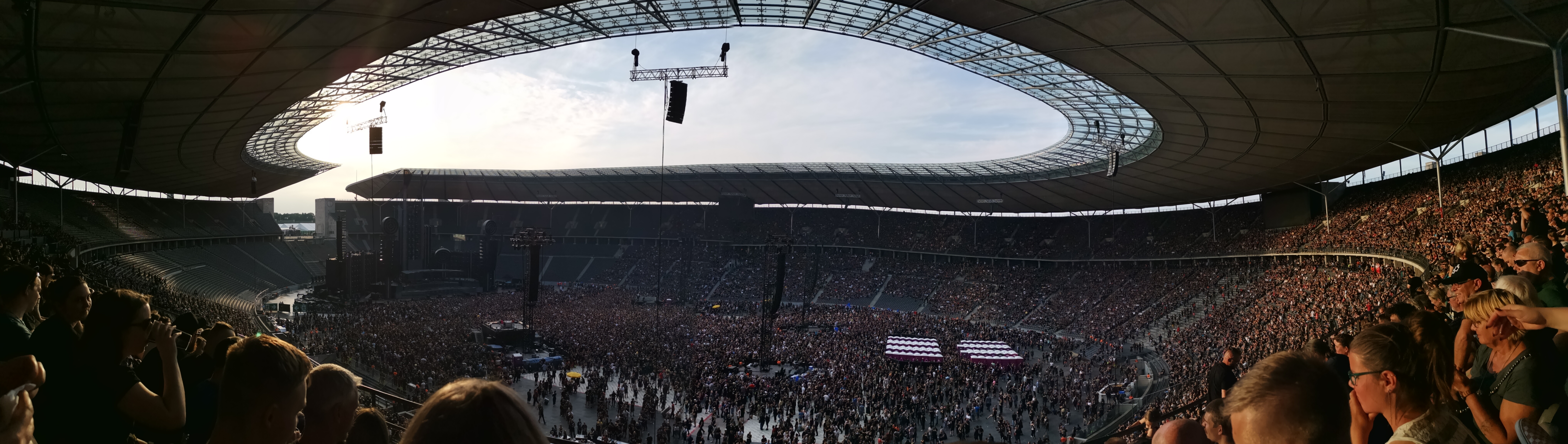

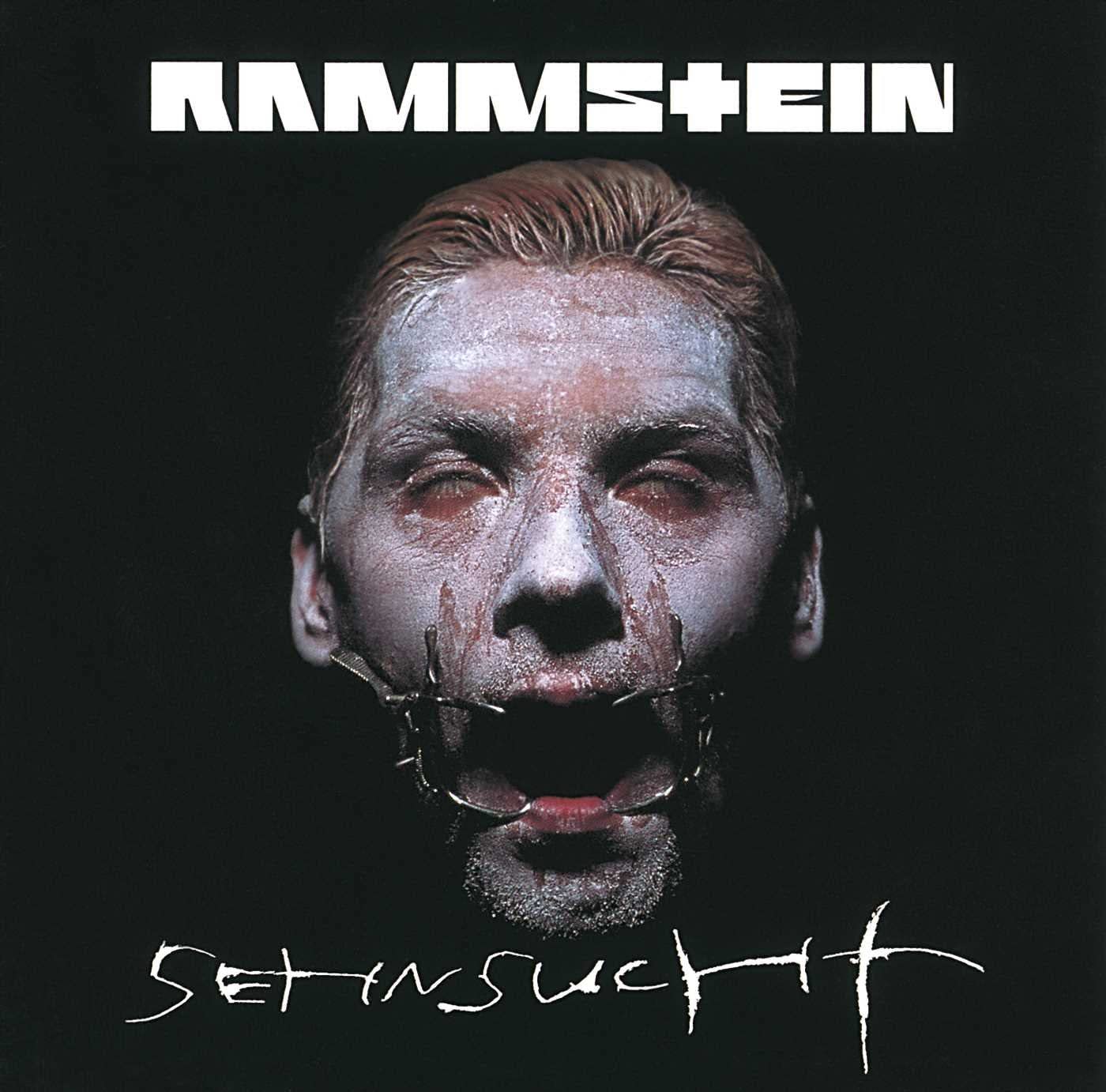






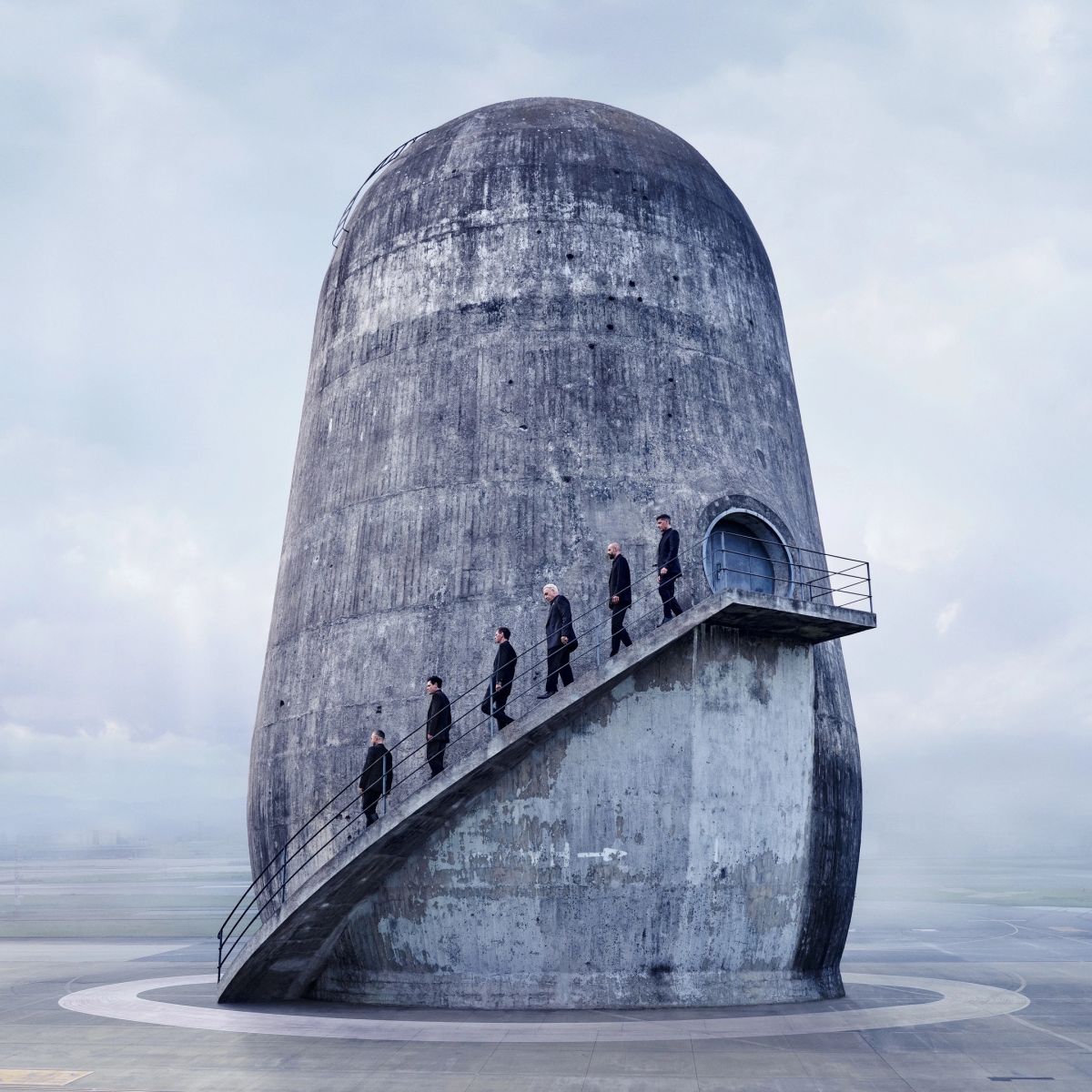

.jpg)






 Thoughtful Meanderings