
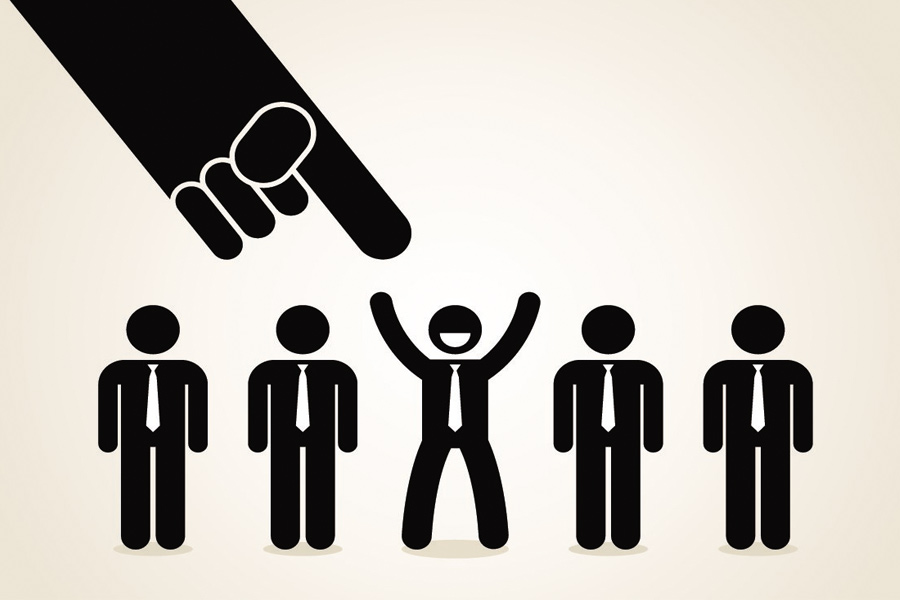
In the second part of this blog, I will be going over the next two attributes I think we need in order to be selected for success.
Submission
It may sound contradictory but submission is an extremely useful behaviour to have in our man-made environment. Trade, debate, favours, negotiation, collaboration, conversation, hospitality all involve submission to varying degrees. What submission teaches is compromise and it promotes harmony because every transaction is mutually beneficial and is either redeemed now or later in the future through delayed gratification.
In romantic relationships, emotional availability is a key component to healthy interactions between both partners. If one or neither submits their feelings or is willing to give themselves for the good of the other then the relationship is in serious trouble or doomed to fail
Arguably, the most successful political regimes are submissive ones where an appointed or an elected leader must carry out their duty with the good of their country and their people at the forefront. They should not be there to run their own agenda. That would be domination because power, resources, influence, etc is being taken away with nothing being given in return. The only place, in my view, where we should be seeing domination is in sport. That’s where the art of competition comes alive and we want to see the battle between two sides to see which one comes out on top. It’s thrilling and exciting but that behaviour, if used outside of sport, comes with terrible consequences.
Going back to submissive regimes for a moment, if you look at monarchies, they married into other royal houses. This was, typically, the most successful way to expand and strengthen a kingdom. One family would submit a female member to a prince or king so they could produce an heir and, in return, they would get land, titles, maybe money, and the protection of the realm. Hence one act of submission (gain of a fertile princess or queen) results in another (gain of wealth and protection). A trade is done because the prince or king knows they can (excuse me for making this sound inhuman. I’m breaking the example down to base level components) create something better with the new element than it would be able to on its own. In other words, with his chosen female, he knows he can create a better kingdom.
In democratic nations, we can take the progression of each one and compare against those under tyrannical rule or dictatorship. For the most part, a democracy will allow a person to choose where they live, where they are educated, where they work, where they socialise, shop, etc. They are given civil liberties and social freedoms. Their views can be expressed (submission) but they cannot be forced upon others (domination) as other people are entitled to their views. The same cannot be said under tyranny or dictatorship. From what I’ve reasonably observed, people in these regimes are told what to say, what they cannot say, where to go, when they should be at home, where they can work, where they can be educated, etc. In others words, dominant societies end up oppressing, suppressing, repressing and depressing their people. They cannot express themselves how they’d like and they cannot do as they please. This causes anger but that anger cannot be expressed because of a larger, overshadowing emotion.
Fear.
Dominance brings about fear. Usually, a fear of loss whether that be land, property, income, family or your own life. Being dominated (in the truest sense) creates a lot of fear which creates a lot of stress and people who are stressed don’t function well. But that’s fine if you’re a dictator or tyrant because you want control of all the people, land, property, resources and wealth anyway. Your country, in turn, won’t do very well. Just look at Africa. How many billions in aid has been sent over the last thirty years? It should have made a significant difference but it hasn’t. Yes, those countries are improving but not at the rate they should have. Part of the reason is financial domination. The corrupt governments take the money and either use it to buy weapons and drugs to sell on the black market or…they invest it back into the countries that gave them the money; Make money on the world’s stock exchanges and become even richer without having to spend a penny of their own cash.
Take families. If parents don’t submit themselves to being a parent then the child will grow up neglected. That neglect will likely manifest into fear which, as they get older, usually turns into resentment and anger. That’s dangerous. The same happens in romantic relationships. Devotion and commitment are submission in different forms and we all know that you must invest (another form) in order to make a relationship grow and flourish. Same can be said for so many things.
In democratic nations, people are generally more relaxed and able to enjoy life more. For the most part, this culminates in improved productivity hence its generally democratic nations that are currently the wealthiest and most powerful. Why? I would say because by submitting a large part of control to the people, they will feel more thankful. This, in turn, creates loyalty which is another form of submission. As the saying goes, ‘You scratch my back, I scratch yours.’ Like any healthy relationship, there must be give and take. Anyone who’s had a controlling partner will know the amount of trauma and stress that comes with such a person.
But the relationships aren’t always that clear. Take the current Brexit goings-on here in the UK. The government performed an act of submission by allowing the people to vote on whether to stay in or leave the EU because there was enough demand for it. The people voted to leave and, for the last three years, the UK government, from what can be seen, has not successfully submitted itself to the will of its people. Instead, it looks like it’s trying to dominate the people by not delivering what was voted for. The result? Chaos. The UK government is falling over itself partly due to too many small agendas. Whilst we will probably never know what they are, we have a good idea that most people who enter politics now rarely do so with the good of the people at heart. Why bother with that when there’s money, power, influence and a level of non-accountability to be gained?
Brexit is a great example of the submission practice or, rather, lack of it. The general unwillingness of the electorate to see through what was voted for is the government effectively telling its people their vote doesn’t matter. And yet, their attempts to dominate proceedings are failing as well because they’re showing the world that the fifth most powerful government in the world cannot act as one cohesive unit regardless of personal feelings.
I could meander into the current US administration but I think I’ll leave that for another post.
Perhaps, the most egregious example of dominance is Hitler. His hatred of ‘imperfection’ led him to want to dominate the world and eradicate any and all people that didn’t fall under his view of perfection. If you didn’t fit his model for the ‘Arian Race’ you were hunted and killed.
In fact, the Second World War was perhaps the last major effort of one group making a concerted effort to force all others into their way of thinking and living.
I say that because it was the last effort of intentionally trying to dominate the world. Nowadays, things are quieter. More subtle. More sinister. Terrorism had a go but the organisations are too small, too poorly organised and not well funded or equipped enough to make a real dent on the Western World – 9/11 aside. They cause upset and panic but, in reality, they’ve had little effect. So little that we don’t really hear about them now.
Fundamentally, submission is the path of least resistance to success. I don’t mean material gains because you don’t need those to feel successful.
Let’s look at this from a more unconventional viewpoint. In the world of BDSM, it’s quite common for a ‘submissive’ to visit a ‘dominant’ to have their bodies used in any way they see fit. But who has the real control? Yes, the dominant is using and abusing the submissive in a variety of ways but who asked for it? Who encourages it? Who says it’s OK? Who has the safeword? The submissive. Hence, in this context, the idea of submission allows that person to get exactly what they want. A person relinquishes control over to the ‘domme’ and, in exchange, they get their wildest fantasies fulfilled. But if they don’t give in then the experience isn’t fun for either party.
To end this section, I want you to think about this. Think about the most successful person you know. They don’t have to be rich or famous. At least not on the world stage. Could be a neighbour, friend, colleague, family member, etc. What did they do to get the car they wanted or the house or the loving family or the fantastic lifestyle or the self-sufficient business?
Work.
They gave themselves over to work. They submitted their skills, talents, knowledge, personality and expertise in exchange for something they wanted and they got it because they kept submitting.
Let’s flip that around and imagine they dominated. They’d most likely not have any of what they wanted because they’re mindset would narrow. They might tell themselves that they’re ‘too good’ for where they are but won’t make the effort to improve. But then, they’d only do that for the ‘right’ people or place. We’ve all met people like that. Those who like to be grander than they are. They have the ideas but not the inclination or conviction. ‘Something’ always gets in the way.
The problem?
That word again. Fear.
They dominate their own minds because they are scared of either success or failure just from the thought of trying. An act of submission takes real courage because you don’t know the outcome. To give yourself over to an idea, a person or a group takes a lot of faith and trust in who or whatever is on the other side.
And if history has taught us anything about tyrants and dictators, it’s that, deep down, they were afraid and so they sought to control.
And history also tells us – it never works.
Communication
A major reason why submission is so scary is lack of communication. Whether it’s lack of will or means, poor communication stops things progressing because communication is how we transact information. How can you give yourself over to something or someone if you’re unsure of their intentions?
Clear and concise exchanges are needed to ensure we’re all of the same understanding and in agreement regardless of the context. If we don’t know what’s going on then how are we going to know what to do?
I’ll take myself as an example. My partner and I do have some communication problems. She tends to miss out important details and I tend to not ask for them thinking she’s given me all I need to know. Last year, we went to a wedding and all she kept saying was things like “When we go to Dumfries…” or “When we’re in Dumfries…”.
So, to my mind, the wedding was in Dumfries. When we set off, I was given a Dumfries postcode so all things pointed to Dumfries. As we got 16 miles out, my satnav kept telling me to turn off the main road. I ignored it as I hadn’t updated it and kept going.
We maybe travelled three or four miles before my girlfriend pointed out we were going the wrong way. My satnav had been correct all along.
I turned round and went back to the nearest junction where my satnav previously told me to turn off the main road. We drove through a few hamlets until we reached the hamlet of Tynron. My satnav showed our destination as being a house at the corner of a junction. After we parked up, met our host and got settled, I remember being a bit annoyed. I had been under the impression that Dumfries was our location when it wasn’t. It was a hamlet in Dumfries and Galloway. The county not the town.
That episode was a fairly minor thing but it’s something that happens all too often in our relationship. Small but important details get missed and it results in something happening that could have easily been avoided. All through not having been clear and articulating exactly what is meant.
I learned my lesson. My girlfriend doesn’t do geography or navigation so, as the driver in the relationship, I get all details ahead of time so I can plan my route. We have less trouble as a result.
And so, communication is a vital element in success. A clear message that can be easily read and understood can make the difference between life and death and clear any unnecessary frustration and stress.
Being as crystal clear as possible will make you more efficient in all areas of life which, in turn, will make you more successful. The ability to articulate in simple terms is highly valued. It makes you easy to understand but also easy to talk to. From my own observations, this is why I believe highly educated and talented people who can ‘talk to the common man’ are more attractive (i.e. more popular) than those who can’t or won’t. By being able to engage in conversation with people at all levels whether they’re a CEO, retired gardener, supermarket assistant or a celebrity, if you can talk to all of them at their respective levels then you will create better connections which may prove useful later on.
Communication is a direct reflection of who a person is at a given point in time. How they do it gives you an indication of their internal workings. Of course, we can’t know exactly how a person thinks (until someone invents brain hacking then we’re in trouble) but their way of communicating gives us an idea.
Conversely, how a person receives and interprets a message also says a lot about the next attribute which you can read about next time.

 Thoughtful Meanderings