

It’s not that I hate vegans. I don’t. It’s not that I can’t tolerate them. I can. The issue I’m seeing is the perceived ignorance of those that switch to being vegan because it’s ‘ethical’ or ‘healthier’. More ethical or healthier than what? Eating other living beings?
And then what happens when killing plants is too much? Do we start harvesting bacteria? Do we just not eat and make ourselves extinct through starvation?
I think there’s a conflation of a number of things here. There’s the cultural angle for a start. Whilst fruits, vegetables and grains have been eaten for hundreds of thousands of years, we have no evidence to suggest that any one culture has developed solely on these foods. Meat has been involved to some extent. Why? It’s energy rich. It contains a densley packed mass of nutrients that have built up over the life of an animal. It’s done the hard work of eating other plants and we get the benefit passed on when we eat its meat. This effect is even more greatly experienced when the meat is cooked. Many scientists believe this was what caused a surge in our brain development to evolve to become the species we are today.
So, if that’s the case, then why do some people think that removing meat altogether is somehow better?
I come back to the ‘ethical’ and ‘healthier’ points from that start. I’ll start with the last first. I think the first conflation is that many people nowadays don’t know where their food comes from. With more people being born and bred in cities, the chances of them seeing a farm let alone an abbatoir is diminishing. If all a person’s idea of meat is fast food and then they read/hear how unhealthy it is then it’s no surprise that an individual would correlate meat with being unhealthy. Amplify that if their parents rarely actually cooked meat and relied heavily on ready-meals and takeaways.
And when those children raised on crap (yes, they are) go to university and get all curious about what’s actually in a fast food burger (pink goo) or doner meat (fatty cuts of, typically, lamb but also beef, chicken, turkey and veal) then it’s only going to compound the idea that meat is bad. They are shown chickens in cages laying eggs whilst surrounded in their own faeces. From that, eggs are bad.
They are not shown the love and respect a good farmer has for his animals. They are shown industrialised methods which spawned from other factors I’ll get into later.
So, when all a child is shown is the poor treatment of an animal before it’s unceremoniously killed to have its meat on a plastic tray, wrapped in plastic and displayed on a supermarket refrigerated shelf, that child is, quite likely, not going to want to eat meat. They’ve been scared out of it. Should we be using fear to educate children rather than information? Schools still do day trips. Why not take them to a farm? After all, who better to ask where food comes from than the person that grows it? The farmer.
A blog post by the British Educational Research Association (BERA, 4 Aug 2017) points to an interesting issue. The authors state that ‘Some teachers observed that food and farming topics could be undertaken wholly in class, without pupils ever visiting a farm.’ and ‘Teachers who aren’t familiar with the farm environment may not feel comfortable taking pupils there.’
If that is representative then the teachers are a barrier between the children and having them obtain knowledge on where their food comes from. In which case, if the teachers prefer to go over the topic in the classroom, those children will likely never set foot on a farm in the capacity where they can openly ask questions to a real-life farmer on how their food is made. It also highlights an issue with some teachers who priortise their preferences over the education of the children they’re in charge of thus they indirectly force their persepctive on to the class.
Another interesting point was raised in Episode 8 of the podcast, Psycho Schizo Espresso, where hosts Bruce Dickinson (he of Iron Maiden fame) and Dr Kevin Dutton spoke to the world’s only British matador, Alexander Fiske-Harrison. The question of meat production arose and Bruce made an interesting suggestion. For a person to opt-in to buying meat, they must obtain a meat licence. And to obtain it, they must be involved in the slaughter of a cow. He used cow though, in the example, any animal would suffice. Now, something like that wouldn’t be so bad because it would then mean that those who can buy meat know exactly what’s involved and I think that would create a greater sense of empathy towards the animal and gratitude at its sacrifice and towards the farmers/abbatoir workers who do this daily. It may also mean that less meat is wasted due to the old ‘see-food’ diet. He also suggested that all butchers should have windows showing the meat hung so people see exactly how the food got there.
Now that I’ve mentioned butchers, this allows me to segue into the thing that prompted this post.
The vegan butcher.
What I find bizarre and, indeed, hypocritical about this new addition to our societal landscape, is why bother?
If you’re vegan, it means you’ve opted out of eating meat and being involved with any products derived from animals. So, why create a shop that simulates the atmosphere and purpose of one that sells the flesh of dead animals? What’s the point of taking plant material and transforming into something that looks, smells and tastes in the vein of the very thing you’ve chosen not to eat? It’s a bit self-serving, no? You want all the things about the meat just not the meat? All the benefits just none of the shame and guilt that goes with it?
As for the ‘healthier’ and ‘ethical’ argument, I’m not so sure. Below is the nutrition information and ingredients list of Beyond Meat’s plant-based burgers (2x patties @ 226g), on sale here at Sainsbury’s in the UK.
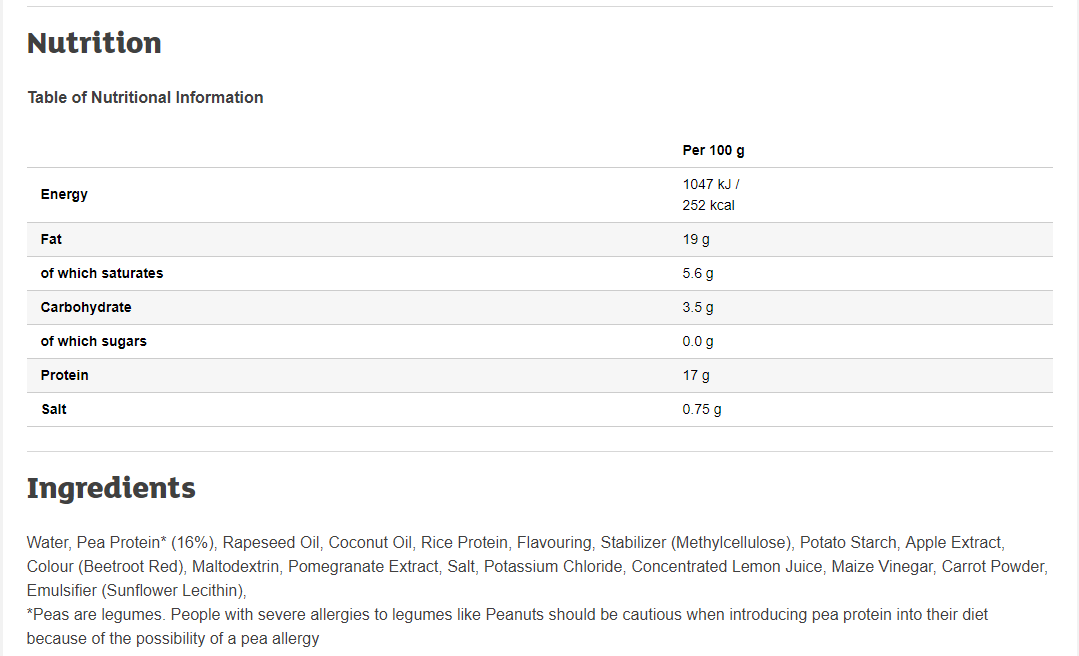
For comparison, here’s the same information for Sainsbury’s Taste The Difference beef burgers (2 x patties @ 340g):


You’ll note the additional nutritional information on the meat burgers and less numerous ingredients list (7 to the plant burger’s 18), however, the caveat at the price point is the beef used is the cheaper off-cuts though Sainsbury’s insist the product is made with ‘Prime Cuts’. Yet, it still accounts for 95% of the product whilst the Beyond Meat burger has no reference as to how it’s been composed and by what percentages. You’ll also note that the health information regarding nutrient intake hasn’t been applied to the Beyond Meat burger.
So, what are we to take from this example? Well, if you don’t look at the ingredients, the average consumer might well think the plant burger is healthier. I mean, look at the lack of coloured stripes. It’s got to be healthier, right?
I would disagree. The number of ingredients required to make a simple burger suggest that Beyond Meat is a highly processed product. I would wager the same for the supermarket butcher, whereas a real butcher is where you are more likely to find leaner, healthier cuts of meat as a good butcher will work closely with farmers to ensure they can sell the best produce. What does a vegan butcher do? How do they take plant matter and make it look, smell and taste like meat?
After a fair bit of digging, I came across the Meatless Farm that seems to do a pretty decent job at explaining things in a fairly non-scientific way. For the appearance, a mix of beetroot, radish and tomato is used. Texture is provided by combining the oils of coconut, canola and shea to provide a fat source to bind the proteins together which come from pea concentrate and isolate. This gives the ‘meat’ the firmness required to simulate the muscle fibres of an animal.
But what about taste? Two things are noted. Yeast extract for the umami flavours and…natural flavouring. This is where Meatless Farm get all vague:
“Well, without getting into too much of the boring details, scientists are now able to break down any flavor into its specific chemical components and then recreate it from scratch. In other words, they can make the meat flavor without any of the real meat”
No. If you’re saying natural flavouring is used for a meatless burger that’s designed to taste like meat, you can’t back off when explaining how the product tastes like the thing it’s not. That would be dishonest, maybe even deceitful.
So, a bit more digging on this umbrella term ‘natural flavourings’ and I came across the U.S. Code of Federal Regulations (Title 21, Section 101, part 22) which states:
“The term natural flavor or natural flavoring means the essential oil, oleoresin, essence or extractive, protein hydrolysate, distillate, or any product of roasting, heating or enzymolysis, which contains the flavoring constituents derived from a spice, fruit or fruit juice, vegetable or vegetable juice, edible yeast, herb, bark, bud, root, leaf or similar plant material, meat, seafood, poultry, eggs, dairy products, or fermentation products thereof, whose significant function in food is flavoring rather than nutritional”
So, I would say, for clarity, companies claiming to be producing completely vegan products should state that the natural flavourings are from plants. Unless they’re not, in which case they’re lying through their corporate teeth. Which could be for cynical reasons (they’re using animal flavourings) or for perfectly legitimate business ones, like not wanting competitors to know the secrets of their recipe.
But still, there is an element of deception involved when companies don’t state where those flavourings come from. In the alcoholic beverages industry (of which there’s a parallel), there are plenty of alcohol-free variants of popular drinks. But there are also low alcohol variants where the drink has an ABV of 0.5% or 1%. Here in the UK, there are three varieties available to those not wanting a fully alcoholic drink: Alcohol free, de-alcoholised and low alcohol. Respectively, the ABV for each is 0.05% or less, no more than 0.5% and no more than 1.2%.
If the drinks industry can be clear about how little alcohol is in their product, then why can’t the vegan meat producers when it comes to how the product is flavoured?
Culture and marketing are two very common bedfellows. The practice of influencing societal behaviour and trends with slogans, advertising and endorsements is well established at this point. Veganism is not immune. If producers can comfortably lie about the full content of their product then why should existing and aspiring vegans bother picking such things up? After all, the fertiliser used to grow the plants could be manure and not compost. Why should someone who chooses to be vegan have to question whether the thing they’re buying aligns with their lifestyle?
In which case, vegans should then campaign for greater transparency as meat-eaters here in the UK have done for decades and continue to do so, the latest of which being the campaign to not allow US meat into the UK if a trade deal was struck as US quality standards are much lower. Who wants chlorinated chicken on their plate?
So, if vegans really want to be vegan for the reasons they say, they need to stand up and demand their products are up to the high standards they require before they even open their wallets.
However, for that to happen, vegans, and those wishing to adopt the lifestyle, need to know exactly what is and isn’t in their food. Which means, as a whole, they need to act with integrity. And that means, are they being vegan to be fashionable, trendy and ‘progressive’ or do they really care about the way animals are treated? If it’s the former, they won’t care about what’s actually in the vegan product just as long as it makes them look as required. If it’s the latter, then some real speaking up needs done.
Ultimately, it is the lack of due care and willingness to act that plays right into the hands of the companies that will continue to profit by selling food that isn’t entirely vegan.
Which raises another point. That lack of attention hurts vegans when they go out to restaurants and takeaways. They think they’re getting the healthier option, but are they really or are they just getting the non-meat version of the same highly processed food their meat-eating counterparts have been getting for decades?
Let’s go to McDonald’s. The McPlant and the Quarter Pounder with Cheese look to be comparable items on the menu.
First – The vegan option.

Next, the meat option.

Now, you may think that the McPlant is better as it has less calories. But let’s look at the composition. Both have:
1x patty
1x sesame bun
Onions
Pickles
Mustard
The McPlant adds sandwich sauce whilst the quarter pounder has two cheese slices to the McPlant’s one. If we take the sandwich sauce from the McPlant and the extra cheese slice from the quarter pounder we get:

390 calories for the McPlant.
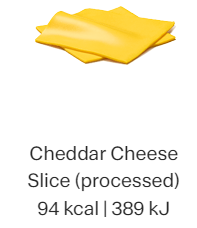
47 calories a slice makes the Quarter Pounder 460 calories.
So, if completely assembled equally, there’s 70 calories between the vegan McPlant and it’s meat counterpart, the quarter pounder. That’s almost two chicken McNuggets. And what about the price?
The McPlant on its own is £3.89 whilst the quarter pounder is £3.49.
So, 70 calories less but £0.40 more? Why might that be? Well, the argument could be that vegan ingredients are more specialist therefore less available and therefore more expensive. But this is McDonald’s. They have the purchasing power and influence to get what they want at the price they want because they want to sell whatever keeps making them money. And how many of you really think a company like McDonald’s has its customers health at heart? I doubt there’s much in the way of ethics either.
On that point, I came across this article from ‘i’ which disclosed the ingredients of the McPlant’s patty and cheese. Here they are, but feel free to read the full article:
“Full list of ingredients in the patty
Water, pea protein, rapeseed oil, coconut oil, flavouring, rice protein, stabiliser, potato starch, apple extract, salt, pomegranate extract, potassium chloride, concentrated lemon juice, maize vinegar, yeast extract, carrot powder, emulsifier, beetroot colour, maltodextrin.
Full list of patty ingredients in the cheese
Water, coconut oil, tapioca starch, pea protein, modified potato starch, salt, stabiliser, natural flavourings, acidity regulator, preservative, colours, anti-caking agent.”
Look alright to you? Or does it read it like a chemist’s checklist?
The thing that bugs me is, why not just take beans, tofu, mushroom, soy or whatever and mash it up into a burger-like shape? Processing vegetables and fungi must be cheaper than all this chemistry? But it is less addictive, isn’t it? The vegan products are just being given the same treatment as the meat ones i.e. poor, cheap and unfit for human consumption.
Why am I picking on McDonald’s? Well, they’re the largest fast food chain in the world and, arguably, the symbol of globalisation. If they’re not spearheading the mass adoption of a non-meat lifestyle and not actually providing food products that are genuinely vegan then who will?
So, what are real vegans (those genuinely concerned with animal welfare) to do? A simple answer, they can make the food the themselves. That way, they know where it’s come from and how it was compiled. They would have complete control over the production. However, not everyone is willing to put the time, money and effort into either learning to cook or learning how to cook vegan food. Like all skills, heavy investment is needed upfront to enjoy the benefits later on. But it doesn’t answer the question on where a vegan can go when they want to enjoy thier diet outside of the home.
There are two places in the world where non-meat food has been a staple part of their diet for centuries, if not thousands of years. India and South America. No, I’m not suggesting that vegans move to either just to enjoy their lifestyle, but they could go to their restaurants wherever they live, fairly safe in the knowledge that what they’re getting will be truly vegan as it’s part of the culture in that part of the world ergo, they will make it authentically.
But other than that, what’s a vegan to do? Well, they may need to get inquistive and ask the restaurant where they source their ingredients before making an order. A quiet word somewhere or a phone call or email ahead of a visit would allow an informed decision on whether they’d want to go or not. This could have the benefit of either raising awareness of a particularly good restaurant, in which case more vegans will visit. Or, it will highlight a restaurant that doesn’t take their vegan options seriously hence word could spread and that restaurant finds itself with little to no vegans coming in. If that happens, they may be forced to improve their offerings in order to get vegans in the door. Revenue is revenue, after all.
And I want to come back to my earlier point on why bother with making vegan food an emulation of meat. What’s the cost in research and development to find the right chemical mixture that would allow vegetables to take on meat-like qualities?
Let’s go back to Beyond Meat. Oh, did I mention they provide McDonald’s with their vegan patties? Well, they do. Anyway, for the 2020 fiscal year, Beyond Meat spent $31.5million which was 7.74% of revenue of $406,785,000. No figures released for 2021 yet but projections indicated that they would spend more on R&D based on average growth of 26% annually. Sounds good. But when we compare that to the $1.4trillion global meat market, it doesn’t look like the cultural shift the press would have us believe.
But, taking the vegan meat market as a whole at $7.9billion (2022) and it’s still a paltry 0.56% of the total meat market across the world. But let’s consider that a lot of the alternative meat companies have been on the go for less than 40 years (the oldest being Quorn at 37 years). In the same timeframe, China became the world’s factory and second biggest economy after having suffered economic and cultural destitution under Chairman Mao. For all the big talk about going to make the current food system ‘obsolete’, the alternative meat companies are taking their sweet time over it.
I realised I digressed (good job I have ‘meander’ in my name), so I’ll come back. What’s the purpose of spending all that money to make non-meat items become a meat approximation? Why not just make vegetables tasty like the Indians and South Americans mentioned earlier?
Apparently, according to numerous studies, of which here’s a site filled with statistics, “55% of those surveyed became vegetarian or vegan because of animal-welfare concerns, 45% because of health, and 38% because of environmental concerns.” That’s for the UK.
Now, I’d be inclined to extrapolate that that would be similar reasons and percentages worldwide. In which case, none of the reasons have anything to do with not liking meat. It’s a) they don’t like how the animals are treated, b) they think it’s healthier, and c) they believe it’s better for the environment.
The first point, I can understand to an extent, however, humans didn’t get this far in their evolution without being fierce, ruthless and cunning enough to stave off serious competition. That meant working with each other and other animals (the wolf being the first we domesticated for mutual benefit) to get rid of predators. What happens when you get rid of the bulk of the threats to your species? You become top of the food chain. And to stay there, you have to enact some form of order. We have collectively taken out the natural predators for a number of animals and we have had to take their place. If we don’t, prey animals would increase in number and start causing problems. We’d have another form of competition to deal with by not keeping numbers under control.
That’s not to say I agree with industrialised farming. I don’t. However, it’s a reflection of the demand. How many farmers want to squeeze their livestock into little prisons as opposed to letting them roam free and live a life before being given a compassionate, kind end that results in their death sustaining more life? The current farming is indicative of people who want their meat cheap. They don’t care how it got there. They just want it. Again, I revert to my previous point at the start about city-dwellers. And how much is wasted? How much is allowed to go to waste because it’s cheap and not treated with the respect it deserves just like the animals whose life was forcibly taken to satisfy the whims of an ungrateful majority? in the EU, it’s 88million tons of food.
So, yes, I sympathise the need to want to ensure animals are treated better. But then, why eat fake stuff? If you’re against the poor treatment of animals why continue to engage in the act of eating meat but in an artificial manner? That’s more like having your cake and eating it, no? All the pleasure of meat but none of the guilt or shame over how it got there.
On the second point – Plants are raw sources of nutrients. A lot of what’s in there needs a supplement of some kind to help extract as much of the nutrient as possible to allow it be digested and absorbed. Things like iron, calcium, vitamin B12, omega-3 fatty acids, iodine, vitamin D3, zinc and creatine are all lacking in a vegan diet but are crucial for our bodies to function. For example, dark green leafy vegetables are raw sources of iron but our body can’t fully digest them to extract the iron. Vitamin C is required so potatoes, citrus fruits, strawberries, peppers or blackcurrants would need to be eaten with them. Broccoli contains both so that’s a winner if you really like it.
But given most people know so little about nutrition as it is, a vegan diet could render a person weak, fatigued and unable to function due to severe malnutrition. For example, a friend of mine recently revealed they lived with a vegan and, because they didn’t like vegetables, all they ate was tinned spaghetti hoops. It got to a point where the person’s gastric issues were so severe they had to have part of their gut removed. I don’t know if this person went back to their diet afterwards but, regardless, it’s a harrowing sign of what could happen if we were put on such a diet.
This article points to what vegans should do to gain the nutrients lacking in their diet. Largely, they are to eat foods fortified with the nutrients which means being reliant on corporations to feed them what they need. I know Mr. Kellogg was a vegan but not everything the company makes is strictly healthy. Coco Pops and spinach anyone? And since many vegans tend to be against capitalism, it’s further fuel to hypocrisy fire that they would need to resort to fortified cereals or supplements produced by large pharmaceutical companies just to function. How do they justify their choice then?
For the third point – I completely agree that going vegan is more environmentally friendly. It’s 0.56% of the meat market. If it were the other way round, then being a meat-eater would be more environmentally friendly.
And if we all went vegan then we’d have a major concern. We’d start farming plants at higher rates. Would that mean the very things that are vital to our existence would be under threat because we’d start heavily draining the soil of nutrients?
This article from University College London suggests that, given the bulk of farming land is suitable for livestock, it may not be possible to turn it into suitable land for arable farming. And if it were, it could take decades. And what happens to all the animals that are born? The article doesn’t answer this but if we’re not farming then surely they end up needlessly dying? I don’t foresee governments allowing millions of animals to die pointessly when taxable profit can be generated.
And what happens to the people? If there’s no meat to be had and if a large enough portion of the farmland isn’t suitable for growing crops then what? We eat a bunch of processed vegan food until the farmland is ready? I don’t think so.
No, if everyone went vegan, we’d start starving the soil of the very nutrients it needs to give to the plants we’ll be over-harvesting to feed ourselves. And what about the herbivore animals? Their food supply will start to became scarce. Grass will be removed to make way for crops so cows, sheep, pigs and horses (typical far animals) will be denied their natural food source and won’t be allowed the crops. So why have the animals if we’re all vegan? We’ll just kill them off.
So, if we don’t need the herbivore animals for food and take away large portions of their food source so we can all eat, then we kill the herbivore animals because they take up too much space and contribute to ‘climate change’ but end up stripping the soil for all its worth, how is that good for the environment?
As with many things, moderation is key. We are ominivores. We are not built for a herbivore or carnivore diet. The Atkins Diet didn’t prove a carnivore diet worked and neither will a vegan diet work. It only gives part of what we need. We need both plant and animal. Too much of either will cause problems.
As for the vegan butcher? Sorry. If I want something that looks, smells and tastes like a steak, I’ll have a beef, turkey or venison one, thank you. I think it’s deeply disrespectful to the animals and shows a complete lack of awareness. It is cult narcissism that feeds on the sadistic pleasure of knowing they are getting away with eating their favourite foods without punishment so they can lord over others and show how enlightened they are. It’s disgusting and, in my view, is something only city-people seem to do.
On that, The Vegan Society state that, in the UK –
“The vast majority of vegans live in urban or suburban areas (88%) compared with rural areas (12%) and this is reflected in London, where 22% of all vegans in Britain live – more than any other region. Almost twice as many vegans are female (63%) than male (37%).”
What did I say earlier? Something about people who never see a farm and not knowing where their food comes from are more likely to go vegan?
If you don’t see reality for yourself, you’ll believe whatever anyone tells you.
 Thoughtful Meanderings