

I covered the car quite extensively in the first part of this blog. In this second part, I’ll run you through the other ways subscription can make you worse off.
Living in the Cuckoo’s Nest

Renting. The principle is simple. Someone buys a property, lives in it for a minimum of two years (in the UK) then converts the mortgage from residential to buy to let. Then, they remove anything of value, get an estate agent involved to manage the property, hike the price well above the mortgage value then get someone poorer and more desperate to come in and pay for the property. You, the poor schmuck, ends up paying over the odds whilst an agent gets 10% to maange the place and the owner simply cashes in. More so if the mortgage has been paid off. The property increases in value as supply runs low since more and more people rent their properties out making renting a vastly expensive venture.
I was helping a friend out recently who has moved to Glasgow from Central America to start a position with the University of Glasgow. They hadn’t sorted a place to stay and asked for my help since I’m the only person they know that lives in the city. Despite having gone over their finances and suggested a budget of between £400 and £600 a month for rent (which is still possible) to keep their living costs as low as possible whilst still granting them their own space, they opted for a flat in the West End, near the University with poorly fitted windows, which makes it cold and the landlady allows heating for two hours a day, and they’re sharing with a fellow colleague. Yet, the University would have paid for them to stay in a hotel for up to three months to take the time to find a place to live.
Were they happy with their choice of accommodation? No. Why? It was too much (bills are not included so half their wages are gone on the flat), it was cold (‘but Spring is almost here. It’ll be fine.’) and they’re sharing with someone when they wanted their own place.
I said nothing. In reality, they made the choice because of convenience. The property is a short walk to work, plus they get the prestige of living in a posh part of Glasgow. See that thing about paying for a badge in the previous blog? Apply it to location for property. People will pay over the odds for the perception of living in an affluent area even if they themselves are not affluent. A lot of people do it, especially in cities.
This New York Times article points at two common reasons why some people live in nicer areas or houses than their income would suggest – hidden debt or wealth.
Certainly, in the case of young students and graduates, it’s not uncommon for their wealthier parents to bankroll some or all the living costs to help their children find their feet. I worked with one young graduate at Royal Bank of Scotland. She lived in a flat owned by her father, a wealth management advisor. As far as I remember, she didn’t have to pay rent but did have to pay for utilities. Council tax may have been taken care of too. However, her flatmate was charged rent at the going rate. And she was certainly not affluent being a budding photographer and film director.
So, how avoid renting? It’s tricky but possible. If you’re willing, you could club together with friends and buy a house together. For clarity, I am talking more about those leaving home for the first time in an attempt to avoid getting into the renting cycle.
Good financial guidance and support from family is important here. Not every family is going to be able to offer it but, for those that can, it should be utilised. If they can provide, then they will likely be involved every step of the way to ensure the property not only provides good value for money, but will be a suitable place to live in. This is the kind of activiy that can also more fully reinforce the familial bonds as the family has become the preferred choice. I’m not suggesting they buy it for you. Most cannot do that. I’m suggesting contributions to a deposit or acting as guarantor on the mortgage. If split two, three or four ways, the upfront costs are less and the living costs lowered by the number of people living in the property.
By going this route, you will have to learn several skills to make this work. Your financial skills will need to be up to par to be able to maintain your end of the bargain.
If you can’t make a payment, you will need to communicate in advance to your housemates. To do so will require acknowledgement of your accountability to your peers. This will teach humility and vulnerability.
Diplomacy will also be a vital skill as house/flat-sharing is seldom plain sailing. There will be discussions, debates, conflicts and arguments over everything from bills to alarm clocks, sleeping habits to relationships, and chores to house activities.
It won’t be comfortable but nothing worthwhile ever is. What you should gain from the experience is the ability to manage yourself and people far better than before. And, at the end, you can sell the property and split the proceeds or rent it out and continue splitting the proceeds.
Ultimately, renting should, ideally, only be for the short term either whilst you’re working in another location or saving up for a home, if the family option isn’t available.
Are You Entertained?

Netflix, Disney+, HBO Max, Prime Video, Sky, the TV Licence, Hulu, Now TV. The list of television and streaming services gets longer by the year. But how much do you watch and how many of the damned things do you actually need? Starting at £4.99 a month (Apple TV) and going as high as £71 a month for Sky Q, Netflix, Sky Sports & BT Sport. How much entertainment is really required?
Of course, I’m not suggesting you live without some form of entertainment. We all need to unwind and sitting on the sofa watching a favourite film or TV show is a comfortable way to relax.
Music services have increased in popularity. I moved to Amazon’s Prime Music streaming service and sold all my CD’s. I reckoned that if I listened to just 8 new albums a year, it was presenting value. I have recently moved to Spotify to be able to listening to their exclusive podcasts as well as new music. There’s an increase in price but the knowledge and wisdom gained from the likes of Joe Rogan’s podcast makes the extra expense worthwhile. That alone, to me, is worth the subscription price. In addition, I still get to listen to new music and I take part in a friend’s weekly themed playlists so there’s a community element too.
But entertainment should be a luxury not an essential. If you’re not getting anything out of it, why keep paying? I stopped paying the UK’s TV Licence fee (which funds the BBC) because it stopped presenting value for money. I enjoyed Doctor Who but it started going down the drain as did Top Gear; Coverage of Formula 1 ceased on the BBC and moved to Channel 4 which only showed highights as live coverage moved to Sky; and international rugby was split between the BBC and ITV for the Six Nations tournament whilst the Autumn Internationals (played in the Northern Hemisphere) have moved exclusively to Amazon’s Prime Video. For the very little I used the BBC for, it just ended up getting worse so I stopped paying for it. Why fund something you no longer get any joy from?
With Spotify, or other music streaming services, I have found considerable value. I listen to it daily and it allows me to listen anywhere on whatever device be it my PC, laptop, phone, earphones or the car. And, being a vinyl collector, I use the service to sample new music, to listen to over and over before making a decision on whether I like it enough to justify buying on vinyl. So, for me, music streaming has been worthwhile.
Now, these services are nothing compared to going out whether it’s drinking, cinema, theatre, clubbing, etc. Cinema is the cheapest here as a ticket is still around £10 and, as long as you don’t buy any drinks or snacks on the premises, it will stay at that. Theatre is next cheapest. More expensive ticket, on average, but same rules apply to keep it at ticket price.
It’s the clubbing and drinking that causes the financial strain. According to these figures, a night out in the UK costs, on average, £56.10. From my experience, I would agree with that, allowing for inflation since I was out doing such things. However, these figures do not factor in travel costs which would add anywhere between £5 and £20 depending on how far you live and the mode of transport used.
I think it’s also worth mention in here the habitual spending. Being a vinyl collector has stopped that habit for me, specifically of CD’s and blu-rays. I would buy the latest CD of a band I kind of liked just because the CD was cheap and I’d buy a blu-ray of a film I saw at the cinema even though I thought the film was OK. Thousands gone on stuff I didn’t like enough to watch or listen to more than once, if watched or listened to at all. I stopped buying CD’s in 2018 and, in 2021, decided to buy vinyl because it would be a different experience over CD and streaming. But before investing, I made the conscious effort to plan out how I was going to operate this hobby. I started with my six favourite bands, concentrated on them and worked out from there. At the very least, if I didn’t enjoy the vinyl experience or got fed up, I’d have music I knew I’d always enjoy. As it’s turned out, I’m fully enjoying the experience but I’m careful to not get into the old habit of buying for the sake of it. If there are two albums I really like by a band I sort-of like, I get those two albums and that’s it. Of course, apply this to whatever you think you needlessly spend money on. I’m sure the results will surprise, maybe shock, you once you’ve calculated it out.
These Boots Are Made For…Projection Of My Insecurity?

Clothes. Specifically, designer ones. Whether it’s sports brands like Adidas or Nike, or fashion brands like Gucci and Louis Vuitton, the price tag rarely meets the quality of the garment or footwear. With trainers, once you’re over £50 you stop paying for the actual material and start paying for the brand. I learned this from my marketing module but it came out in practice when a pair of £50 Adidas trainers barely lasted a year of mixed use between walking, hiking and the gym. I decided to stump up £85 for Adidas’ ‘walking’ trainers. Still, barely a year and a 1,000 miles later, they were dead. I have taken the decision to pay for much better footwear as they will last over ten years and I get them resoled for free which will just extend the life. For the winter months, I’ve been using a pair a Loake’s Wolf winter boots. They cost £330 but they are used daily and are designed for urban walking and forest trails. They were bought September ’22 and, despite regular use, aren’t really showing any signs of wear. Plus, the sheepskin lining is not only comfortable but warm.
Yes, you will pay signifincantly more upfront, usually over £200 a pair, but when you can expect to get at least ten years from one pair, it starts to make sense. The same goes for trousers, shirts, jumpers, etc. By paying more upfront for better quality, you save in the long run as long as you look after them. The problem here is breaking out of the cyclical mindset that so many people have where they ‘need’ to change their wardrobe every 2-3 years and ‘treat’ themselves to new shoes, jackets, bags, etc. It’s this mindset that prevents being able to buy better and less often.
The other thing that holds a lot of people back is wanting to appear like they have sufficient money to keep affording regular wardrobe changes. In reality, people with money rarely change their wardrobe often because they know something you don’t – Clothes don’t make the person. You make you. Yes, they may be wearing more expensive clothes, accessories and footwear but can you tell? No. Why not? Because it’s gone on quality and not on advertising other companies which is precisly what happens when you give in to designer brands; you become their walking advert thus you are exploited because you’ve paid over the odds for cheaply made, poor quality items.
Also, those who have made the switch have matured mentally and emotionally enough to realise that clothes are just that. Clothes. They’re designed to keep us warm and protect us from the elements as well as cover up areas we don’t want others to see in public. And with this more mature mindset comes more mature colours and styles. They may be flamboyant or muted but the pallette is always tasteful and leads you to the face of the wearer because that’s what’s important. Paying attention to the person you’re with and not their body which is fast becoming the norm here in the UK and I’m seeing it spread to Western Europe to a lesser extent.
What I’ve also found when I made the switch was I became that bit more relaxed because I wasn’t having the additional worry of hoping that whatever style, pattern or image my clothes had were sending the wrong message. I sit here now in a grey henley shirt and jeans. I’m sending no subliminal message meaning as I’m in control of what message I do send which will be via my mouth.
And for music fans, anyone thinking that they’re getting a better deal buying a band hoodie at £85 versus a merino wool pullover for the same money, guess again. That band/artist hoodie costs £4-£6 to make. You are paying to advertise that band or artist. Alternatively, just enjoy the live music. You paid for the ticket. If you want to buy anything else, maybe get an album off them and support them that way but band clothing is just the same as sports and designer brands.
“Ah, but I’m showing my support by wearing their shirt.” is what some will say. Sure, you are showing support but if it’s Lady Gaga or Metallica how much more support do you think they need? It’s a bit different if it’s a local band or a friend’s band where they do need the support of as many people to help get their name out. If you love the music, get a shirt and help spread their name. You never know, you may just be helping the next headliner. And small bands don’t charge exorbitant prices for their t-shirts because the cuts from the venue, record label and event organiser won’t be as big. Strangely enough, they all use the same manufacturers as the major acts be it Gildan, Fruit of the Loom, etc.
Repairing your own clothes is the skill here that can save you some money. Naturally, you’d need to practice so small rips and tears are good for starters. If your mother or grandmother can’t show you, there are plenty of resources online to show you how to stitch and sow. The materials are inexpensive and will cost you less than buying a replacement shirt, jumper, skirt, etc.
Credit To You
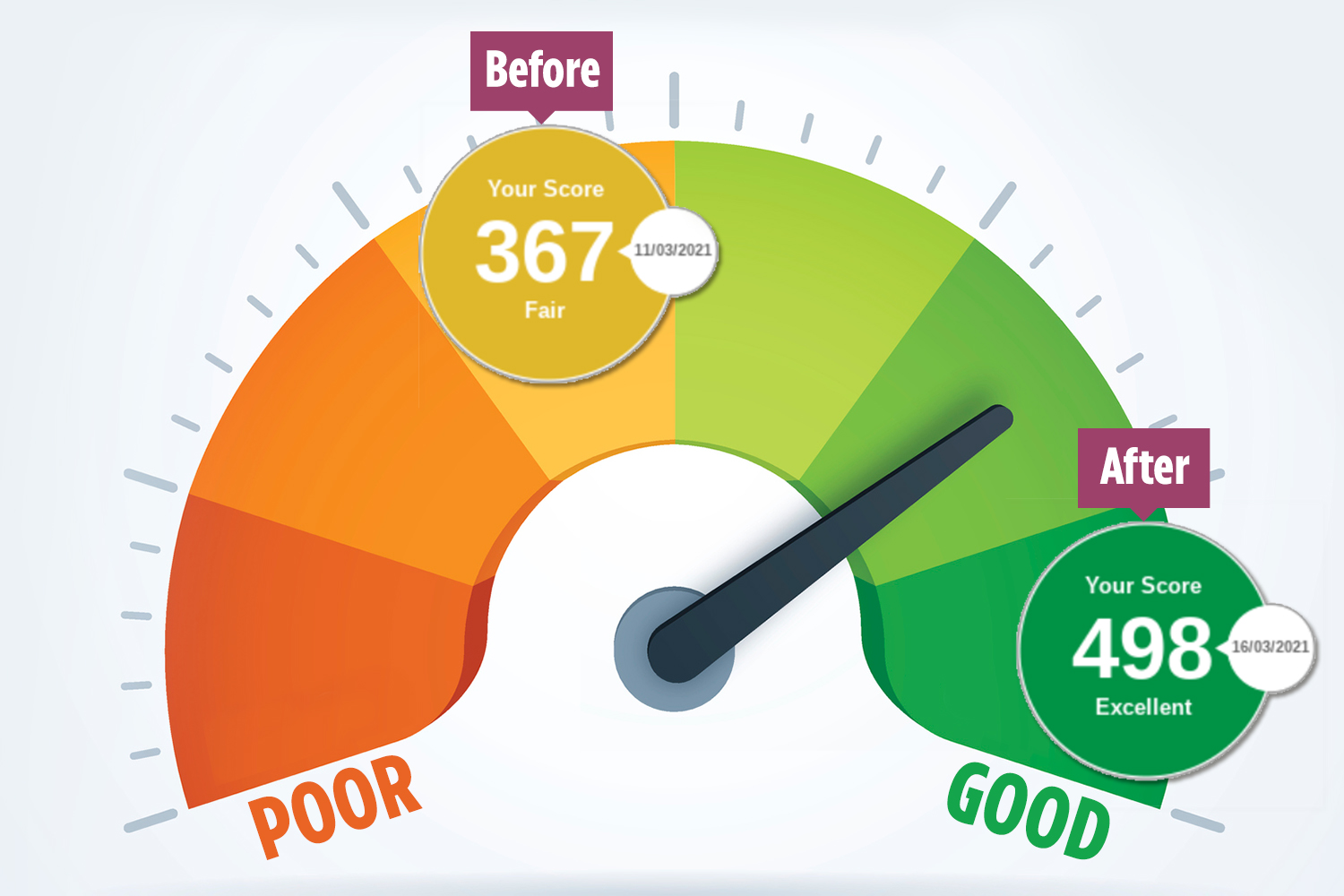
Credit score. A lot of people won’t know what that is let alone how to get one and improve it.
A credit score is a measure of how likely banks and other financial institutions are to give you a loan, credit card or other form of borrowing. This is dicatated by your spending habits which is a reflection of how you run your life.
Just from looking at a person’s bank statements, it’s easy to see where their money goes. This is precisely what lenders do and to determine whether you’re a safe pair of hands or irresponsible.
But how is this calculated?
Well, typically, there are five factors involved:
- Payment History (35% of your score) – Here in the UK, there are three main ways to pay bills. You can transfer the money yourself in by cash or card to the payment details given by your creditor; You can set up a Standing Order in which case you have instructed your bank to make a payment on your behalf to the details provided on a given date at a given payment frequency or; You can set up a Direct Debit in which case you have authorised the creditor (company you owe money to) to collect the money straight out of your bank account. Doing the latter ensures more of the company swings towards the company. As long as you have sufficient funds in your account, you’ll never miss a payment. With a Standing Order, it’s best to set it up 2-3 days before the bill is due to ensure payment gets there on time. And if you’re doing it yourself, it’s all on you. Of course, this is the riskier option and more likely to make you miss a payment even with the best memory and reminders. If you get distracted and forget the payment, it’s going to be a mark against you. Generally, in the UK, we go by Direct Debit where possible. That way we can concentrate on other things. But if you’re reliant on transferring money yourself and keep missing payments, these will be reported to the bank and credit rating agencies. Typically, any payments over 30 days will be reported but constantly missing payments across your accounts will see a mark against you on your credit file and lower your score.
- Existing Debt (30% of your score) – Lenders will look at the entirety of your credit facility across loans and credit cards. Keeping a good payment history will mean your always bringing your debt down, but if you’re taking on too much debt against your salary and bills, your score will go down. For credit cards, ensuring a total usage of less than 25% across all your cards and credit facilities will make sure your score isn’t affected. Of course, one-off emergencies happen and this should be one of the main functions of the credit facility. Your score will drop a bit but if you’re paying back then you take the hit knowing your score will improve.
- Length of Credit History (15% of your score) – Keeping a credit card and using it over a number of years shows lenders you are actually responsible with credit. It may seem counterintuitive at first to apply for a credit card when you don’t need to borrow, but keeping one on you and using it for something small then paying it back straight away shows you can use a credit facility correctly.
- Types of Accounts (10% of your score) – A variety of borrowing can improve your score. A mortgage provides a good foundation as that will typically be your main debt for 15-30 years. Add on credit cards and installment loans and you will have sufficient facilites to provide evidence of good, stable borrowing habits.
- Recent Credit Activity (10% of your score) – Making two or more credit applications within a six month period (in the UK, at least) will indicate to a lender that you are in desperate situation. Whilst this may not be the case (I applied for three credit facilities within a short period to bump up my overall credit facility to boost my score to improve my ability to get a mortgage since I’m on a house hunt), it will temprorarily drop your score. By spacing out your applications, it will indicate that you are not in financial trouble.
So, why add credit to this blog? Well, money dictates your life. The quicker we accept that, the better. Whilst many think that the idea of borrowing is a bad thing, that’s only the case if you’re poor at handling money. Debt is a financial instrument and allows you to obtain things you either can’t afford outright or would rather spread the cost of via disposable income rather than taking a hit in your savings. For example, if you have £200,000 in the bank, you could buy a house outright but then you’d have a house and no financial cushion because you spent it buying a house so, now, you’re in a tough financial position because you’d have to build your savings back up.
Similarly, most people will take 15-30 years to even set enough aside (if they have the discipline) to be able to buy a house outright. Meanwhile, where are you living whilst waiting to buy a house outright? It’s simply easier to get in a position to be able to borrow from a bank to get a place to live and pay back with interest. This principle applies for other forms of borrowing, however, where a mortgage won’t harm your rating, paying a credit card back outside of your interest free period will as you will be charged for late payments and interest will accumulate on your outstanding balance. So, generally speaking, borrowing is fine to be able to get something you need now but make sure you understand the rules of that borrowing before applying. And never borrow more than you can afford as this will put you in a negative cycle and lead you towards loan sharks and payday lenders when you get into a habit of borrowing to pay off a loan to pay off a credit card that you forgot about for a few months or years. That’s the worst case scenario for poor financial discipline.
So, in summary, the Credit Score is a reflection of how well you handle debt. It’s a tool and nothing to be ashamed of when used responsibily and always within your means. The skill here is learning how to use debt so that you can better control your finances. Do that and you’ll have taken an improtant step in enriching your life.
You Are What You Eat

Food and drink. This is a fairly major moneysink especially if your breakfast, lunch and dinner is bought in the form of takeaway or ready-made meals. Not only are they more expensive but the amount of processing that goes into these foods is unreal. Yes, we lead busier lives now and it’s far easier to pop into a supermarket and pick up a sandwich for lunch or grab a takeaway for dinner on the way home but, hold on. How much time do you spend waiting in a queue for that sandwich or waiting on your takeaway being made? How much of your lunch hour is spent just getting lunch rather than sitting down and enjoying it? How far out of your way do you have to go?
These questions are worth noting. Again, the main selling point here is convenience. But what exactly is convenient about running around for food when you can take it with you? What’s more convenient than a packed lunch? It’s cost you less, is healthier and you just pull it out your bag or work fridge and eat. You don’t have to waste time deciding what you want. It’s already there. Just enjoy.
Ah, but. What about the social aspect? What about it? Can you really afford to be spending £3-£10 a day on lunch just to hang out with work colleagues? At that price, you’re entering into a private member’s club where the membership benefits are you get to spend time with people who, most likely, won’t want to become actual friends. Are you likely to develop your career from lunch? Maybe, but for most people, no.
Ok, I admit, that might be a bit harsh. We do need to blow off some steam at work but, really, do you have to spend so much of your hard-earned cash doing so?
So, let’s look at these using a 5-day working week, 22-day working month and 260-day working year:
Breakfast – £2 to £10 a day. Weekly – £10 to £50 a week. Monthly – £44 to £220. Annually – £620 to £2,600.
Lunch – £3 to £20 a day. Weekly – £15 to £100. Monthly – £66 to £440. Annually – £780 to £5,200
Dinner – £5 to £30 a day. Weekly- £25 to £150. Monthly – £110 to £660. Annually – £1,300 to £7,800
And if you’re doing all three:
Daily – £10 to £60. Weekly – £50 to 300. Monthly – £220 to £1,320. Annually – £2,600 to £15,600.
Consider those figures. Whether you’re doing just one meal a day, two or three. Just look at the annual cost. I’ll reiterate. Convenience costs. There are areas where paying for convenience makes sense and others where it doesn’t. Food and drink is one for the former. For example, think of how much food you could feed yourself with for the low-end weekly cost of dinner? A single person who can cook can easily make two working months of healthy, nutritious dinners for £25. How? Well, if you have a freezer, you cook a batch and freeze it. If you have a big enough freezer, you make one batch for two, maybe, four weeks
Ah, but. Yes – it does mean you could be eating the same thing for a while but if you can’t really afford takeway dinners, you have little to argue with. Similarly, if you are able to afford takeaway dinners every night, you could be cooking yourself even better food for less.
And ready meals? In the time it takes to heat one of them up in the oven or microwave, you could have cooked something cheaper, tastier and healthier. Italian food is perfect for this as the cuisine is built on the principle of cheap, fresh and few ingredients. Dishes such as carbonara and puttanesca can be done in less than 15 minutes and, if you’re cooking for one, you will have leftovers to put in that freezer that you, hopefully, have.
In addition, by cooking more of your own meals, you will be more in control of your nutrition which, in turn, would provide a number of health benefits when compared to eating overly processed and unnourishing foods. The other benefit of doing this is that you gain a skill and by gaining it, you will keep more money in your pocket the better you get at it.
Building A Better You

Fitness, when coupled with nutrition, is the foundation for a richer, healthier life. You can think more clearly which will lead to better decision-making. The more exercise you do, the better conditioned your muscles, bones and organs will become which will lead to a more capable body thus you will have more energy as your body has become more efficient.
However, fitness doesn’t have to cost anything more than a pair of decent trainers. For those who aren’t all that fit and have been duped into thinking you need a personal trainer, gym membership and specialist clothing – stop! You don’t! Not at the start. The very least you can start doing is walk. Get yourself a decent pair of trainers (under £50) and walk as far as you can until you can’t. Doesn’t matter if that’s 100 metres or 1 mile. Keep going and it will start getting easier. The greatest obstacle you’ll overcome here is yourself. Your mind has been conditioned into a state of deprivation and incapability. Your subconscious tells you you can’t get fit. Every time you go beyond the distance you previously couldn’t, your subconscious will start to change. Instead of sending you discouranging messages, it will send encouraging ones. Eventually, you will believe you can do things.
But if you go and get yourself a gym membership and a personal trainer straight away, the money you’re trying to save will be wasted. All a personal trainer is going to do (for a minimum of £30 an hour) is be your fitness companion. You tell them what you want to achieve, if you can articulate it, and they’ll find some way to make you believe you can achieve it via the longest possible route thus extracting the most money they can from you (most trainers aren’t paid by the gyms they operate in unless they’re with clients) whilst effectively gaslighting you into thinking you’re getting better. In all my years of going to a gym, I haven’t seen one person get fitter, lose fat, get shredded through a trainer. I had one for a year and I didn’t achieve my goal, however, I think I got a more honest trainer that did give me two pieces of information that came true when I put them into practice:
- Change in diet leads to fat loss more than exercise.
- It takes years of discipline and commitment for changes to take place naturally, particularly if you’re strength training.
Two years after I stopped using the personal trainer, I put his advice into practice but that was only because I’d managed to break through more layers of negative subconscious messaging. By changing my diet and adhering to the trainer’s advice (less than 2,000 calories per day for 5 days with 2 refill days of up to 3,500 calories), I lost 4 inches off my waist the first year; 2 inches the following year and I’m now losing the excess abdominal fat. I could lose it faster but I’m not an athlete, bodybuilder, powerlifter, etc. I have no need to get ‘shredded’ fast. The fact is, I’ve found what works for me , stuck to it and am now seeing the results.
But, fitness is still important. You can’t achieve a more efficient and healthy body through diet. The two go hand-in-hand. A fitter body will get more nutrients out of the lower calorie (but higher protein content) diet you give it. Think of a car engine. An inefficient engine will work a bit better when given more energy dense fuel. But an efficient engine will work even better on that fuel as it’s capable of getting more from it.
To continue the analogy, you can’t expect an engine to run well on fizzy juice so why do some think their body is fine with a diet of cheap fuel? All you end up doing depriving yourself of better health. When your body starts to improve through fitness, it affects the mind. The body will start telling the mind what it needs and, if you listen, you’ll give it what it needs.
Real food.
Real as in, fresh. Raw meat and vegetables that need to be prepared and cooked into something tasty as well as nutritious. If you’ve developed your cooking, you’ll reap the dividends in the fitness arena. Good health and good food will create a positive cycle which will result in you wanting to just keep getting better, whatever that looks like to you.
And a fitter, healthier body, if maintained, will also mean you go into your twilight years with less chance of significant health risks. For example, too much excess fat and you’re putting your joints under stress for decades which, once your muscle mass starts to decline, your body won’t be able to sustain the extra weight and you’ll end up with arthritis in your joints. By maintaining a good level of fitness (not talking elite athlete levels), you set yourself to being more able to enjoy old age with less health problems.
Does that mean you can’t have a lazy day and a takeaway? Of course not. We’re entitled to downtime and indulgence from time to time. This is about establishing good habits for the immediate and long-term health of your body. And rest and relaxation comes into that hence the refill days I mentioned earlier. I use them in between gym days so I might have a takeaway, eat out or make myself a mountain of food because, over the course of a week, I’m still consuming less calories than if I was eating 2,500 – 3,000 a day. Plus, I like to make sure I walk at least three miles a day so some exercise has been done. Easy to do if you’ve errands to run.
I’ve covered the two main aspects of what we think of when it comes to poverty – Financial and Physical. But we can’t neglect the impact of mental, emotional and spiritual poverty. I’ll cover those in the next part.



 Thoughtful Meanderings